Silva-Caso Wilmer, Kym Sungmin, Merino-Luna Alfredo, Aguilar-Luis Miguel Angel, Tarazona-Castro Yordi, Carrillo-Ng Hugo, Bonifacio-Velez de Villa Eliezer, Aquino-Ortega Ronald, Del Valle-Mendoza Juana
Biomedicine Laboratory, Research Center of the Faculty of Health Sciences, Universidad Peruana de Ciencias Aplicadas, Av. San Marcos Cuadra 2, Chorrillos, Lima 15023, Peru.
Instituto de Investigación Nutricional, Lima 15024, Peru.
Biomedicines. 2024 Jul 19;12(7):1609. doi: 10.3390/biomedicines12071609.
Despite great scientific efforts, understanding the role of COVID-19 clinical biomarkers remains a challenge.
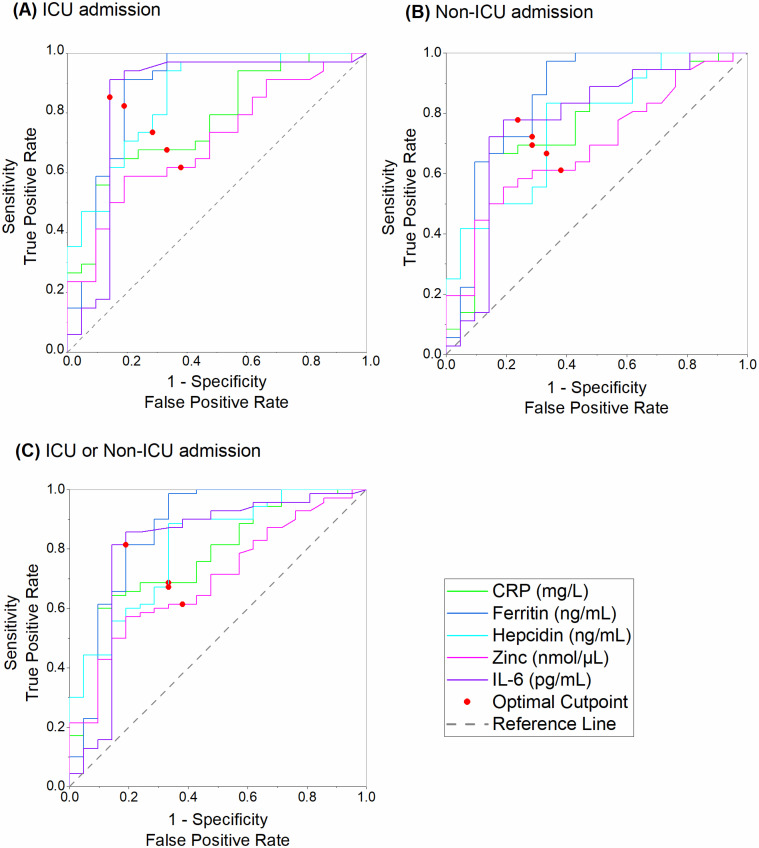
A cross-sectional descriptive study in two Peruvian cities at different altitudes for comparison: Lima and Huaraz. In each place, three groups were formed, made up of 25 patients with COVID-19 in the ICU, 25 hospitalized patients with COVID-19 who did not require the ICU, and 25 healthy subjects as a control group. Five biomarkers were measured: IL-6, hepcidin, ferritin, C-reactive protein, and zinc using ELISA assays.
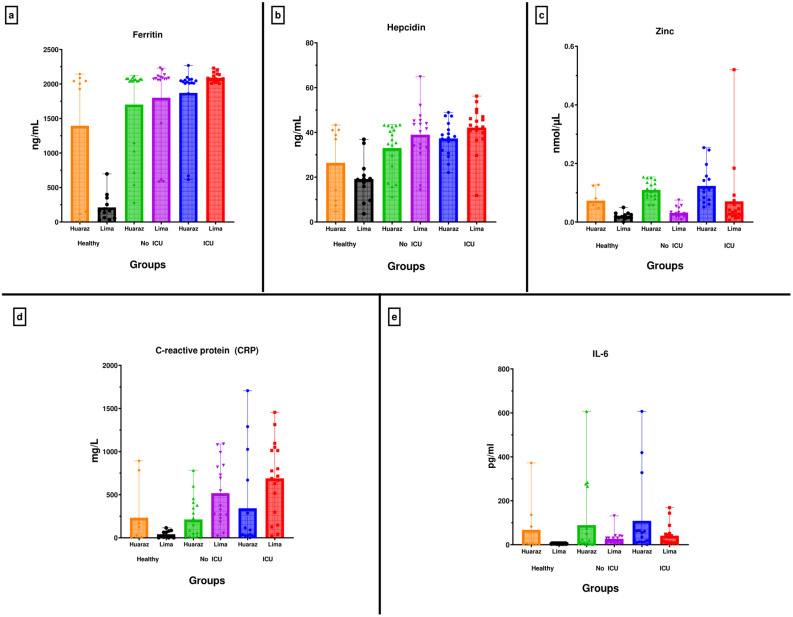
Ferritin, C-reactive protein, and IL-6 levels were significantly higher in the ICU and non-ICU groups at both study sites. In the case of hepcidin, the levels were significantly higher in the ICU group at both study sites compared to the non-ICU group. Among the groups within each study site, the highest altitude area presented statistically significant differences between its groups in all the markers evaluated. In the lower altitude area, differences were only observed between the groups for the zinc biomarker.
COVID-19 patients residing at high altitudes tend to have higher levels of zinc and IL-6 in all groups studied compared to their lower altitude counterparts.
尽管付出了巨大的科学努力,但了解新冠病毒临床生物标志物的作用仍然是一项挑战。
在秘鲁两个不同海拔的城市进行了一项横断面描述性研究以作比较:利马和瓦拉斯。在每个地方,形成了三组,每组由25名入住重症监护病房(ICU)的新冠病毒患者、25名无需入住ICU的住院新冠病毒患者以及25名健康受试者作为对照组组成。使用酶联免疫吸附测定(ELISA)法测量了五种生物标志物:白细胞介素-6(IL-6)、铁调素、铁蛋白、C反应蛋白和锌。
在两个研究地点,ICU组和非ICU组的铁蛋白、C反应蛋白和IL-6水平均显著更高。就铁调素而言,两个研究地点的ICU组水平均显著高于非ICU组。在每个研究地点的各组之间,海拔最高地区的所有评估标志物在组间均呈现出统计学显著差异。在海拔较低地区,仅在锌生物标志物的组间观察到差异。
与海拔较低地区的新冠病毒患者相比,居住在高海拔地区的新冠病毒患者在所有研究组中往往具有更高水平的锌和IL-6。