Operative Research Unit of Laboratory, Fondazione Policlinico Universitario Campus Bio-Medico, Via Alvaro del Portillo, 200, 00128 Rome, Italy.
Unit of Computer Systems and Bioinformatics, Department of Engineering, University Campus Bio-Medico of Rome, Via Alvaro del Portillo, 21, 00128 Rome, Italy.
Genes (Basel). 2024 Jul 11;15(7):908. doi: 10.3390/genes15070908.
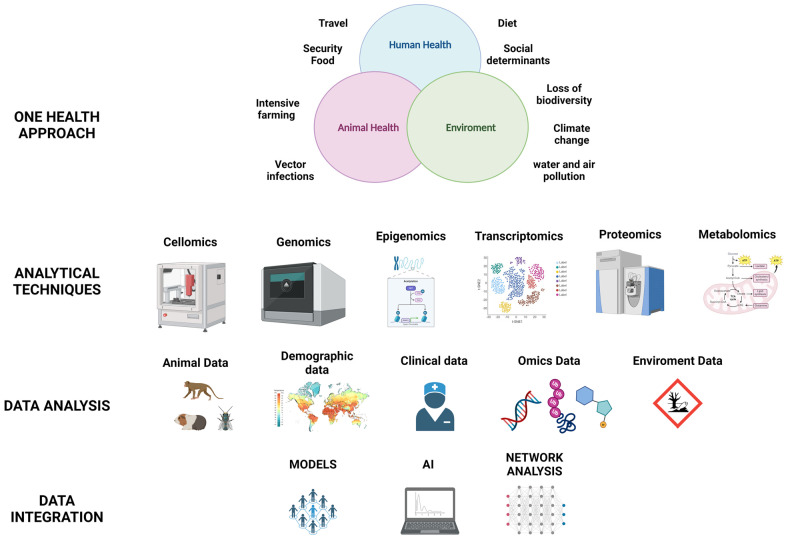
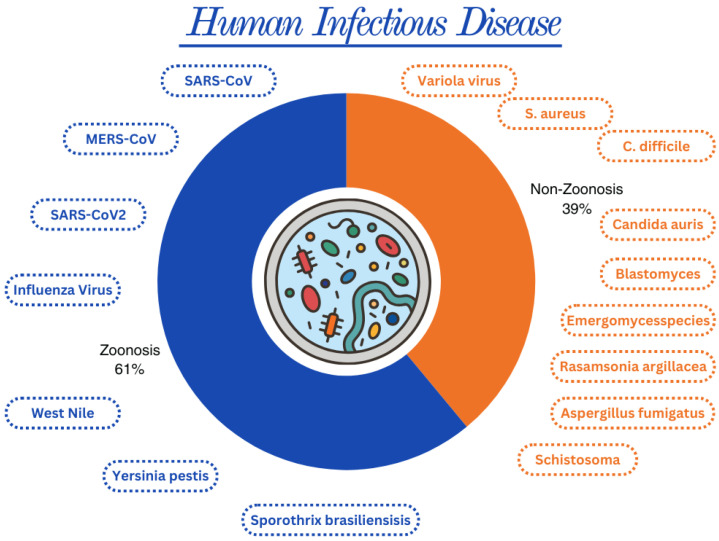
Emerging infectious diseases (EIDs) are newly emerging and reemerging infectious diseases. The National Institute of Allergy and Infectious Diseases identifies the following as emerging infectious diseases: SARS, MERS, COVID-19, influenza, fungal diseases, plague, schistosomiasis, smallpox, tick-borne diseases, and West Nile fever. The factors that should be taken into consideration are the genetic adaptation of microbial agents and the characteristics of the human host or environment. The new approach to identifying new possible pathogens will have to go through the One Health approach and omics integration data, which are capable of identifying high-priority microorganisms in a short period of time. New bioinformatics technologies enable global integration and sharing of surveillance data for rapid public health decision-making to detect and prevent epidemics and pandemics, ensuring timely response and effective prevention measures. Machine learning tools are being more frequently utilized in the realm of infectious diseases to predict sepsis in patients, diagnose infectious diseases early, and forecast the effectiveness of treatment or the appropriate choice of antibiotic regimen based on clinical data. We will discuss emerging microorganisms, omics techniques applied to infectious diseases, new computational solutions to evaluate biomarkers, and innovative tools that are useful for integrating omics data and electronic medical records data for the clinical management of emerging infectious diseases.
新发传染病(EIDs)是指新出现和重新出现的传染病。美国国立过敏和传染病研究所将以下疾病确定为新发传染病:SARS、MERS、COVID-19、流感、真菌病、鼠疫、血吸虫病、天花、蜱传疾病和西尼罗河热。应考虑的因素包括微生物病原体的遗传适应性以及人类宿主或环境的特征。识别新的可能病原体的新方法将不得不通过“One Health”方法和组学整合数据,这能够在短时间内识别高优先级的微生物。新的生物信息学技术能够实现全球整合和共享监测数据,以便快速做出公共卫生决策,以发现和预防疫情和大流行,确保及时做出反应并采取有效的预防措施。机器学习工具在传染病领域的应用越来越广泛,用于预测患者的败血症,早期诊断传染病,并根据临床数据预测治疗效果或抗生素方案的适当选择。我们将讨论新兴微生物、应用于传染病的组学技术、评估生物标志物的新计算解决方案,以及用于整合组学数据和电子病历数据以进行新发传染病临床管理的创新工具。