Wójcik-Pastuszka Dorota, Frąk Anna, Musiał Witold
Department of Physical Chemistry and Biophysics, Faculty of Pharmacy, Wroclaw Medical University, ul. Borowska 211A, 55-556 Wrocław, Poland.
Pharmaceutics. 2024 Jun 27;16(7):867. doi: 10.3390/pharmaceutics16070867.
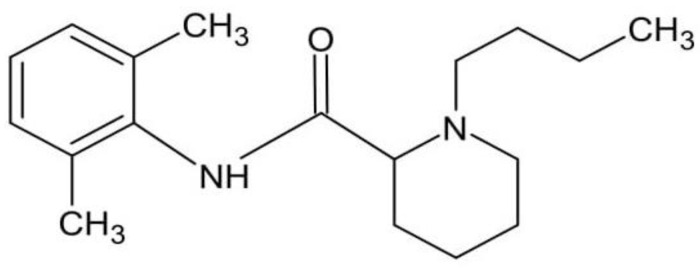
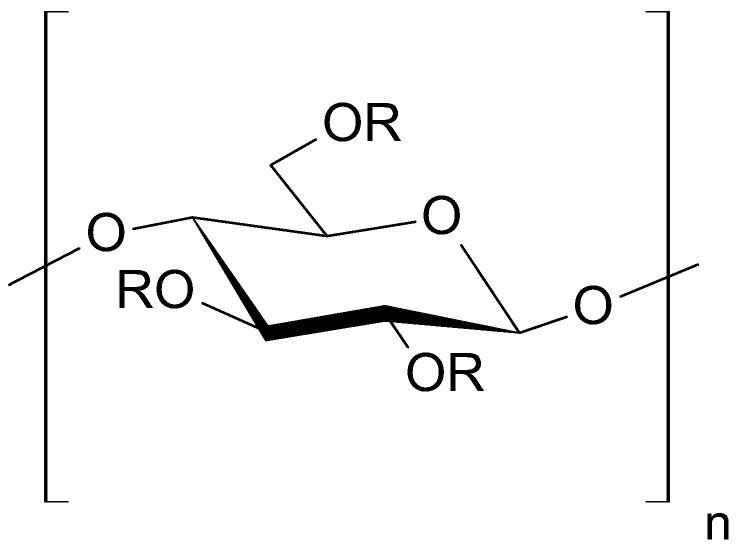
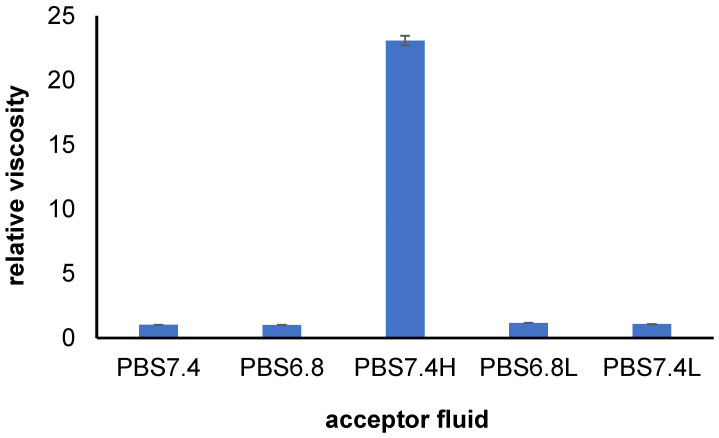
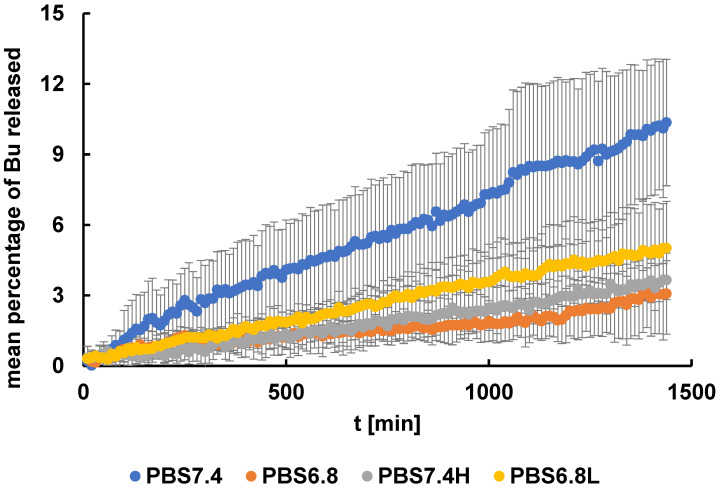
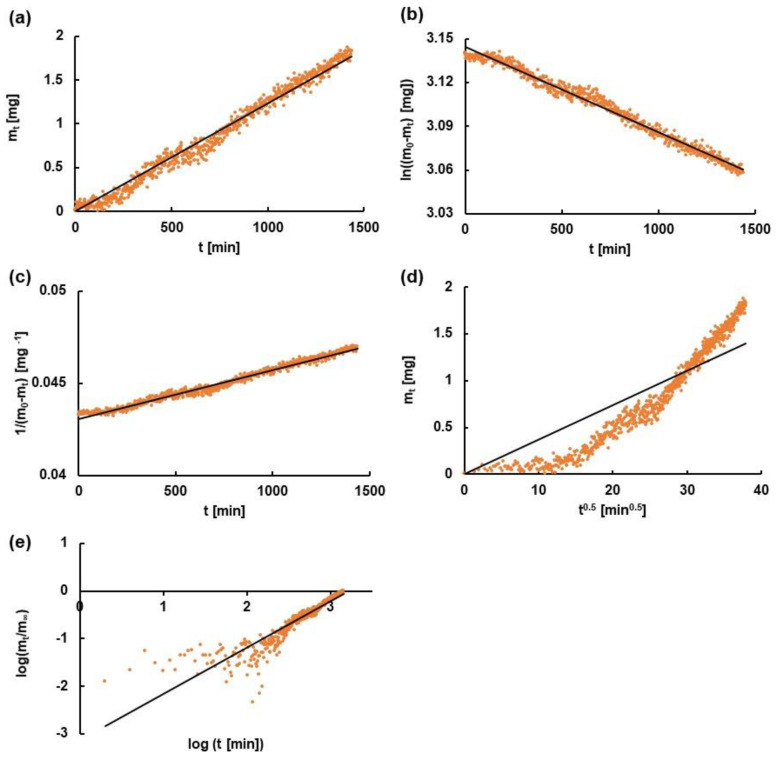
Injections are one way of delivering drugs directly to the joint capsule. Employing this possibility, local anesthetic, such as bupivacaine (Bu), in the form of the suspension can be administered. The aim of this work was to propose a methylcellulose-based hydrogel-incorporated bupivacaine for intra-articular injections and to study the release kinetics of the drug from the hydrogel to different acceptor media, reflecting the synovial fluid of a healthy joint and the synovial fluid of an inflamed joint. The drug release studies were performed employing the flow apparatus. The drug was released to four different acceptor fluids: phosphate buffer pH = 7.4 (PBS7.4), phosphate buffer pH = 6.8 (PBS6.8), phosphate buffer pH = 7.4 with the high-molecular-weight sodium hyaluronate (PBS7.4H), and phosphate buffer pH = 6.8 with the low-molecular-weight sodium hyaluronate (PBS6.8L). The investigation was carried out at the temperature of 37 °C. The absorbance of the Bu released was measured at the wavelength of 262 nm every 2 min for 24 h. The release profiles of Bu to the acceptor media PBS7.4, PBS6.8, PBS7.4H, and PBS6.8L were described best by the first-order kinetics and the second-order equation. According to these models, the release rate constants were the highest when Bu was released to the fluid PBS7.4 and were k = (7.20 ± 0.01) × 10 min and k = (3.00 ± 0.04) × 10 mg × min, respectively. The relative viscosity of the acceptor medium, its pH, and the addition of high-molecular-weight or low-molecular-weight sodium hyaluronate (HAH or HAL) to the acceptor fluid influenced the drug dissolution. The release of Bu into the medium reflecting healthy synovial fluid takes a different pattern from its release into the fluid of an inflamed joint.
注射是将药物直接输送到关节囊的一种方式。利用这种可能性,可以以悬浮液的形式给予局部麻醉剂,如布比卡因(Bu)。这项工作的目的是提出一种用于关节内注射的甲基纤维素基水凝胶包裹布比卡因,并研究药物从水凝胶向不同受体介质的释放动力学,这些受体介质反映了健康关节的滑液和发炎关节的滑液。药物释放研究采用流动装置进行。药物被释放到四种不同的受体流体中:pH = 7.4的磷酸盐缓冲液(PBS7.4)、pH = 6.8的磷酸盐缓冲液(PBS6.8)、含有高分子量透明质酸钠的pH = 7.4的磷酸盐缓冲液(PBS7.4H)以及含有低分子量透明质酸钠的pH = 6.8的磷酸盐缓冲液(PBS6.8L)。研究在37℃的温度下进行。在24小时内,每隔2分钟在262nm波长处测量释放的布比卡因的吸光度。布比卡因向受体介质PBS7.4、PBS6.8、PBS7.4H和PBS6.8L的释放曲线用一级动力学和二级方程描述得最好。根据这些模型,当布比卡因释放到流体PBS7.4中时,释放速率常数最高,分别为k = (7.20 ± 0.01) × 10⁻³ min⁻¹和k = (3.00 ± 0.04) × 10⁻³ mg·cm⁻²·min⁻¹。受体介质的相对粘度、其pH值以及向受体流体中添加高分子量或低分子量透明质酸钠(HAH或HAL)会影响药物溶解。布比卡因释放到反映健康滑液的介质中的模式与其释放到发炎关节的流体中的模式不同。