Reccardini Nicolò, Chernovsky Maria, Salton Francesco, Confalonieri Paola, Mondini Lucrezia, Barbieri Mariangela, Romallo Antonio, Maggisano Marta, Torregiani Chiara, Geri Pietro, Hughes Michael, Campochiaro Corrado, Confalonieri Marco, Scarda Angelo, Zuccon Umberto, Ruaro Barbara
Department of Pulmonology, University Hospital of Cattinara, 34149 Trieste, Italy.
Department of Medical, Surgical and Health Sciences, University of Trieste, 34127 Trieste, Italy.
Pharmaceuticals (Basel). 2024 Jul 11;17(7):930. doi: 10.3390/ph17070930.
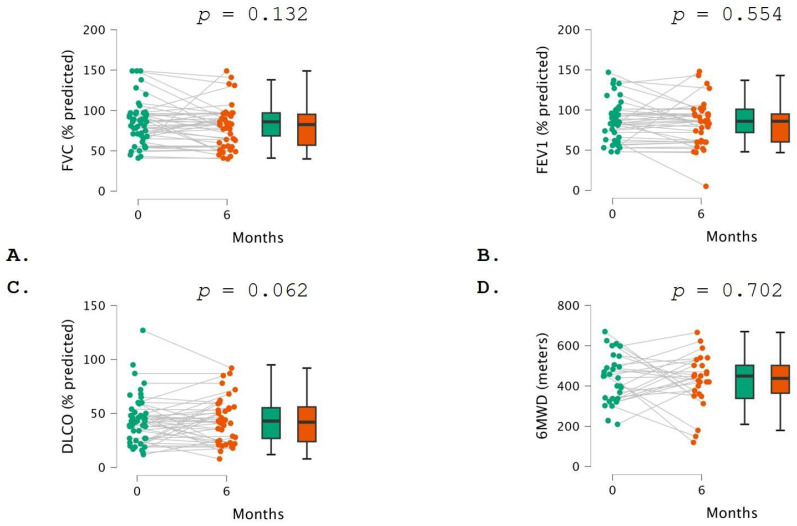
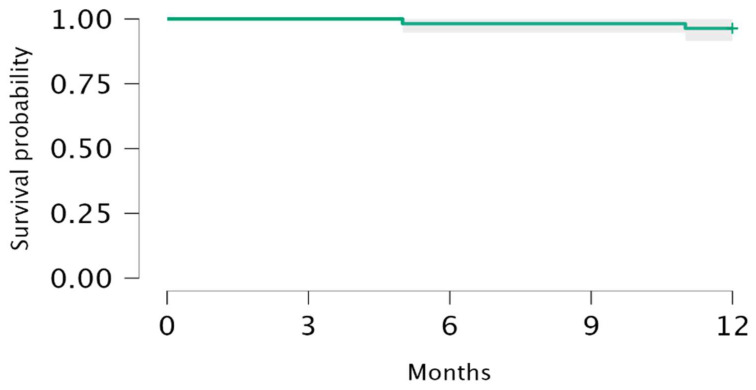
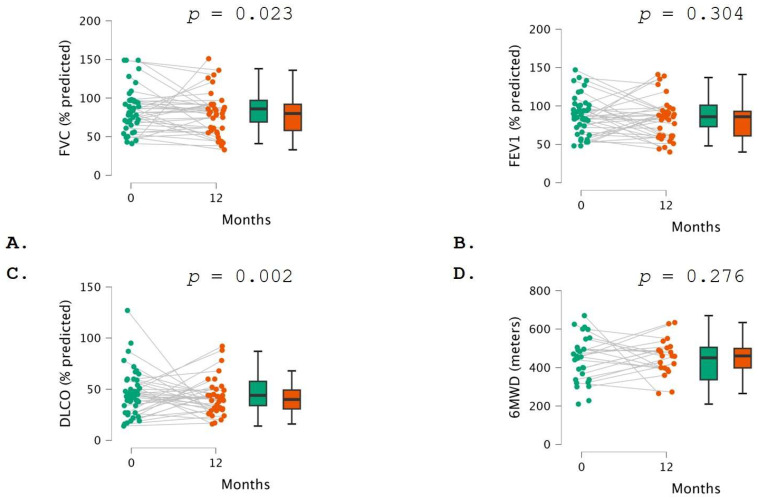
Idiopathic pulmonary fibrosis (IPF) is a rare and progressive interstitial lung disease characterized by irreversible distortion of lung architecture and subsequent loss of pulmonary function. Pirfenidone is an antifibrotic agent associated with increased progression-free survival and overall survival rates, but it carries multiple side effects. The aim of the study was to examine the efficacy and safety profile of pirfenidone in a real-life context, with a focus on the concomitant use of antithrombotic and/or anticoagulant treatments. The clinical and functional data (forced vital capacity [FVC], forced expiratory volume in 1 s [FEV1], diffusing lung capacity for carbon monoxide [DLCO], and 6 min walking test distance [6MWD]) of all IPF patients treated with pirfenidone and referred to our two centers between 2019 and 2022 were retrospectively analyzed at baseline, 6 and 12 months after the start of treatment. A total of 55 IPF subjects undergoing pirfenidone treatment were included in the analysis (45.5% females, median [IQR] age at disease onset 68.0 [10.0] years, median [IQR] age at baseline 69.0 [10.8] years). Compared to baseline, at 12 months, FVC (86.0% vs. 80.0%; = 0.023) and DLCO (44.0% vs. 40.0%; = 0.002) were significantly reduced, while FEV1 ( = 0.304) and 6MWD ( = 0.276) remained stable; no significant change was recorded at 6 months. Most of the reported adverse events were mild or moderate. Gastrointestinal intolerance (9.1%) was the main cause of treatment discontinuation. A total of 5% of patients reported at least one minor bleeding event, although all episodes occurred in those receiving concomitant antithrombotic or anticoagulant. Overall, this real-life experience confirms the efficacy and safety profile of pirfenidone in the case of the concomitant use of antithrombotic and/or anticoagulant drugs.
特发性肺纤维化(IPF)是一种罕见的进行性间质性肺疾病,其特征是肺结构不可逆转的扭曲以及随后肺功能的丧失。吡非尼酮是一种抗纤维化药物,与无进展生存期和总生存率的提高相关,但它有多种副作用。本研究的目的是在实际临床环境中检验吡非尼酮的疗效和安全性,重点关注抗血栓和/或抗凝治疗的联合使用情况。对2019年至2022年间在我们两个中心接受吡非尼酮治疗的所有IPF患者的临床和功能数据(用力肺活量[FVC]、第1秒用力呼气量[FEV1]、一氧化碳弥散量[DLCO]和6分钟步行试验距离[6MWD])在治疗开始时、治疗后6个月和12个月进行回顾性分析。共有55名接受吡非尼酮治疗的IPF受试者纳入分析(女性占45.5%,疾病发病时的年龄中位数[四分位间距]为68.0 [10.0]岁,基线时的年龄中位数[四分位间距]为69.0 [10.8]岁)。与基线相比,在12个月时,FVC(86.0%对80.0%;P = 0.023)和DLCO(44.0%对40.0%;P = 0.002)显著降低,而FEV1(P = 0.304)和6MWD(P = 0.276)保持稳定;在6个月时未记录到显著变化。报告的大多数不良事件为轻度或中度。胃肠道不耐受(9.1%)是治疗中断的主要原因。共有5%的患者报告至少发生过一次轻微出血事件,尽管所有事件均发生在接受联合抗血栓或抗凝治疗的患者中。总体而言,这一实际临床经验证实了在联合使用抗血栓和/或抗凝药物的情况下吡非尼酮的疗效和安全性。