Larsson-Rosenquist Centre for Immunology and Breastfeeding, School of Medicine, The University of Western Australia, Perth, WA, Australia.
Telethon Kids Institute, Perth, WA, Australia.
Microbiome. 2024 Jul 27;12(1):139. doi: 10.1186/s40168-024-01852-7.
Colostrum is the first milk for a newborn. Its high content in microbiota shaping compounds and its intake at the time of gut microbiota seeding suggests colostrum may be critical in the establishment of a healthy microbiota. There is also accumulating evidence on the importance of the gut microbiota for healthy growth. Here, we aimed to investigate the contribution of colostrum, and colostrum-induced microbiota to growth promotion. Addressing this question is highly significant because (1) globally, less than half of the newborns are fully colostrum fed (2) the evidence for the importance of the microbiota for the prevention of undernutrition has only been demonstrated in juvenile or adult pre-clinical models while stunting already starts before weaning.
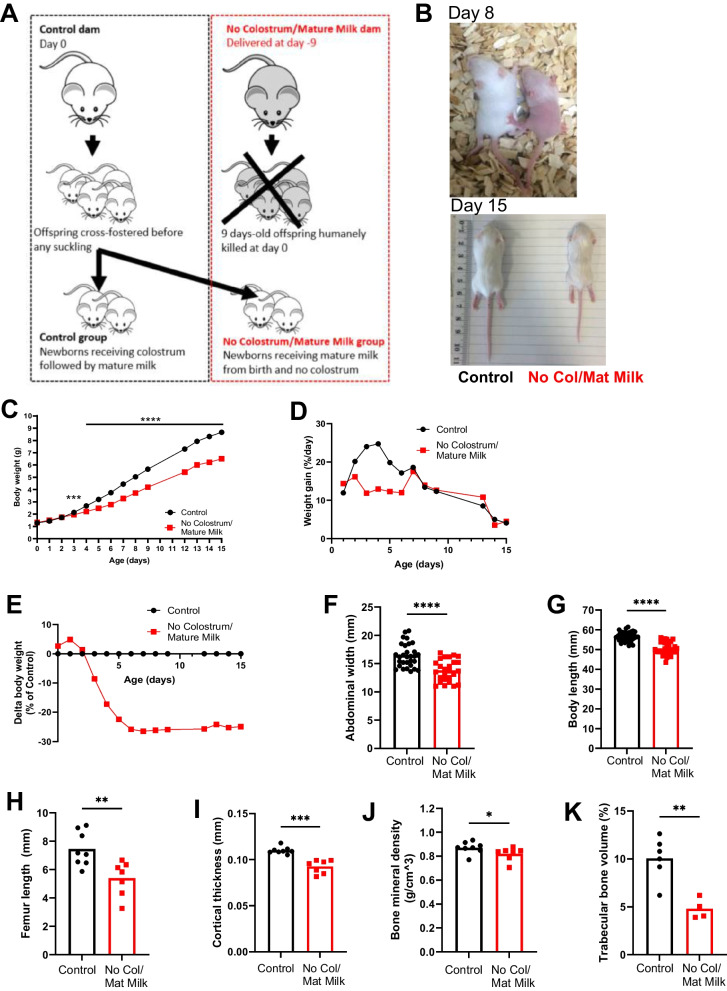
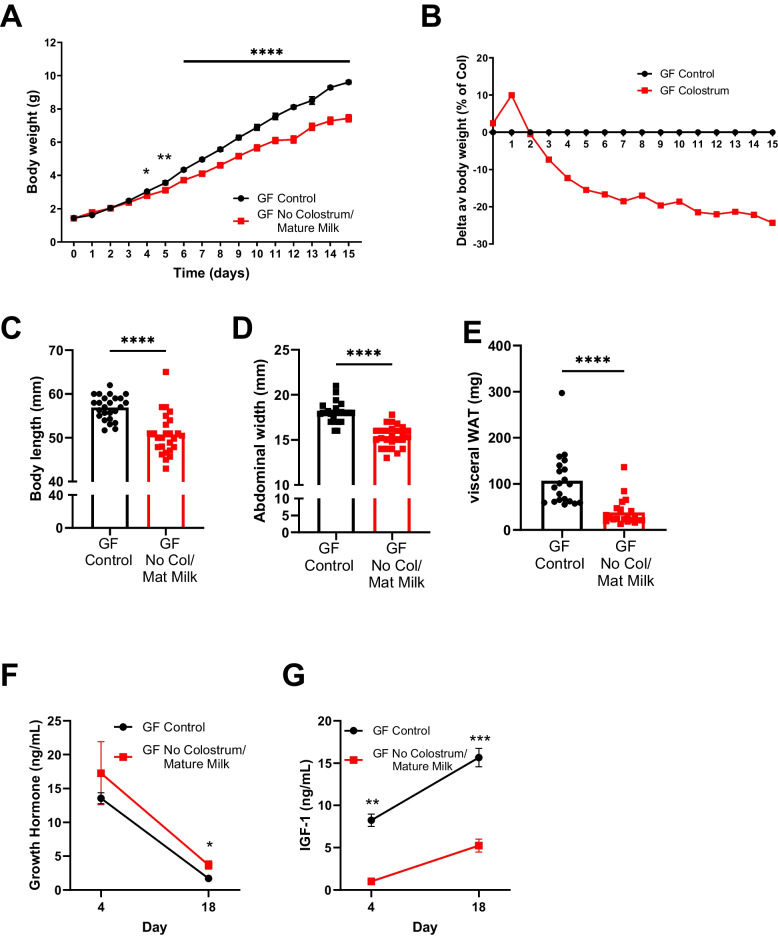
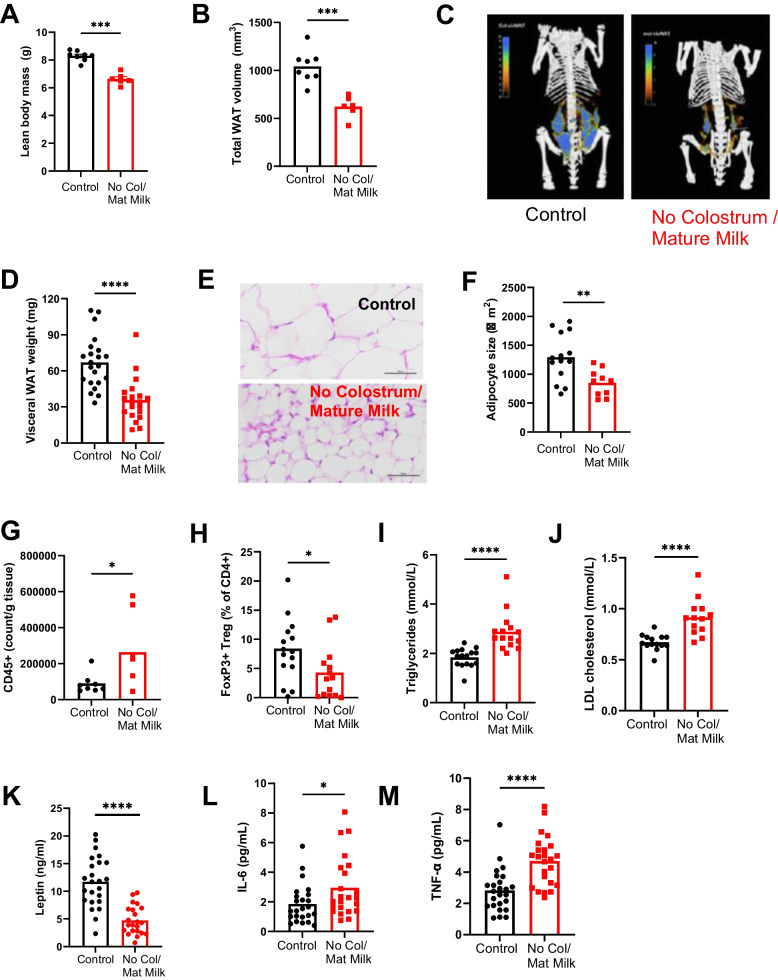
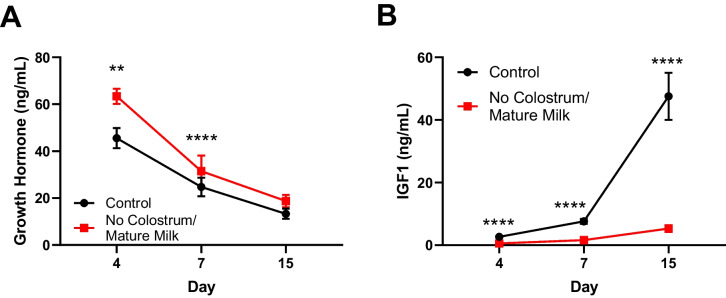
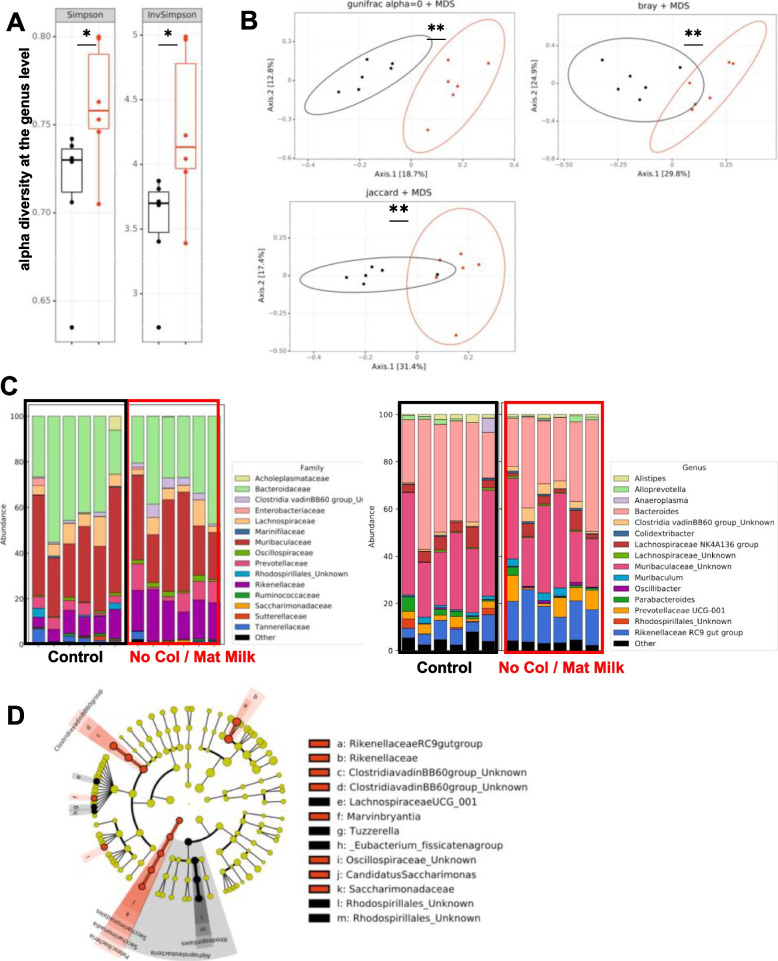
To address the importance of diet at birth in growth failure, we developed a unique mouse model in which neonates are breastfed by mothers at an advanced stage of lactation who no longer provide colostrum. Feeding newborn mice with mature milk instead of colostrum resulted in significant growth retardation associated with the biological features of chronic undernutrition, such as low leptin levels, dyslipidemia, systemic inflammation, and growth hormone resistance. We next investigated the role of colostrum in microbiota shaping. At the end of the lactation period, we found a major difference in gut microbiota alpha diversity, beta diversity, and taxa distribution in control and colostrum-deprived mice. To determine the causal relationship between changes in microbiota and growth trajectories, we repeated our experiment in germ-free mice. The beneficial effect of colostrum on growth remained in the absence of microbiota.
Our data suggest that colostrum may play an important role in the prevention of growth failure. They highlight that the interplay between neonatal gut microbiome assembly and diet may not be as crucial for growth control in the developing newborn as described in young adults. This opens a paradigm shift that will foster research for colostrum's bioactives that may exert a similar effect to microbiota-derived ligands in promoting growth and lead to new avenues of translational research for newborn-tailored prevention of stunting. Video Abstract.
初乳是新生儿的第一口奶。其富含大量调节肠道菌群的化合物,并且在肠道菌群定植时摄入初乳,提示初乳在建立健康的肠道菌群中可能具有关键作用。越来越多的证据表明肠道菌群对健康生长也很重要。在这里,我们旨在研究初乳和初乳诱导的菌群对促进生长的作用。提出这个问题非常重要,因为(1)在全球范围内,只有不到一半的新生儿能完全接受初乳喂养;(2)尽管肠道菌群对预防营养不良的重要性仅在幼年或成年前临床模型中得到证实,但发育迟缓早在断奶前就已经开始了。
为了研究出生时饮食对生长障碍的重要性,我们开发了一种独特的小鼠模型,其中新生小鼠由处于泌乳晚期的母亲母乳喂养,而这些母亲不再提供初乳。用成熟乳而不是初乳喂养新生小鼠会导致明显的生长迟缓,这与慢性营养不良的生物学特征相关,如瘦素水平低、血脂异常、全身炎症和生长激素抵抗。接下来,我们研究了初乳在塑造肠道菌群中的作用。在哺乳期结束时,我们发现对照组和初乳剥夺组小鼠的肠道菌群多样性、β多样性和分类群分布有显著差异。为了确定菌群变化与生长轨迹之间的因果关系,我们在无菌小鼠中重复了我们的实验。初乳对生长的有益影响在没有菌群的情况下仍然存在。
我们的数据表明,初乳可能在预防生长障碍方面发挥重要作用。它们强调了新生儿肠道微生物组组装和饮食之间的相互作用,对发育中新生儿的生长控制可能并不像在年轻成年人中描述的那样至关重要。这开辟了一个范式转变,将促进对初乳生物活性的研究,这些生物活性可能与菌群衍生的配体在促进生长方面发挥相似的作用,并为针对新生儿的预防发育迟缓的新转化研究开辟新途径。