Mei Xiao-Li, Wu Shu-Yi, Wu Si-Lan, Luo Xiao-Lin, Huang Si-Xing, Liu Rui, Qiang Zhe
Department of Pharmacology and Toxicology, Sichuan-Chongqing Joint Key Laboratory of New Chinese Medicine Creation Laboratory, Chongqing Academy of Chinese Materia Medica, Chongqing 400061, China.
College of Chinese Medicine, Chongqing College of Traditional Chinses Medicine, Chongqing 402760, China.
World J Hepatol. 2024 Jul 27;16(7):1051-1066. doi: 10.4254/wjh.v16.i7.1051.
The modified Xiaoyao San (MXS) formula is an adjuvant drug recommended by the National Health Commission of China for the treatment of liver cancer, which has the effect of preventing postoperative recurrence and metastasis of hepatocellular carcinoma and prolonging patient survival. However, the molecular mechanisms underlying that remain unclear.
To investigate the role and mechanisms of MXS in ameliorating hepatic injury, steatosis and inflammation.
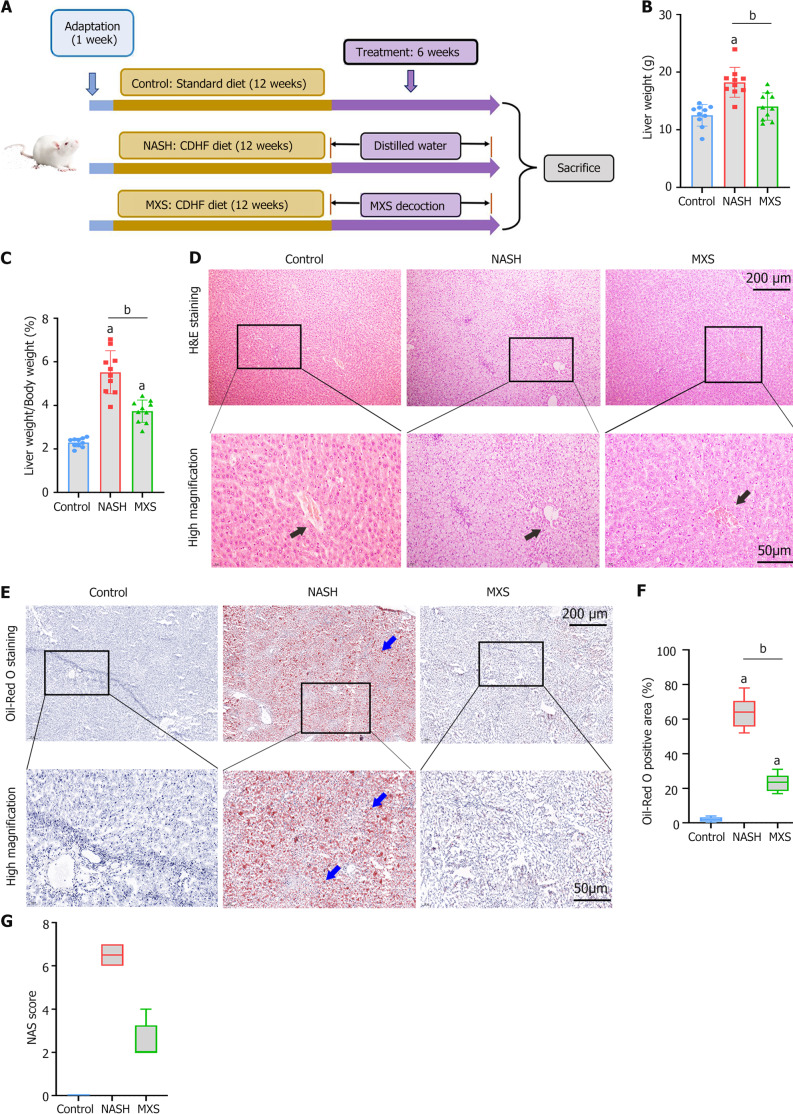
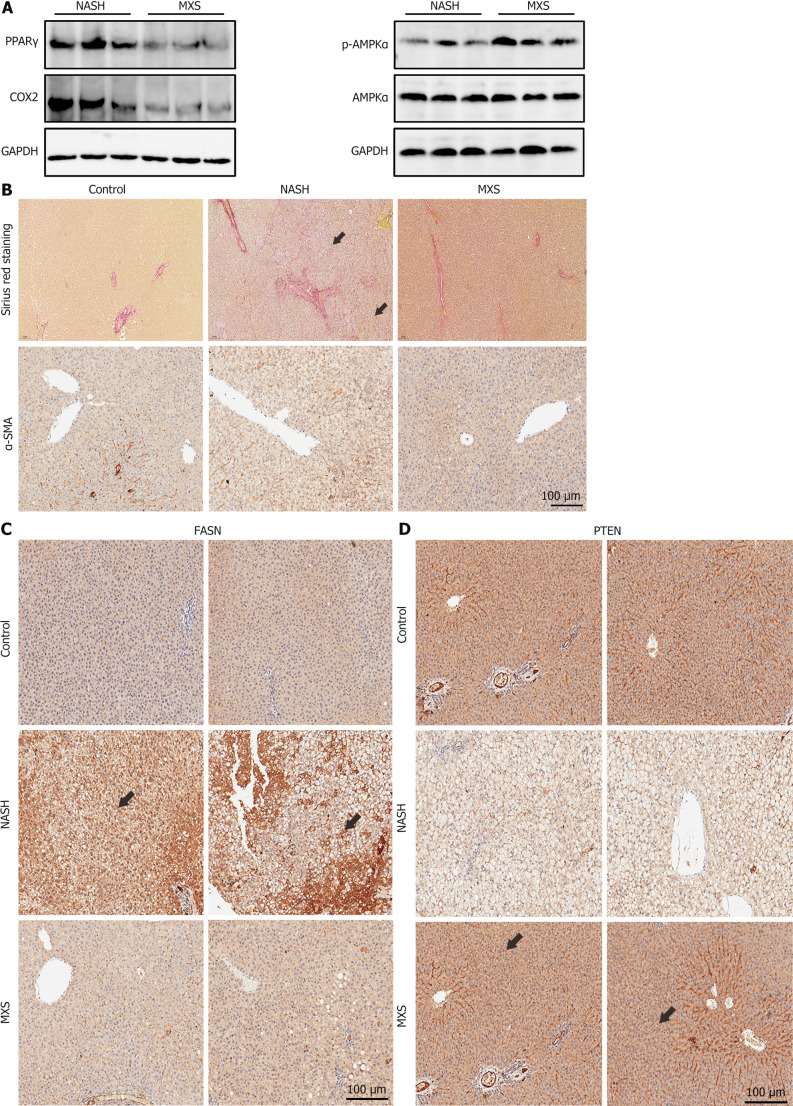
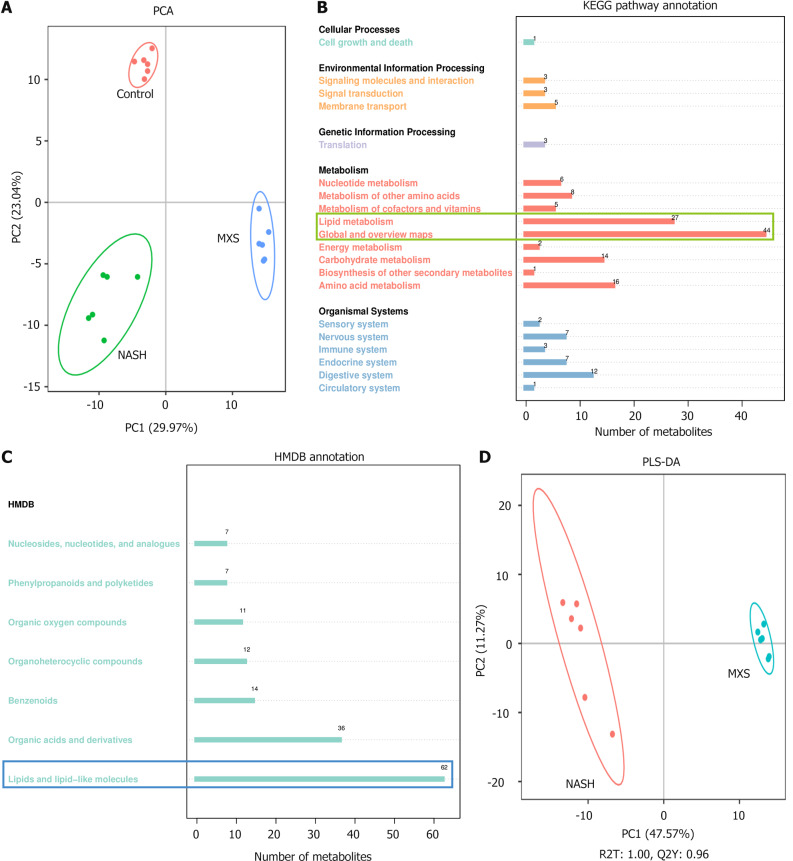
A choline-deficient/high-fat diet-induced rat nonalcoholic steatohepatitis (NASH) model was used to examine the effects of MXS on lipid accumulation in primary hepatocytes. Liver tissues were collected for western blotting and immunohistochemistry (IHC) assays. Lipid accumulation and hepatic fibrosis were detected using oil red staining and Sirius red staining. The serum samples were collected for biochemical assays and NMR-based metabonomics analysis. The inflammation/lipid metabolism-related signaling and regulators in liver tissues were also detected to reveal the molecular mechanisms of MXS against NASH.
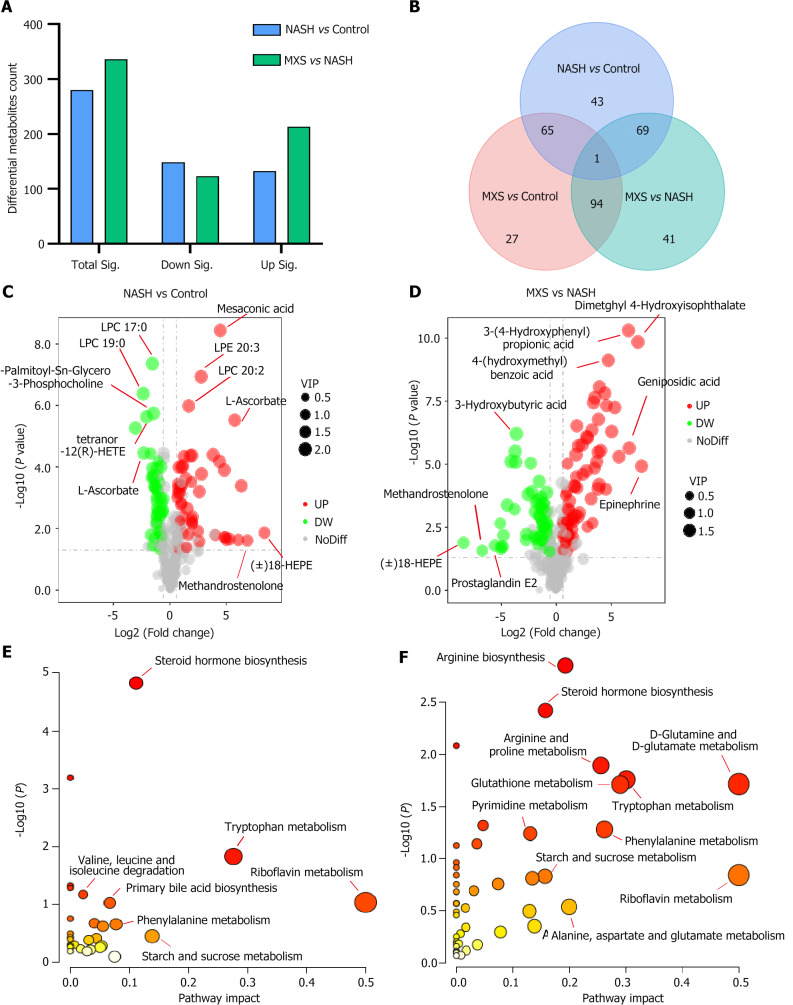
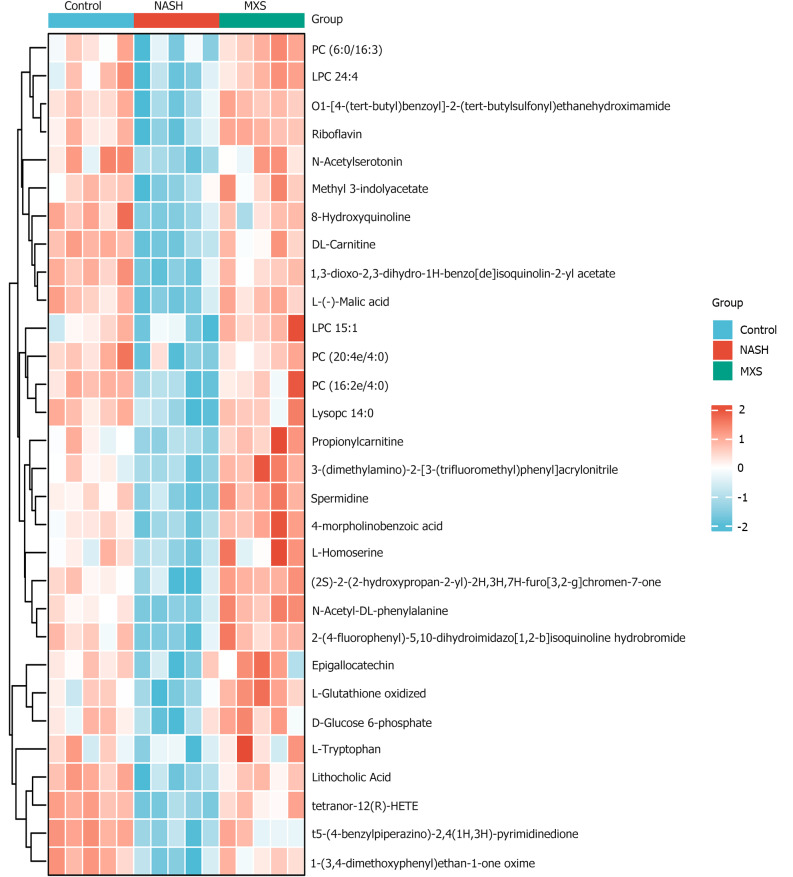
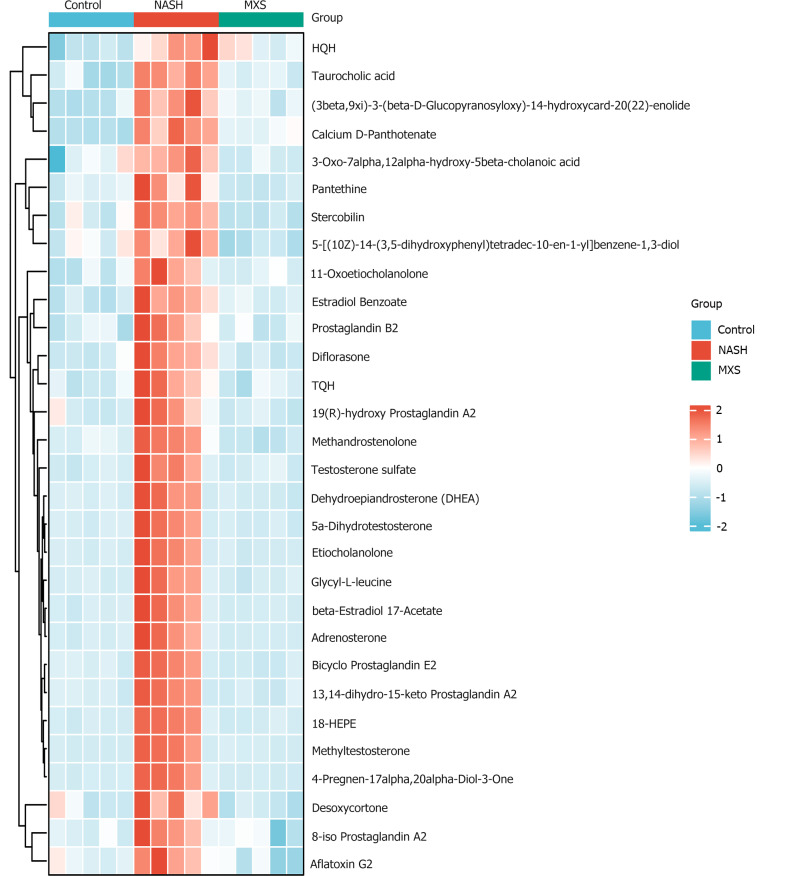
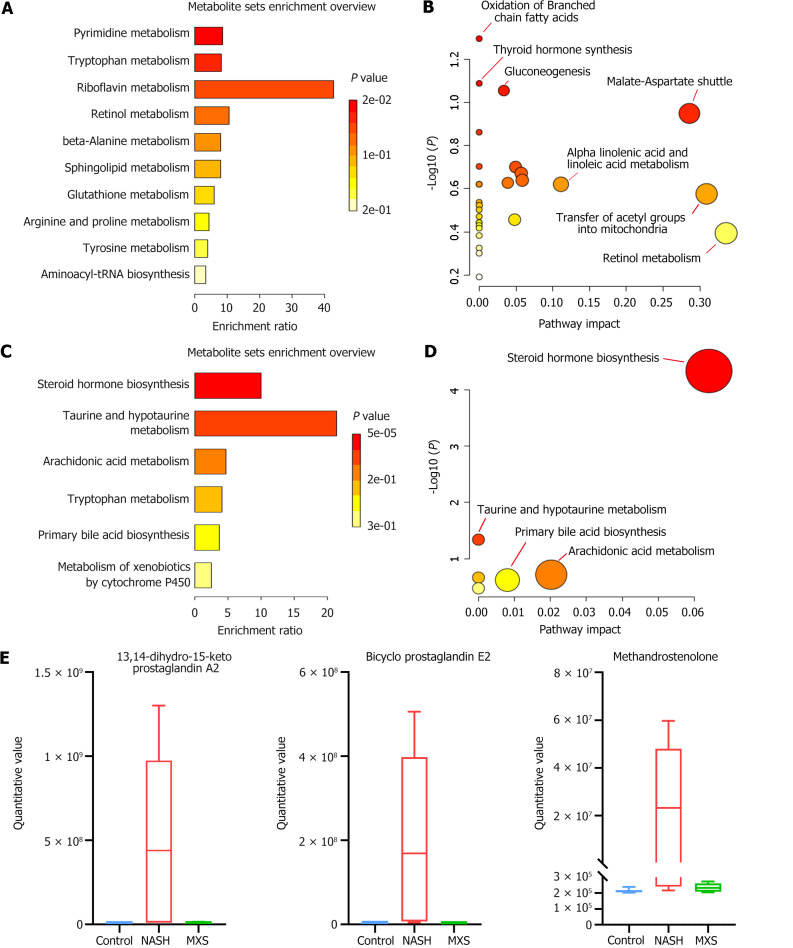
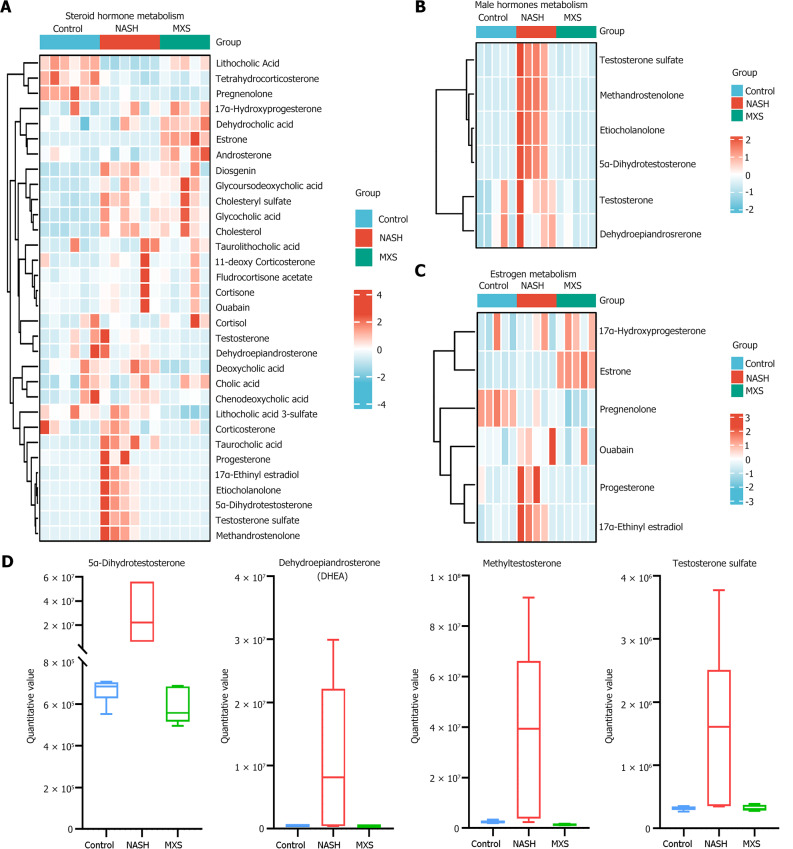
MXS showed a significant decrease in lipid accumulation and inflammatory response in hepatocytes under metabolic stress. The western blotting and IHC results indicated that MXS activated AMPK pathway but inhibited the expression of key regulators related to lipid accumulation, inflammation and hepatic fibrosis in the pathogenesis of NASH. The metabonomics analysis systemically indicated that the arachidonic acid metabolism and steroid hormone synthesis are the two main target metabolic pathways for MXS to ameliorate liver inflammation and hepatic steatosis. Mechanistically, we found that MXS protected against NASH by attenuating the sex hormone-related metabolism, especially the metabolism of male hormones.
MXS ameliorates inflammation and hepatic steatosis of NASH by inhibiting the metabolism of male hormones. Targeting male hormone related metabolic pathways may be the potential therapeutic approach for NASH.
加味逍遥散(MXS)配方是中国国家卫生健康委员会推荐用于治疗肝癌的辅助药物,具有预防肝细胞癌术后复发和转移以及延长患者生存期的作用。然而,其潜在的分子机制尚不清楚。
探讨加味逍遥散在改善肝损伤、脂肪变性和炎症方面的作用及机制。
采用胆碱缺乏/高脂饮食诱导的大鼠非酒精性脂肪性肝炎(NASH)模型,研究加味逍遥散对原代肝细胞脂质积累的影响。收集肝脏组织进行蛋白质免疫印迹法和免疫组织化学(IHC)检测。采用油红染色和天狼星红染色检测脂质积累和肝纤维化情况。收集血清样本进行生化检测和基于核磁共振的代谢组学分析。同时检测肝脏组织中炎症/脂质代谢相关信号通路和调节因子,以揭示加味逍遥散抗NASH的分子机制。
加味逍遥散可显著降低代谢应激下肝细胞的脂质积累和炎症反应。蛋白质免疫印迹法和免疫组织化学结果表明,加味逍遥散激活了AMPK信号通路,但抑制了NASH发病机制中与脂质积累、炎症和肝纤维化相关的关键调节因子的表达。代谢组学分析系统地表明,花生四烯酸代谢和类固醇激素合成是加味逍遥散改善肝脏炎症和肝脂肪变性的两个主要目标代谢途径。机制上发现,加味逍遥散通过减弱性激素相关代谢,尤其是雄性激素代谢来预防NASH。
加味逍遥散通过抑制雄性激素代谢改善NASH的炎症和肝脂肪变性。靶向雄性激素相关代谢途径可能是NASH的潜在治疗方法。