Department of Pathology, The People's Hospital of Guangxi Zhuang Autonomous Region, Guangxi Academy of Medical Sciences, Nanning, China.
Guangxi Medical University, Nanning, China.
BMC Cancer. 2024 Aug 1;24(1):927. doi: 10.1186/s12885-024-12675-y.
This study aims to explore ADH4 expression in hepatocellular carcinoma (HCC), its prognostic impact, and its immune correlation to provide novel insights into HCC prognostication and treatment.
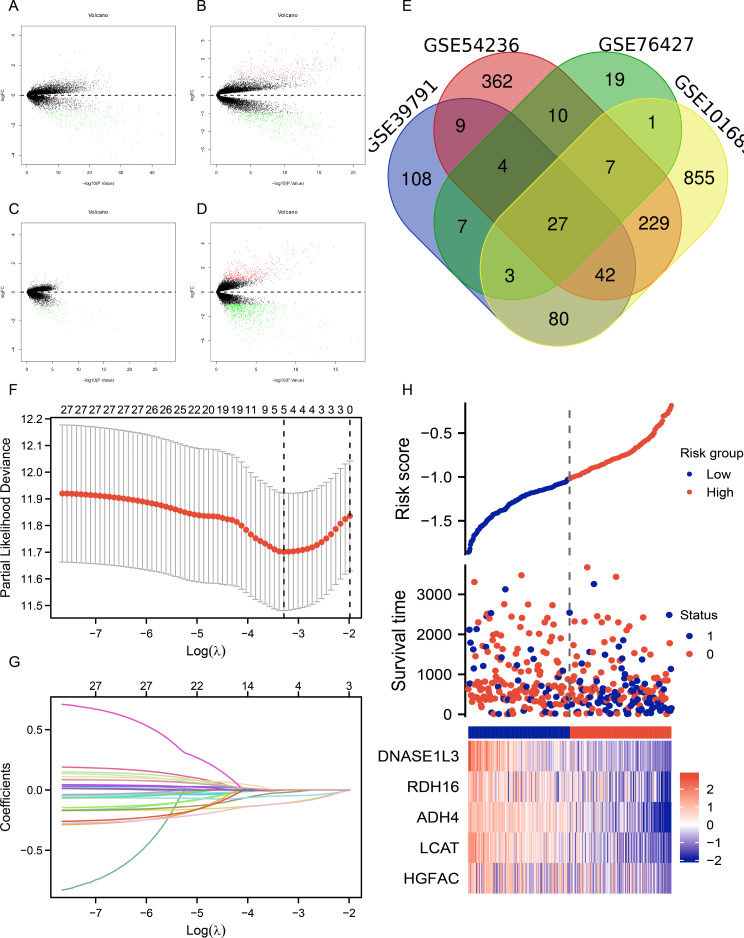
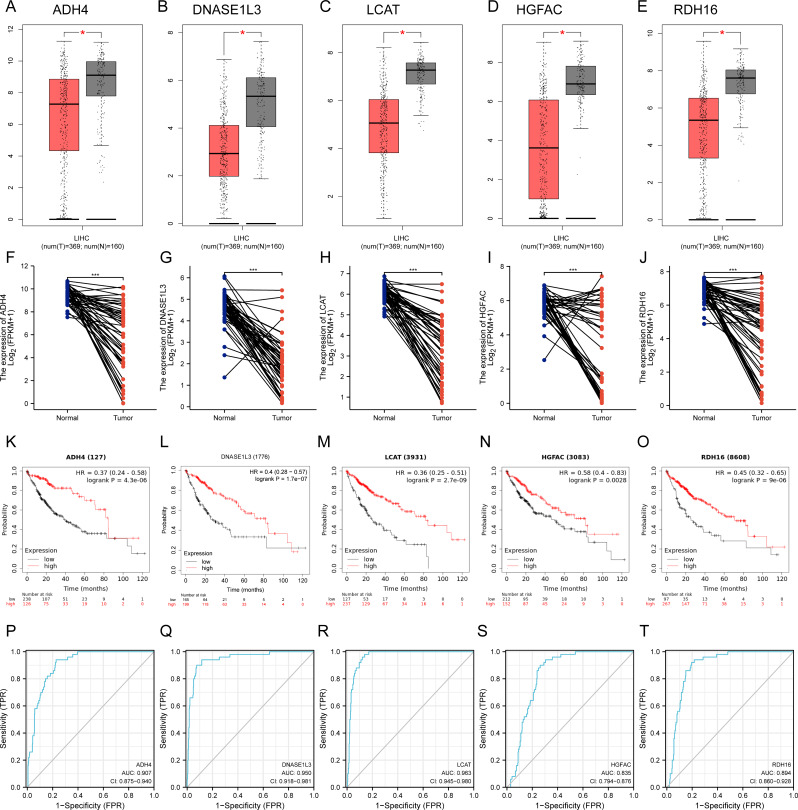
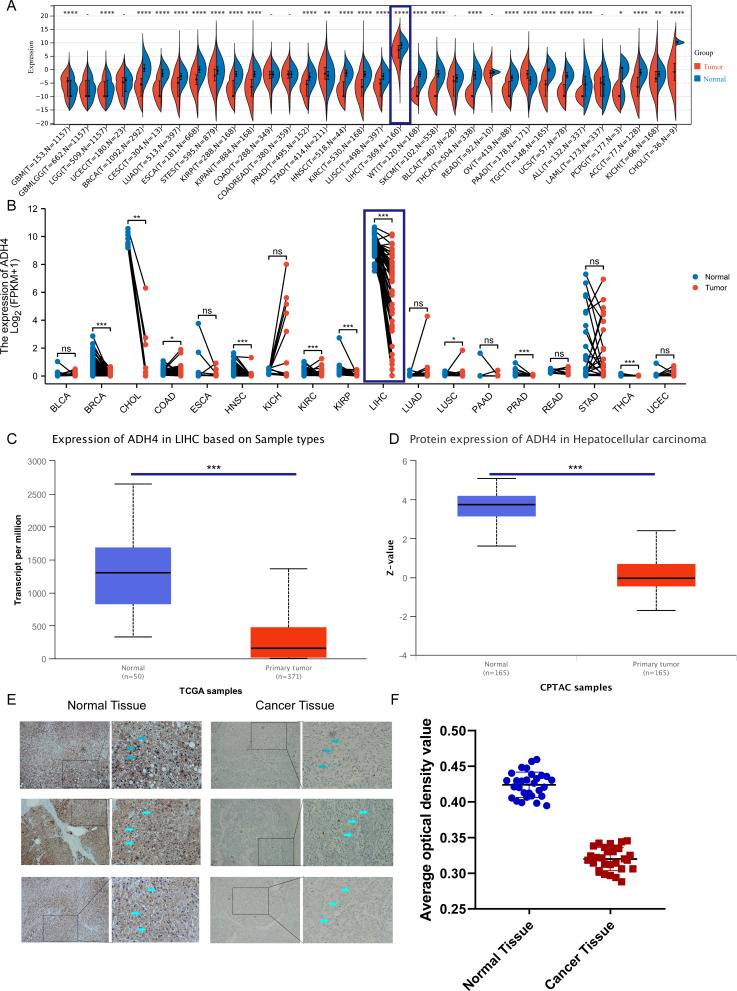
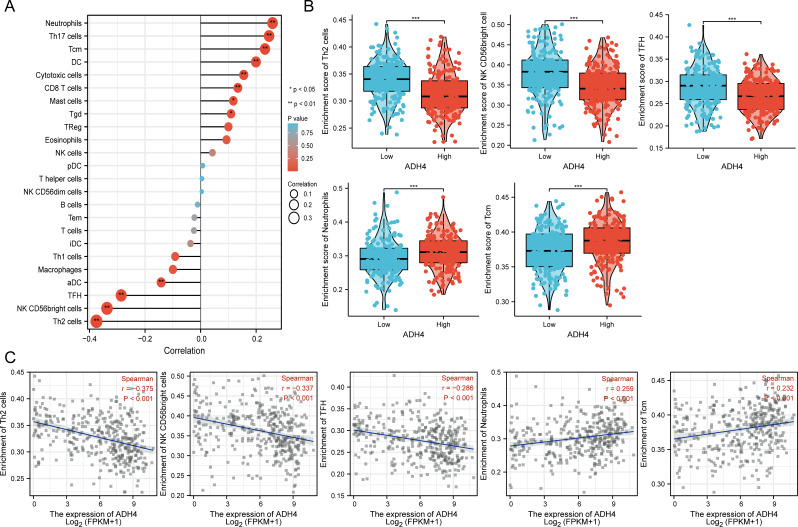
HCC prognostic marker genes were rigorously selected using GEO database, Lasso regression, GEPIA, Kaplan-Meier and pROC analyses. The expression of interested markers (ADH4, DNASE1L3, RDH16, LCAT, HGFAC) in HCC and adjacent tissues was assessed by Immunohistochemistry (IHC). We observed that ADH4 exhibited low expression levels in liver cancer tissues and high expression levels in normal liver tissues. However, the remaining four genes did not manifest any statistically significant differences between hepatocellular carcinoma (HCC) tissue and adjacent non-cancerous tissue. Consequently, ADH4 became the primary focus of our research. ADH4 expression was validated by signed-rank tests and unpaired Wilcoxon rank sum tests across pan-cancer and HCC datasets. Clinical significance and associations with clinicopathological variables were determined using Kaplan-Meier, logistic regression and Cox analyses on TCGA data. The ADH4-related immune responses were explored by Spearman correlation analysis using TIMER2 data. CD68, CD4, and CD19 protein levels were confirmed by IHC in HCC and non-cancerous tissues.
ADH4 showed significant downregulation in various cancers, particularly in HCC. Moreover, low ADH4 expression was associated with clinicopathological variables and served as an independent prognostic marker for HCC patients. Additionally, ADH4 affects a variety of biochemical functions and may influence cancer development, prognosis, and treatment by binding to immune cells. Furthermore, at the immune level, the low expression pattern of ADH4 is TME-specific, indicating that ADH4 has the potential to be used as a target for cancer immunotherapy.
This study highlights the diagnostic, prognostic and immunomodulatory roles of ADH4 in HCC. ADH4 could serve as a valuable biomarker for HCC diagnosis and prognosis, as well as a potential target for immunotherapeutic interventions.
本研究旨在探讨 ADH4 在肝细胞癌(HCC)中的表达及其对预后的影响,以及其与免疫的相关性,以期为 HCC 的预后和治疗提供新的思路。
使用 GEO 数据库、Lasso 回归、GEPIA、Kaplan-Meier 和 pROC 分析严格筛选 HCC 预后标志物基因。采用免疫组织化学(IHC)检测 ADH4 等感兴趣标志物(ADH4、DNASE1L3、RDH16、LCAT、HGFAC)在 HCC 及癌旁组织中的表达。观察到 ADH4 在肝癌组织中表达水平较低,而在正常肝组织中表达水平较高。然而,其余四个基因在 HCC 组织和癌旁非肿瘤组织之间没有表现出任何统计学上的显著差异。因此,ADH4 成为我们研究的重点。在泛癌和 HCC 数据集上,通过符号秩检验和非配对 Wilcoxon 秩和检验验证 ADH4 的表达。使用 TCGA 数据进行 Kaplan-Meier、逻辑回归和 Cox 分析确定 ADH4 表达的临床意义和与临床病理变量的相关性。使用 TIMER2 数据进行 Spearman 相关分析探讨 ADH4 相关的免疫反应。在 HCC 和非肿瘤组织中通过 IHC 验证 CD68、CD4 和 CD19 蛋白水平。
ADH4 在多种癌症中表现出明显下调,特别是在 HCC 中。此外,低 ADH4 表达与临床病理变量相关,是 HCC 患者的独立预后标志物。此外,ADH4 通过与免疫细胞结合影响多种生化功能,可能影响癌症的发生、发展和治疗。此外,在免疫水平上,ADH4 的低表达模式是 TME 特异性的,表明 ADH4 有可能成为癌症免疫治疗的靶点。
本研究强调了 ADH4 在 HCC 中的诊断、预后和免疫调节作用。ADH4 可以作为 HCC 诊断和预后的有价值的生物标志物,以及免疫治疗干预的潜在靶点。