Jusic Amela, Erpapazoglou Zoi, Dalgaard Louise Torp, Lakkisto Päivi, de Gonzalo-Calvo David, Benczik Bettina, Ágg Bence, Ferdinandy Péter, Fiedorowicz Katarzyna, Schroen Blanche, Lazou Antigone, Devaux Yvan
HAYA Therapeutics SA, Route De La Corniche 6, SuperLab Suisse - Batiment Serine, 1066 Epalinges, Switzerland.
Cardiovascular Research Unit, Department of Precision Health, Luxembourg Institute of Health, 1445 Strassen, Luxembourg.
Mol Ther Nucleic Acids. 2024 Jun 26;35(3):102262. doi: 10.1016/j.omtn.2024.102262. eCollection 2024 Sep 10.
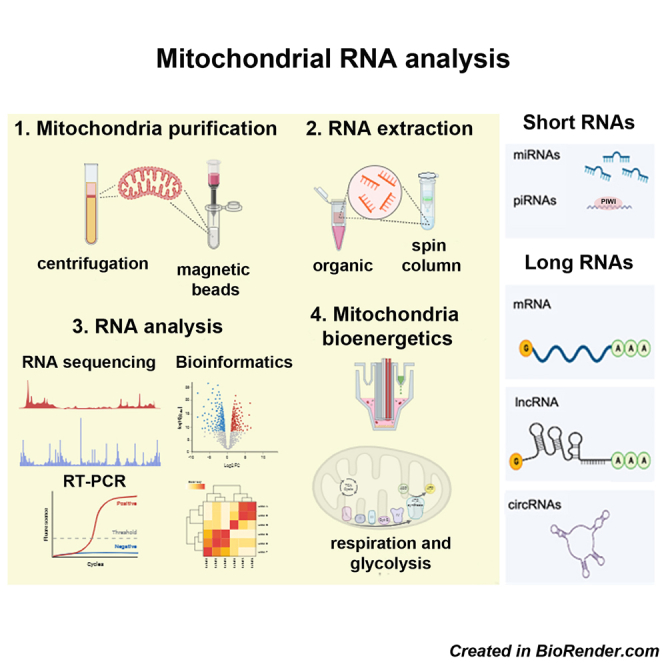
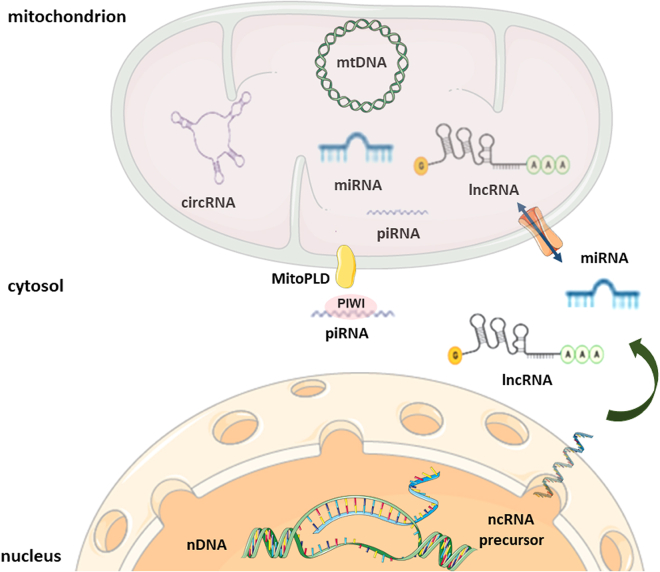
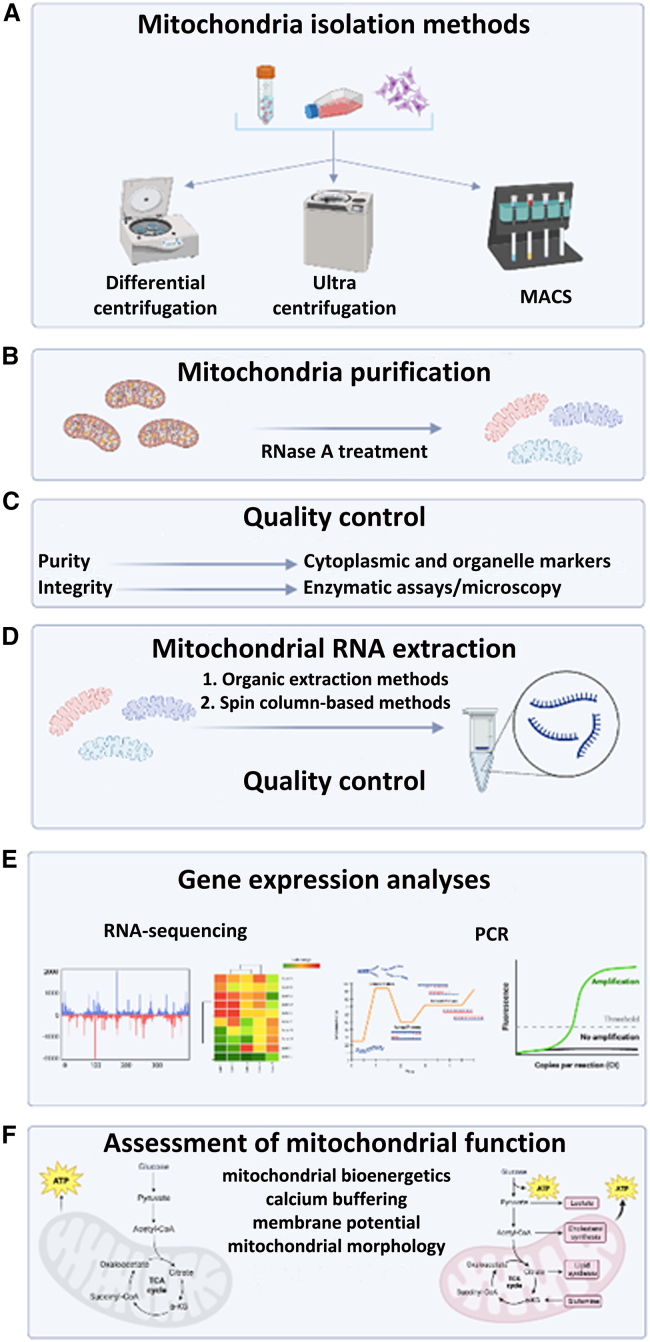
Mitochondria are the energy-producing organelles of mammalian cells with critical involvement in metabolism and signaling. Studying their regulation in pathological conditions may lead to the discovery of novel drugs to treat, for instance, cardiovascular or neurological diseases, which affect high-energy-consuming cells such as cardiomyocytes, hepatocytes, or neurons. Mitochondria possess both protein-coding and noncoding RNAs, such as microRNAs, long noncoding RNAs, circular RNAs, and piwi-interacting RNAs, encoded by the mitochondria or the nuclear genome. Mitochondrial RNAs are involved in anterograde-retrograde communication between the nucleus and mitochondria and play an important role in physiological and pathological conditions. Despite accumulating evidence on the presence and biogenesis of mitochondrial RNAs, their study continues to pose significant challenges. Currently, there are no standardized protocols and guidelines to conduct deep functional characterization and expression profiling of mitochondrial RNAs. To overcome major obstacles in this emerging field, the EU-CardioRNA and AtheroNET COST Action networks summarize currently available techniques and emphasize critical points that may constitute sources of variability and explain discrepancies between published results. Standardized methods and adherence to guidelines to quantify and study mitochondrial RNAs in normal and disease states will improve research outputs, their reproducibility, and translation potential to clinical application.
线粒体是哺乳动物细胞中产生能量的细胞器,在代谢和信号传导中起着关键作用。研究它们在病理条件下的调控机制,可能会发现新型药物来治疗,例如,心血管疾病或神经疾病,这些疾病会影响高耗能细胞,如心肌细胞、肝细胞或神经元。线粒体既拥有由线粒体或核基因组编码的蛋白质编码RNA,也拥有非编码RNA,如微小RNA、长链非编码RNA、环状RNA和piwi相互作用RNA。线粒体RNA参与细胞核与线粒体之间的顺行-逆行通讯,并在生理和病理条件下发挥重要作用。尽管关于线粒体RNA的存在和生物发生的证据不断积累,但对其研究仍然面临重大挑战。目前,尚无标准化的方案和指南来对线粒体RNA进行深入的功能表征和表达谱分析。为了克服这一新兴领域的主要障碍,欧盟-心脏RNA和动脉粥样硬化网络成本行动网络总结了目前可用的技术,并强调了可能构成变异性来源并解释已发表结果之间差异的关键点。在正常和疾病状态下,采用标准化方法并遵循指南来定量和研究线粒体RNA,将提高研究产出、其可重复性以及向临床应用转化的潜力。