Menzies Institute for Medical Research, University of Tasmania, Hobart, TAS, Australia.
Melbourne Bioinformatics, University of Melbourne, Parkville, VIC, Australia.
Sci Rep. 2024 Aug 2;14(1):17877. doi: 10.1038/s41598-024-66488-x.
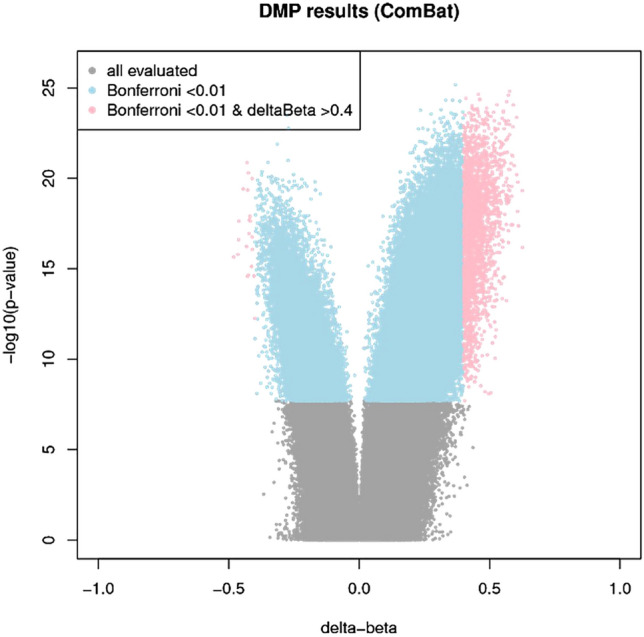
Differentially methylated CpG sites (dmCpGs) that distinguish prostate tumour from adjacent benign tissue could aid in the diagnosis and prognosis of prostate cancer. Previously, the identification of such dmCpGs has only been undertaken in radical prostatectomy (RP) samples and not primary diagnostic tumour samples (needle biopsy or transurethral resection of the prostate). We interrogated an Australian dataset comprising 125 tumour and 43 adjacent histologically benign diagnostic tissue samples, including 41 paired samples, using the Infinium Human Methylation450 BeadChip. Regression analyses of paired tumour and adjacent benign samples identified 2,386 significant dmCpGs (Bonferroni p < 0.01; delta-β ≥ 40%), with LASSO regression selecting 16 dmCpGs that distinguished tumour samples in the full Australian diagnostic dataset (AUC = 0.99). Results were validated in independent North American (n = 19; AUC = 0.87) and The Cancer Genome Atlas (TCGA; n = 50; AUC = 0.94) RP datasets. Two of the 16 dmCpGs were in genes that were significantly down-regulated in Australian tumour samples (Bonferroni p < 0.01; GSTM2 and PRKCB). Ten additional dmCpGs distinguished low (n = 34) and high Gleason (n = 88) score tumours in the diagnostic Australian dataset (AUC = 0.95), but these performed poorly when applied to the RP datasets (North American: AUC = 0.66; TCGA: AUC = 0.62). The DNA methylation marks identified here could augment and improve current diagnostic tests and/or form the basis of future prognostic tests.
区分前列腺肿瘤与相邻良性组织的差异甲基化 CpG 位点(dmCpGs)可辅助前列腺癌的诊断和预后。此前,此类 dmCpGs 的鉴定仅在根治性前列腺切除术(RP)样本中进行,而不在原发性诊断肿瘤样本(如前列腺针吸活检或经尿道前列腺切除术)中进行。我们利用 Infinium Human Methylation450 BeadChip 对包括 41 对样本在内的来自澳大利亚的 125 个肿瘤和 43 个相邻组织学良性诊断样本的数据集进行了分析。对配对的肿瘤和相邻良性样本进行回归分析,确定了 2386 个具有统计学意义的 dmCpGs(Bonferroni p<0.01;delta-β≥40%),LASSO 回归选择了 16 个 dmCpGs 来区分澳大利亚全诊断数据集(AUC=0.99)中的肿瘤样本。在独立的北美(n=19;AUC=0.87)和癌症基因组图谱(TCGA;n=50;AUC=0.94)RP 数据集上对结果进行了验证。在澳大利亚肿瘤样本中,有两个 dmCpGs 位于显著下调的基因(Bonferroni p<0.01;GSTM2 和 PRKCB)中。另外 10 个 dmCpGs 可区分澳大利亚诊断数据集中低(n=34)和高(n=88)Gleason 评分的肿瘤(AUC=0.95),但在 RP 数据集中表现不佳(北美:AUC=0.66;TCGA:AUC=0.62)。这里鉴定的 DNA 甲基化标记可增强和改进当前的诊断测试,并/或成为未来预后测试的基础。