Morsli Madjid, Gimenez Elise, Magnan Chloé, Salipante Florian, Huberlant Stéphanie, Letouzey Vincent, Lavigne Jean-Philippe
VBIC, INSERM U1047, Department of Microbiology and Hospital Hygiene, University of Montpellier, CHU Nîmes, Nîmes, France.
Department of Gynecology and Obstetrics, University of Montpellier, CHU Nîmes, Nîmes, France.
Eur J Clin Microbiol Infect Dis. 2024 Oct;43(10):1869-1881. doi: 10.1007/s10096-024-04915-7. Epub 2024 Aug 3.
The vaginal microbiota offers valuable insights into women's sexual health and the risk of developing sexually transmitted infections (STIs) and bacterial vaginosis. Despite the public health implications of changes in the vaginal environment, existing data on this topic remain sparse.
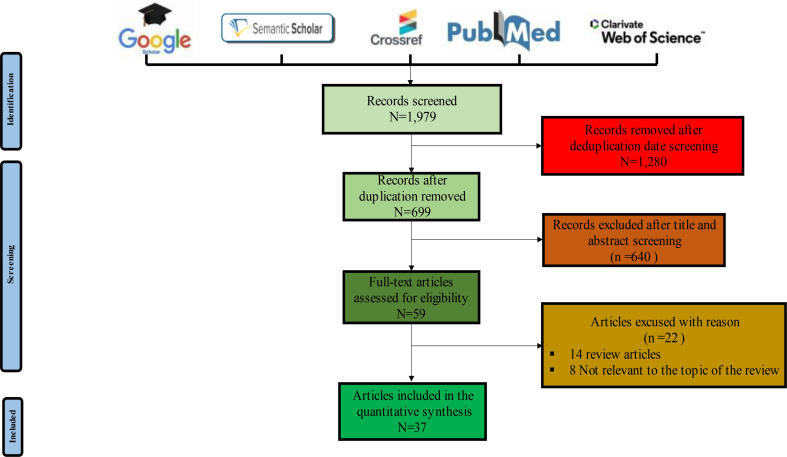
Following the PRISMA statement guidelines, we consulted five bibliographic databases, focusing on five main daily habits and behaviors. We included only studies published up to October 2023, investigating the influence of personal hygiene, sexual behaviors, hormonal contraception, smoking, alcohol consumption, and psychosocial stress on the vaginal microbiota using next-generation sequencing.
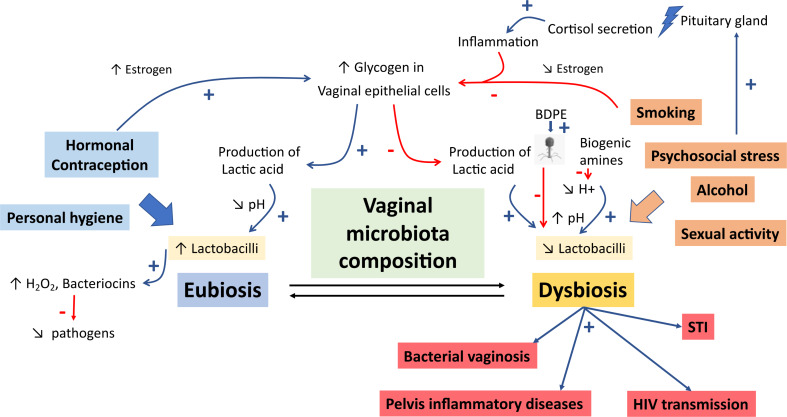
Based on our inclusion criteria, we incorporated 37 studies into this review. Hormonal contraception and personal hygiene were found to promote eubiosis of the vaginal microbiota. In contrast, sexual behaviors, smoking, alcohol consumption, and psychosocial stress were associated with an increased susceptibility to bacterial vaginosis, STIs, and severe pelvic inflammatory diseases due to a modified vaginal microbiota. Black ethnicity emerged as a confounding factor, with this population showing unstable vaginal microbiota. Oral contraception and a stable male sexual partner were found to favor Lactobacillus colonization, acting as a protective factor. Conversely, non-hormonal contraception and unprotected or non-penile/vaginal sexual activity increased the incidence of vaginal inflammation and bacterial vaginosis by disturbing the vaginal microbiota and reducing Lactobacillus abundance.
Daily habits and lifestyle can influence the composition of the vaginal microbiota, thereby affecting vaginal health. Disturbances in the vaginal microbiota could be associated factors for STIs and vaginosis. Therefore, prioritizing more appropriate management of the vaginal microbiota is crucial.
阴道微生物群为了解女性性健康以及性传播感染(STIs)和细菌性阴道病的发病风险提供了有价值的见解。尽管阴道环境变化对公共卫生有影响,但关于这一主题的现有数据仍然稀少。
遵循PRISMA声明指南,我们查阅了五个文献数据库,重点关注五种主要的日常习惯和行为。我们仅纳入截至2023年10月发表的研究,这些研究使用下一代测序技术调查个人卫生、性行为、激素避孕、吸烟、饮酒和心理社会压力对阴道微生物群的影响。
根据我们的纳入标准,我们将37项研究纳入本综述。发现激素避孕和个人卫生可促进阴道微生物群的健康状态。相比之下,性行为、吸烟、饮酒和心理社会压力与因阴道微生物群改变而导致的细菌性阴道病、性传播感染和严重盆腔炎易感性增加有关。黑人种族是一个混杂因素,该人群的阴道微生物群显示不稳定。口服避孕药和稳定的男性性伴侣有利于乳酸杆菌定植,起到保护作用。相反,非激素避孕以及无保护或非阴茎/阴道性行为会通过扰乱阴道微生物群和降低乳酸杆菌丰度而增加阴道炎症和细菌性阴道病的发生率。
日常习惯和生活方式会影响阴道微生物群的组成,从而影响阴道健康。阴道微生物群的紊乱可能是性传播感染和阴道病的相关因素。因此,优先对阴道微生物群进行更适当的管理至关重要。