Computational Genomics Lab, Beijing Institutes of Life Science, Chinese Academy of Sciences, Beijing, China.
Department of Gynecology and Obstetrics, Wenzhou People's Hospital/Wenzhou Maternal and Child Health Care Hospital, Zhejiang, China.
Gut. 2018 Sep;67(9):1614-1625. doi: 10.1136/gutjnl-2018-315988. Epub 2018 May 14.
The initial colonisation of the human microbiota and the impact of maternal health on neonatal microbiota at birth remain largely unknown. The aim of our study is to investigate the possible dysbiosis of maternal and neonatal microbiota associated with gestational diabetes mellitus (GDM) and to estimate the potential risks of the microbial shift to neonates.
Pregnant women and neonates suffering from GDM were enrolled and 581 maternal (oral, intestinal and vaginal) and 248 neonatal (oral, pharyngeal, meconium and amniotic fluid) samples were collected. To avoid vaginal bacteria contaminations, the included neonates were predominantly delivered by C-section, with their samples collected within seconds of delivery.
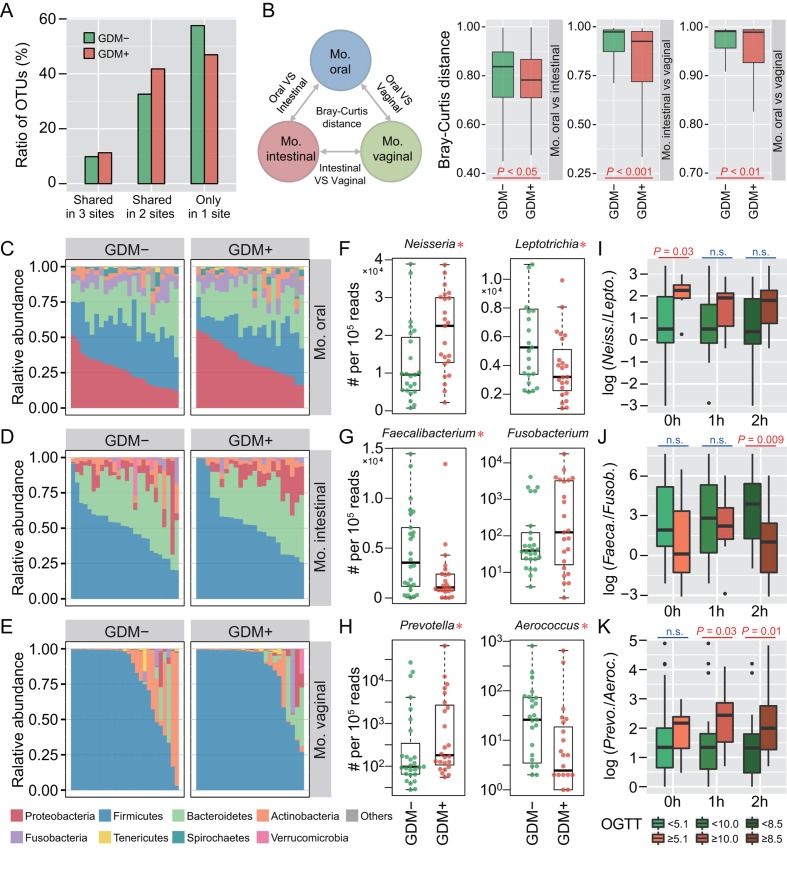
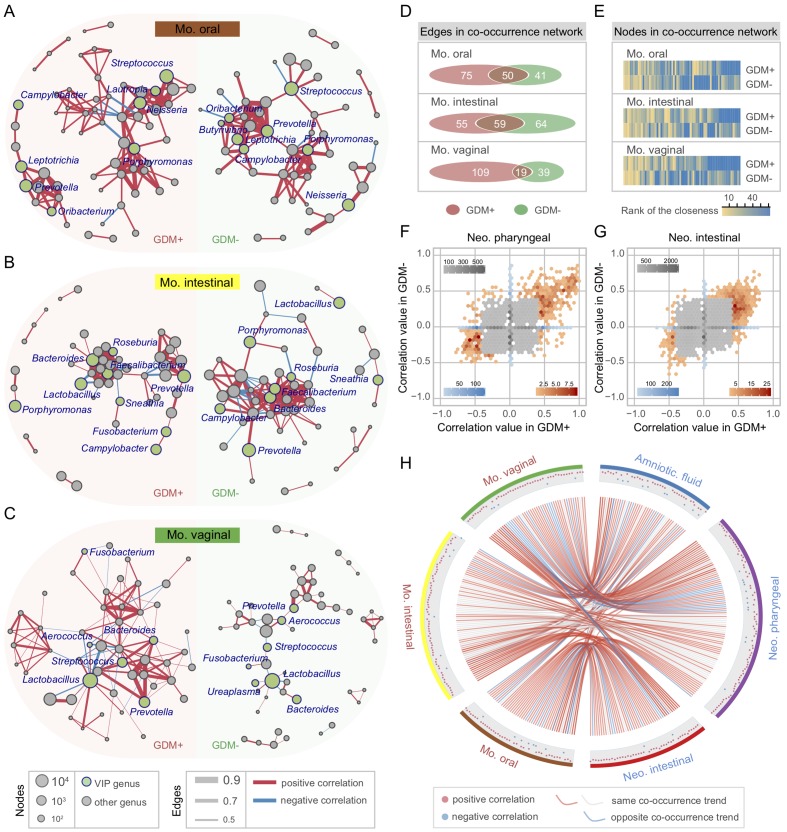
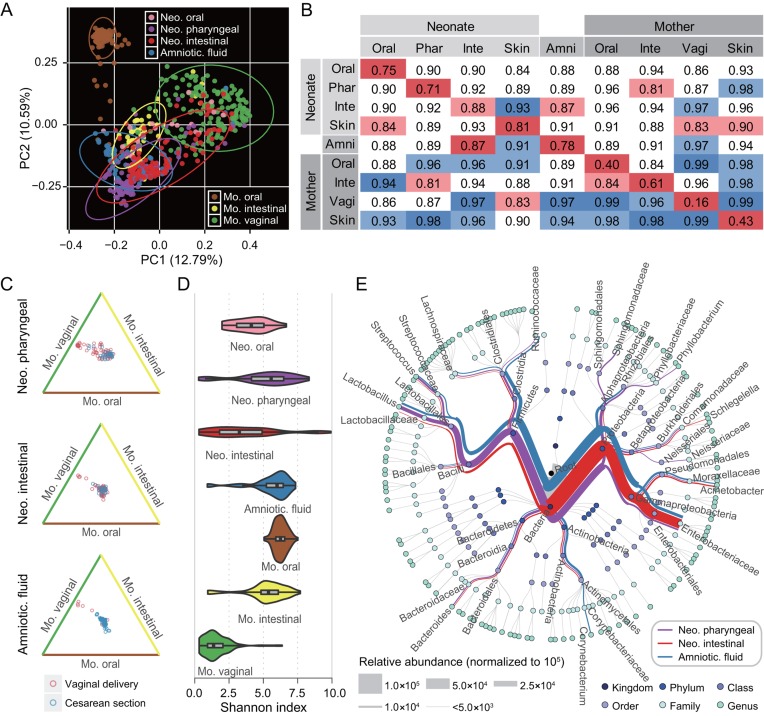
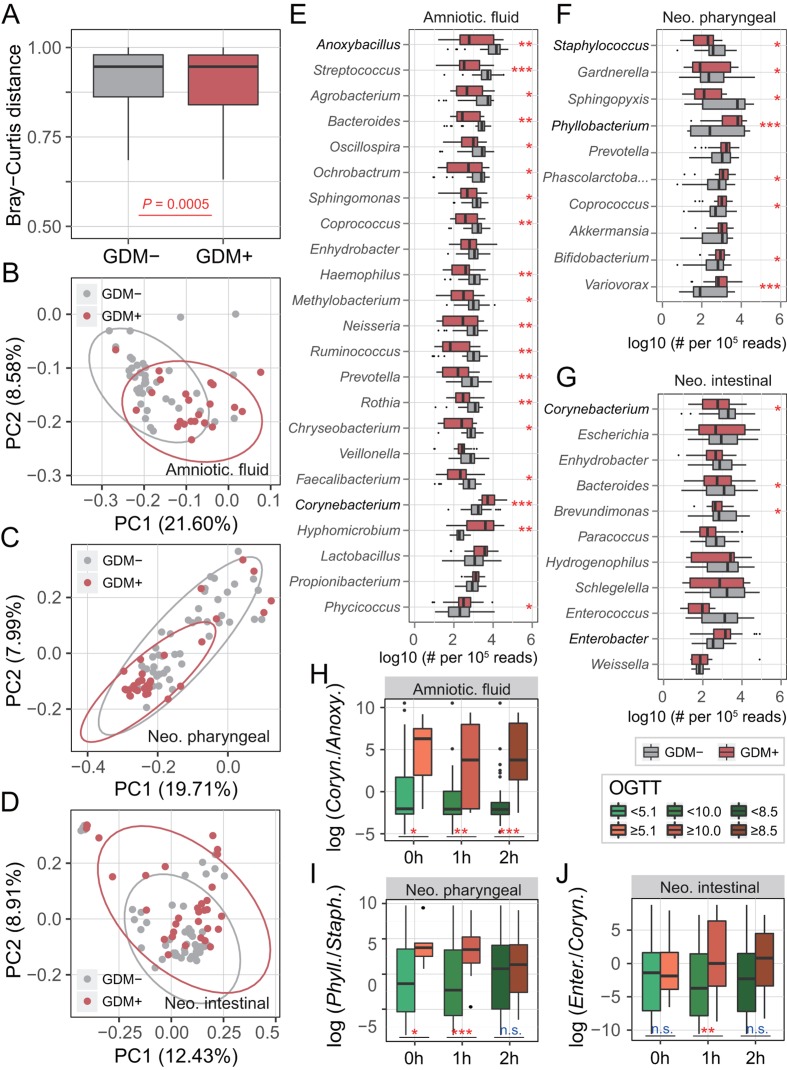
Numerous and diverse bacterial taxa were identified from the neonatal samples, and the samples from different neonatal body sites were grouped into distinct clusters. The microbiota of pregnant women and neonates was remarkably altered in GDM, with a strong correlation between certain discriminatory bacteria and the oral glucose tolerance test. Microbes varying by the same trend across the maternal and neonatal microbiota were observed, revealing the intergenerational concordance of microbial variation associated with GDM. Furthermore, lower evenness but more depletion of KEGG orthologues and higher abundance of some viruses (eg, herpesvirus and mastadenovirus) were observed in the meconium microbiota of neonates associated with GDM.
GDM can alter the microbiota of both pregnant women and neonates at birth, which sheds light on another form of inheritance and highlights the importance of understanding the formation of early-life microbiome.
人类微生物组的初始定植以及母体健康对新生儿出生时微生物组的影响在很大程度上尚不清楚。本研究旨在调查与妊娠期糖尿病(GDM)相关的母体和新生儿微生物组可能出现的失调,并估计微生物向新生儿转移的潜在风险。
纳入患有 GDM 的孕妇和新生儿,采集了 581 份母体(口腔、肠道和阴道)和 248 份新生儿(口腔、咽、胎粪和羊水)样本。为了避免阴道细菌污染,纳入的新生儿主要通过剖宫产分娩,在分娩后几秒钟内采集其样本。
从新生儿样本中鉴定出了大量多样的细菌类群,来自不同新生儿身体部位的样本被分为不同的聚类。GDM 显著改变了孕妇和新生儿的微生物组,某些有区别性的细菌与口服葡萄糖耐量试验之间存在强烈相关性。在母体和新生儿微生物组中观察到沿相同趋势变化的微生物,揭示了与 GDM 相关的微生物变异的代际一致性。此外,与 GDM 相关的新生儿胎粪微生物组中观察到均匀度降低但 KEGG 直系同源物耗竭更多,以及某些病毒(例如疱疹病毒和巨细胞病毒)丰度更高。
GDM 可改变孕妇和新生儿出生时的微生物组,这提示了另一种形式的遗传,并强调了理解生命早期微生物组形成的重要性。