Centre for Ecology and Conservation, Faculty of Environment, Science and Economy, University of Exeter, Penryn Campus, Cornwall, UK.
Centre of Excellence for Data Science, Artificial Intelligence and Modelling and Department of Biology, University of Hull, Hull, UK.
Nat Commun. 2024 Aug 3;15(1):6583. doi: 10.1038/s41467-024-50621-5.
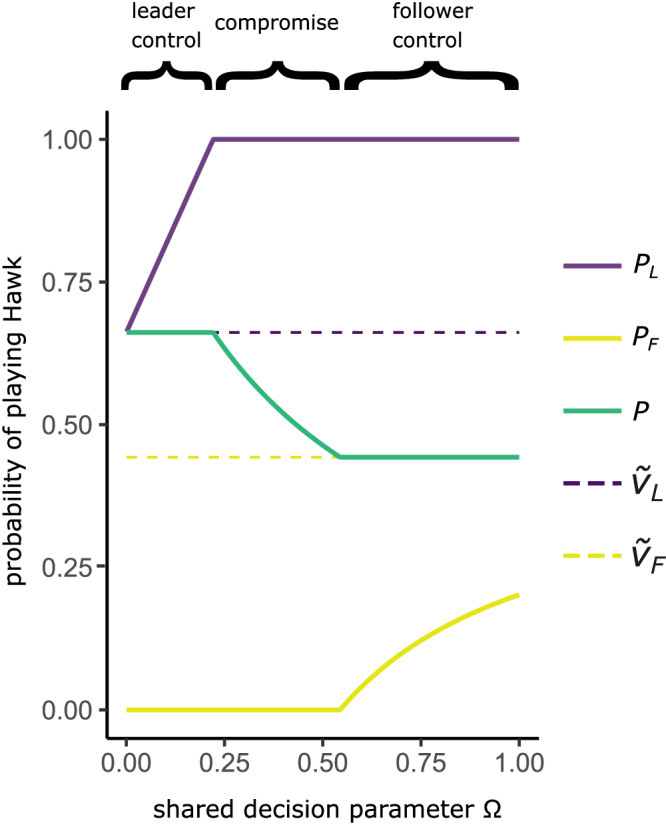
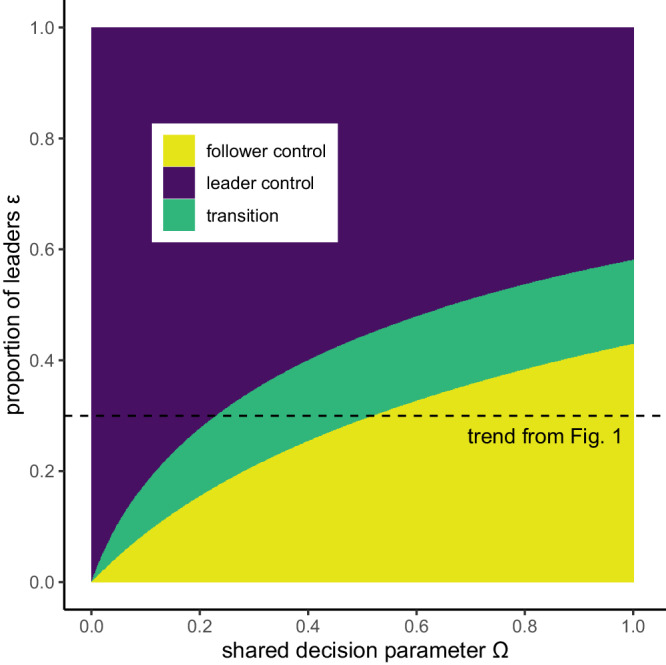
A major goal in evolutionary biology is to elucidate common principles that drive human and other animal societies to adopt either a warlike or peaceful nature. One proposed explanation for the variation in aggression between human societies is the democratic peace hypothesis. According to this theory, autocracies are more warlike than democracies because autocratic leaders can pursue fights for private gain. However, autocratic and democratic decision-making processes are not unique to humans and are widely observed across a diverse range of non-human animal societies. We use evolutionary game theory to evaluate whether the logic of democratic peace may apply across taxa; specifically adapting the classic Hawk-Dove model to consider conflict decisions made by groups rather than individuals. We find support for the democratic peace hypothesis without mechanisms involving complex human institutions and discuss how these findings might be relevant to non-human animal societies. We suggest that the degree to which collective decisions are shared may explain variation in the intensity of intergroup conflict in nature.
进化生物学的一个主要目标是阐明共同的原则,这些原则驱使人类和其他动物社会采取好战或和平的本性。人类社会之间攻击性差异的一个解释是民主和平假说。根据这一理论,独裁政权比民主政权更具有好战性,因为独裁领导人可以为了私人利益而发动战争。然而,独裁和民主的决策过程并不是人类所特有的,在广泛的非人类动物社会中也有广泛的观察。我们使用进化博弈论来评估民主和平的逻辑是否适用于分类群;具体来说,我们改编了经典的鹰鸽模型来考虑由群体而不是个人做出的冲突决策。我们没有涉及复杂的人类制度的机制支持民主和平假说,并讨论这些发现如何与非人类动物社会相关。我们认为,集体决策的共享程度可能解释了自然界中群体间冲突强度的变化。