School of Sustainability, Arizona State University, Tempe, Arizona, United States of America.
School of Music, Dance and Theatre, Arizona State University, Tempe, Arizona, United States of America.
PLoS One. 2024 Aug 5;19(8):e0308363. doi: 10.1371/journal.pone.0308363. eCollection 2024.
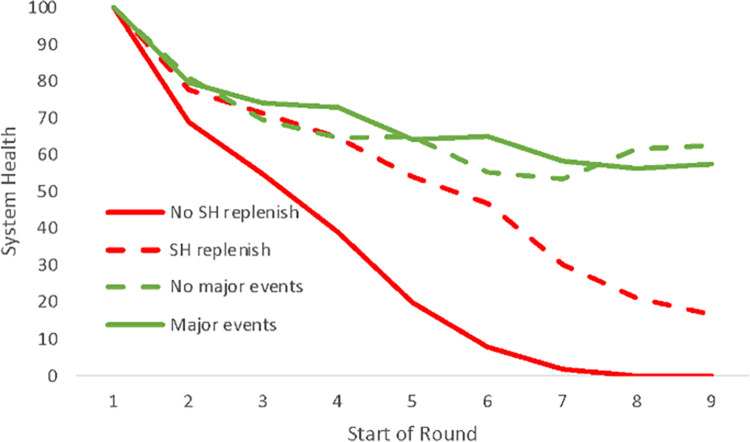
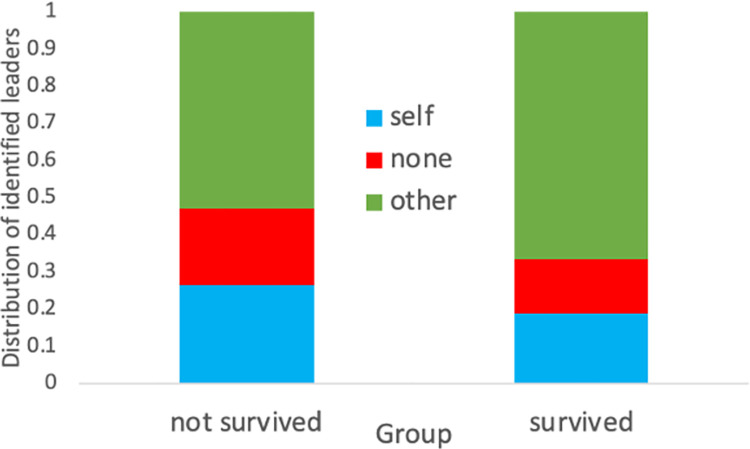
There is limited research about how groups solve collective action problems in uncertain environments, especially if groups are confronted with unknown unknowns. We aim to develop a more comprehensive view of the characteristics that allow both groups and individuals to navigate such issues more effectively. In this article, we present the results of a new online experiment where individuals make decisions of whether to contribute to the group or pursue self-interest in an environment with high uncertainty, including unknown unknowns. The behavioral game, Port of Mars is framed as a first-generation habitat on Mars where participants have to make decisions on how much to invest in the shared infrastructure to maintain system health and how much to invest in personal goals. Participants can chat during the game, and take surveys before and after the game in order to measure personality attributes and observations from the game. Initial results suggest that a higher average social value orientation and more communication are the key factors that explain why some groups are more successful than others in surviving Port of Mars. Neither other attributes of players nor the group's communication content explain the observed differences between groups.
关于群体如何在不确定环境中解决集体行动问题的研究有限,特别是当群体面临未知的未知时。我们旨在更全面地了解使群体和个人能够更有效地应对这些问题的特征。在本文中,我们介绍了一项新的在线实验的结果,在该实验中,个体会在一个高度不确定的环境中做出是为群体做出贡献还是追求自身利益的决策,包括未知的未知。行为游戏“火星港”被构造成火星上的第一代栖息地,参与者必须决定在维持系统健康的共享基础设施上投资多少,以及在个人目标上投资多少。参与者可以在游戏过程中聊天,并在游戏前后进行调查,以测量人格属性和游戏中的观察结果。初步结果表明,更高的平均社会价值取向和更多的沟通是一些群体比其他群体更成功地在“火星港”中生存的关键因素。玩家的其他属性以及群体的沟通内容都不能解释观察到的群体之间的差异。