Ghosh Subhrojyoti, Rajendran Ramya Lakshmi, Mahajan Atharva A, Chowdhury Ankita, Bera Aishi, Guha Sudeepta, Chakraborty Kashmira, Chowdhury Rajanyaa, Paul Aritra, Jha Shreya, Dey Anuvab, Dubey Amit, Gorai Sukhamoy, Das Purbasha, Hong Chae Moon, Krishnan Anand, Gangadaran Prakash, Ahn Byeong-Cheol
Department of Biotechnology, Indian Institute of Technology, Madras, Chennai, 600036, India.
Department of Nuclear Medicine, School of Medicine, Kyungpook National University, Daegu, 41944, Republic of Korea.
Cancer Cell Int. 2024 Aug 7;24(1):278. doi: 10.1186/s12935-024-03464-5.
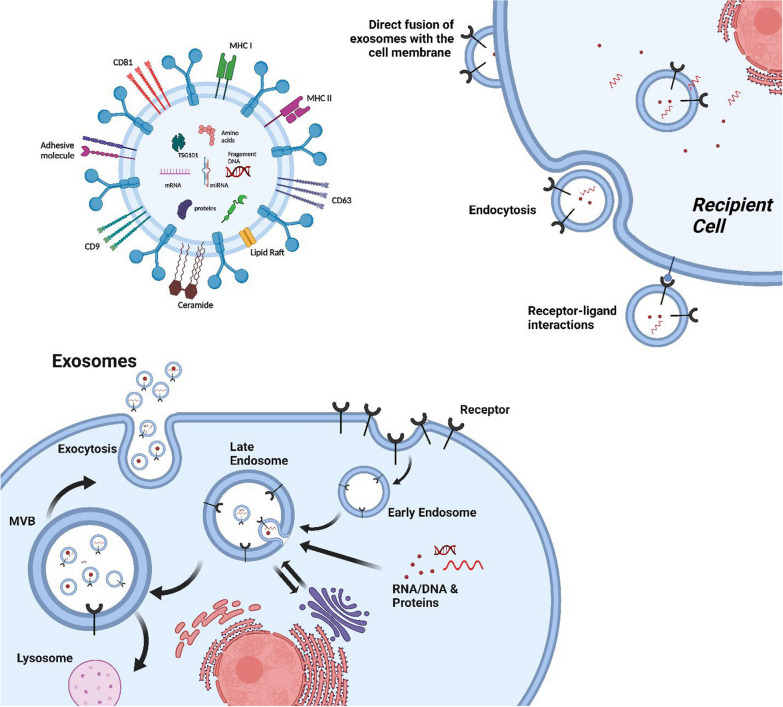
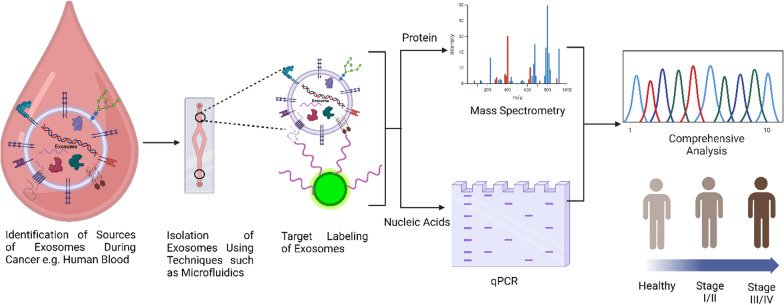
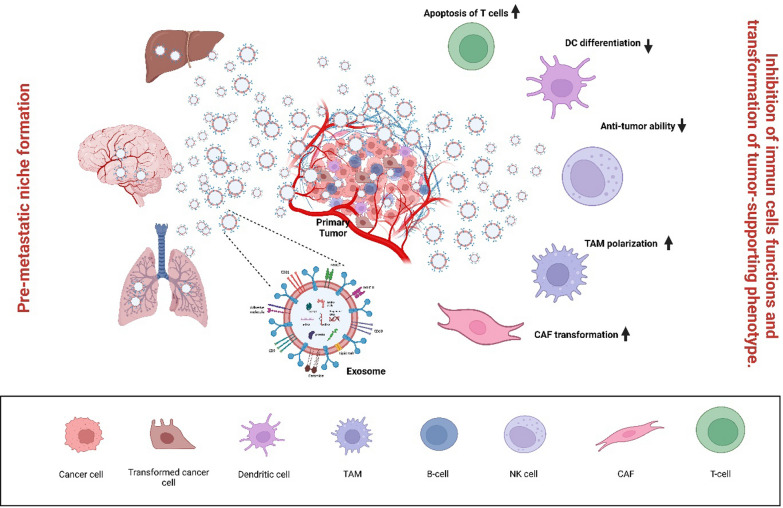
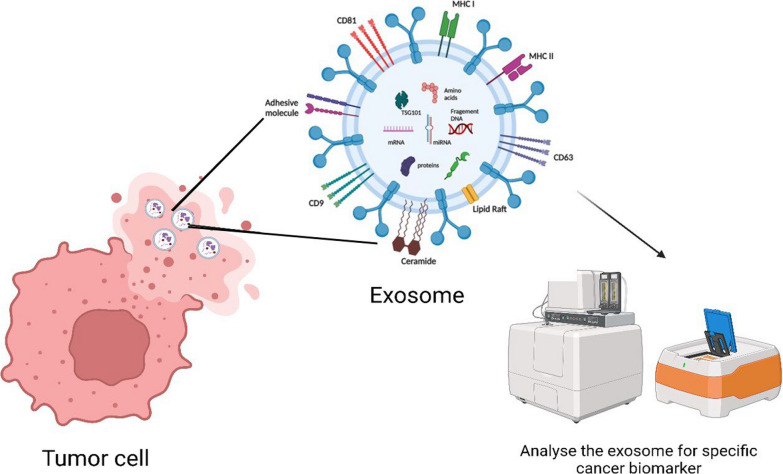
Exosomes are extracellular vesicles well known for facilitating cell-to-cell communication by distributing essential macromolecules like proteins, DNA, mRNA, lipids, and miRNA. These vesicles are abundant in fluids distributed throughout the body, including urine, blood, saliva, and even bile. They are important diagnostic tools for breast, lung, gastrointestinal cancers, etc. However, their application as cancer biomarkers has not yet been implemented in most parts of the world. In this review, we discuss how OMICs profiling of exosomes can be practiced by substituting traditional imaging or biopsy methods for cancer detection. Previous methods like extensive imaging and biopsy used for screening were expensive, mostly invasive, and could not easily provide early detection for various types of cancer. Exosomal biomarkers can be utilized for routine screening by simply collecting body fluids from the individual. We anticipate that the use of exosomes will be brought to light by the success of clinical trials investigating their potential to enhance cancer detection and treatment in the upcoming years.
外泌体是一种细胞外囊泡,因其通过分布蛋白质、DNA、mRNA、脂质和miRNA等重要大分子来促进细胞间通讯而闻名。这些囊泡在遍布全身的液体中大量存在,包括尿液、血液、唾液甚至胆汁。它们是乳腺癌、肺癌、胃肠道癌等的重要诊断工具。然而,它们作为癌症生物标志物的应用在世界大部分地区尚未得到实施。在这篇综述中,我们讨论了如何通过用外泌体的组学分析替代传统的成像或活检方法来进行癌症检测。以前用于筛查的广泛成像和活检等方法昂贵,大多具有侵入性,并且不容易对各种类型的癌症进行早期检测。外泌体生物标志物可以通过简单地从个体收集体液用于常规筛查。我们预计,在未来几年,随着研究外泌体增强癌症检测和治疗潜力的临床试验取得成功,外泌体的应用将被广泛关注。