Varadharajan Venkatramanan, Balu Ashwath Kumar, Shiju Atul, Muthuramalingam Pandiyan, Shin Hyunsuk, Venkidasamy Baskar, Alharbi Naiyf S, Kadaikunnan Shine, Thiruvengadam Muthu
Department of Biotechnology, PSG College of Technology, Peelamedu, Coimbatore, India.
Division of Horticultural Science, College of Agriculture and Life Sciences, Gyeongsang National University, Jinju 52725, Korea.
Int J Med Sci. 2024 Jul 22;21(10):1915-1928. doi: 10.7150/ijms.98393. eCollection 2024.
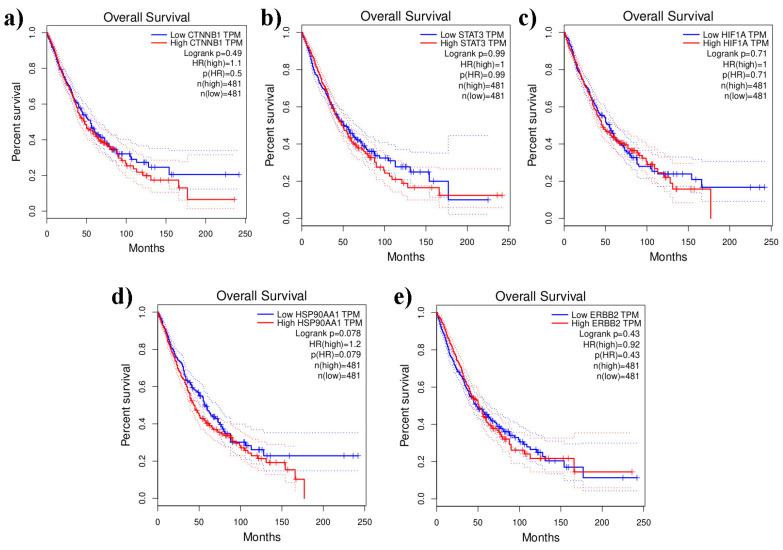
Lung cancer, characterized by uncontrolled cellular proliferation within the lung tissues, is the predominant cause of cancer-related fatalities worldwide. The traditional medicinal herb has emerged as a significant contender in oncological research because of its documented anticancer attributes, suggesting its potential for novel therapeutic development. This study adopted network pharmacology and omics methodology to elucidate the anti-lung cancer potential of by identifying its bioactive constituents and their corresponding molecular targets. Through a comprehensive literature review and the Integrated Medicinal Plant Phytochemistry and Therapeutics database (IMPPAT), we identified 33 bioactive molecules from . Subsequent analyses employing tools such as SwissTargetPrediction, SuperPred, and DIGEP-Pred facilitated the isolation of 676 potential targets, among which 72 intersected with 666 lung cancer-associated genetic markers identified through databases including the Therapeutic Target Database (TTD), Online Mendelian Inheritance in Man (OMIM), and GeneCards. Further validation through protein-protein interaction (PPI) networks, gene ontology, pathway analyses, boxplots, and overall survival metrics underscored the therapeutic potential of compounds such as 7-epi-eudesm-4(15)-ene-1β, demethoxypiplartine, methyl 3,4,5-trimethoxycinnamate, 6-alpha-diol, and aristolodione. Notably, our findings reaffirm the relevance of lung cancer genes, such as CTNNB1, STAT3, HIF1A, HSP90AA1, and ERBB2, integral to various cellular processes and pivotal in cancer genesis and advancement. Molecular docking assessments revealed pronounced affinity between 6-alpha-diol and HIF1A, underscoring their potential as therapeutic agents for lung cancer. This study not only highlights the bioactive compounds of but also reinforces the molecular underpinnings of its anticancer mechanism, paving the way for future lung cancer therapeutics.
肺癌以肺组织内细胞的不受控制增殖为特征,是全球癌症相关死亡的主要原因。这种传统草药因其已被记录的抗癌特性,在肿瘤学研究中成为了一个重要的竞争者,这表明它在新型治疗药物开发方面具有潜力。本研究采用网络药理学和组学方法,通过鉴定其生物活性成分及其相应的分子靶点,来阐明该草药的抗肺癌潜力。通过全面的文献综述以及综合药用植物植物化学与治疗数据库(IMPPAT),我们从该草药中鉴定出33种生物活性分子。随后使用诸如SwissTargetPrediction、SuperPred和DIGEP-Pred等工具进行的分析,促成了676个潜在靶点的分离,其中72个与通过包括治疗靶点数据库(TTD)、人类在线孟德尔遗传(OMIM)和基因卡片等数据库鉴定出的666个肺癌相关遗传标记相交。通过蛋白质-蛋白质相互作用(PPI)网络、基因本体论、通路分析、箱线图和总生存指标进行的进一步验证,强调了诸如7-表-桉叶-4(15)-烯-1β、去甲氧基匹拉丁、3,4,5-三甲氧基肉桂酸甲酯、6-α-二醇和马兜铃二酮等化合物的治疗潜力。值得注意的是,我们的研究结果再次证实了肺癌相关基因的相关性,例如CTNNB1、STAT3、HIF1A、HSP90AA1和ERBB2,这些基因对于各种细胞过程不可或缺,并且在癌症的发生和发展中起关键作用。分子对接评估显示6-α-二醇与HIF1A之间具有显著亲和力,突出了它们作为肺癌治疗药物的潜力。本研究不仅突出了该草药的生物活性化合物,还强化了其抗癌机制的分子基础,为未来的肺癌治疗铺平了道路。