Department of Biological Sciences, Indian Institute of Science Education and Research Kolkata, Mohanpur, Nadia, West Bengal, 741246, India.
Department of Radiation Oncology, N. R. S. Medical College & Hospital, 138 A.J.C. Bose Road, Kolkata, 700014, India.
Mol Cancer. 2023 Feb 21;22(1):40. doi: 10.1186/s12943-023-01740-y.
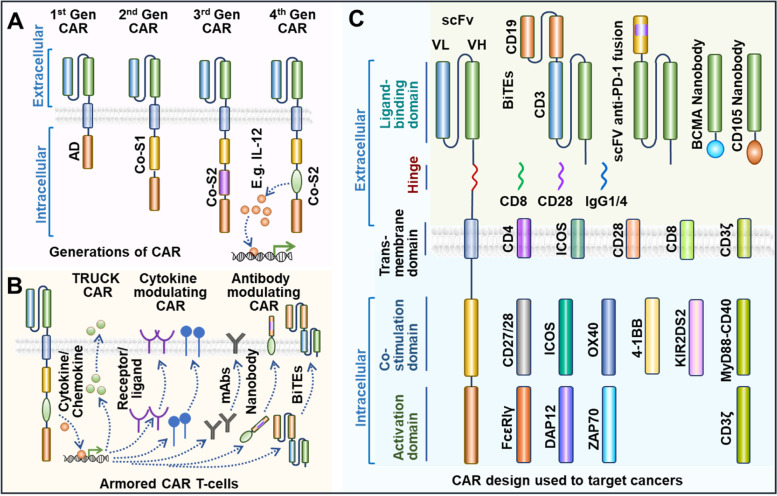
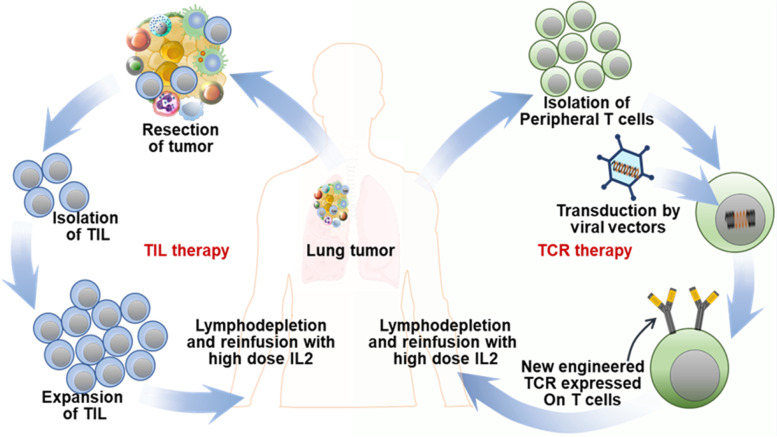
Lung cancer is the primary cause of mortality in the United States and around the globe. Therapeutic options for lung cancer treatment include surgery, radiation therapy, chemotherapy, and targeted drug therapy. Medical management is often associated with the development of treatment resistance leading to relapse. Immunotherapy is profoundly altering the approach to cancer treatment owing to its tolerable safety profile, sustained therapeutic response due to immunological memory generation, and effectiveness across a broad patient population. Different tumor-specific vaccination strategies are gaining ground in the treatment of lung cancer. Recent advances in adoptive cell therapy (CAR T, TCR, TIL), the associated clinical trials on lung cancer, and associated hurdles are discussed in this review. Recent trials on lung cancer patients (without a targetable oncogenic driver alteration) reveal significant and sustained responses when treated with programmed death-1/programmed death-ligand 1 (PD-1/PD-L1) checkpoint blockade immunotherapies. Accumulating evidence indicates that a loss of effective anti-tumor immunity is associated with lung tumor evolution. Therapeutic cancer vaccines combined with immune checkpoint inhibitors (ICI) can achieve better therapeutic effects. To this end, the present article encompasses a detailed overview of the recent developments in the immunotherapeutic landscape in targeting small cell lung cancer (SCLC) and non-small cell lung cancer (NSCLC). Additionally, the review also explores the implication of nanomedicine in lung cancer immunotherapy as well as the combinatorial application of traditional therapy along with immunotherapy regimens. Finally, ongoing clinical trials, significant obstacles, and the future outlook of this treatment strategy are also highlighted to boost further research in the field.
肺癌是美国和全球主要的死亡原因。肺癌的治疗选择包括手术、放射治疗、化疗和靶向药物治疗。医学管理通常与治疗耐药性的发展有关,导致复发。免疫疗法由于其可耐受的安全性、由于免疫记忆的产生而产生的持续治疗反应以及在广泛的患者群体中的有效性,正在深刻地改变癌症治疗方法。不同的肿瘤特异性疫苗策略在肺癌治疗中取得了进展。本文讨论了过继细胞治疗(CAR T、TCR、TIL)的最新进展、相关的肺癌临床试验以及相关的障碍。最近对(没有可靶向的致癌驱动改变的)肺癌患者进行的临床试验表明,当用程序性死亡-1/程序性死亡配体 1(PD-1/PD-L1)检查点阻断免疫疗法治疗时,会产生显著和持续的反应。越来越多的证据表明,有效的抗肿瘤免疫丧失与肺肿瘤的进化有关。联合使用治疗性癌症疫苗和免疫检查点抑制剂(ICI)可以获得更好的治疗效果。为此,本文详细概述了针对小细胞肺癌(SCLC)和非小细胞肺癌(NSCLC)的免疫治疗领域的最新进展。此外,还探讨了纳米医学在肺癌免疫治疗中的应用以及传统治疗与免疫治疗方案联合应用的意义。最后,还强调了正在进行的临床试验、重大障碍以及该治疗策略的未来展望,以推动该领域的进一步研究。