Xie Yiran, Zhao Fangqi, Wang Yiru, Borowski Sophia, Freitag Nancy, Tirado-Gonzalez Irene, Hofsink Naomi, Matschl Urte, Plösch Torsten, Garcia Mariana G, Blois Sandra M
Department of Obstetrics and Fetal Medicine, University Medical Center Hamburg-Eppendorf, Hamburg, Germany.
Charité - Universitätsmedizin Berlin, corporate member of Freie Universität Berlin and Humboldt-Universität zu Berlin, and Berlin Institute of Health (BIH) and Institute of Biochemistry, Berlin, Germany and Deutsches Zentrum für Herz-Kreislauf-Forschung (DZHK), partner site Berlin, Berlin, Germany.
Cell Death Dis. 2024 Aug 8;15(8):575. doi: 10.1038/s41419-024-06962-6.
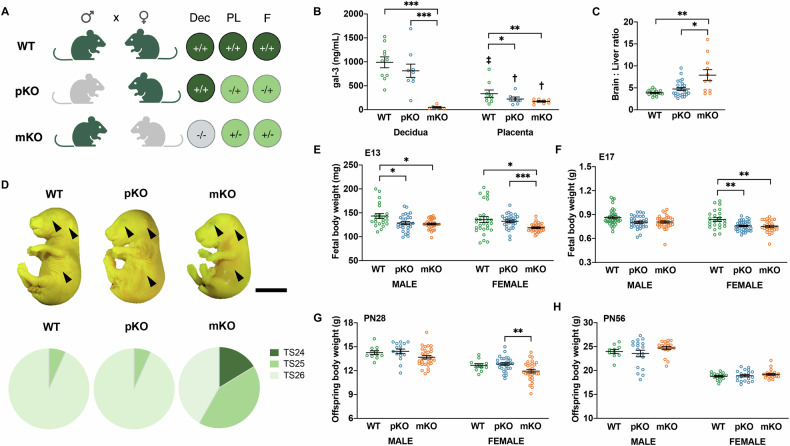
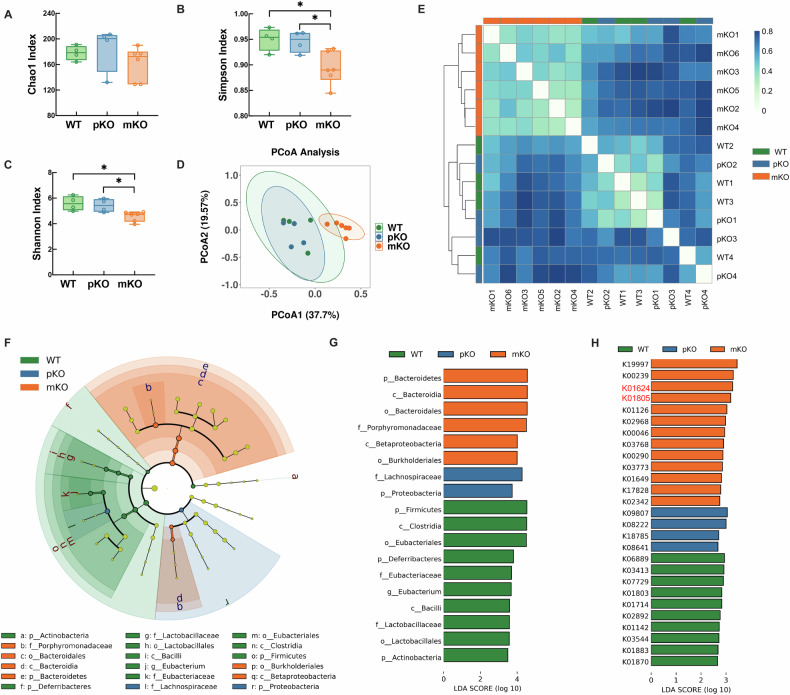
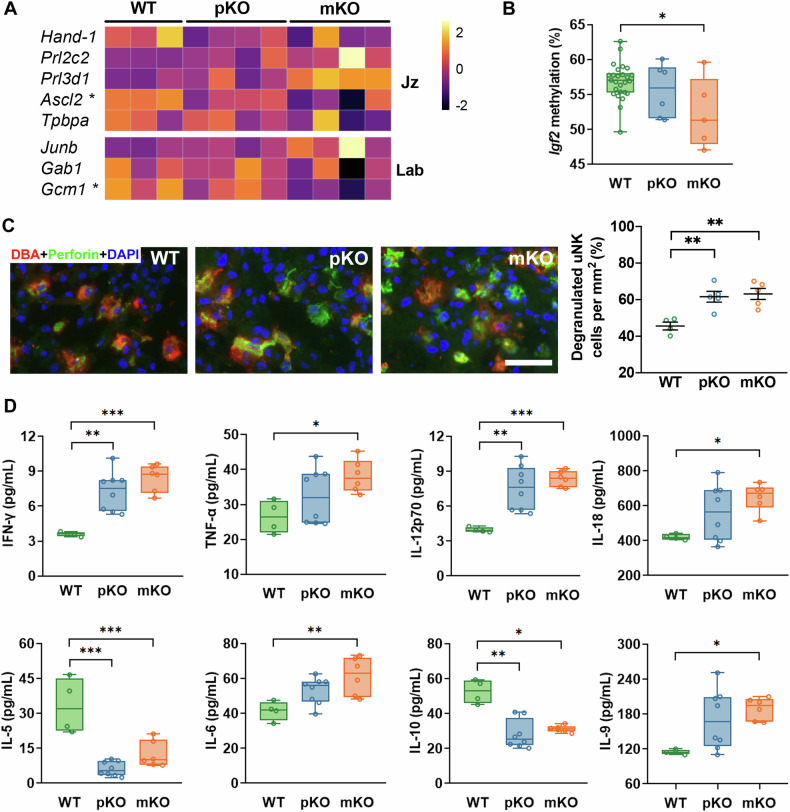
Adverse intrauterine conditions may cause fetal growth restriction (FGR), a pregnancy complication frequently linked to perinatal morbidity and mortality. Although many studies have focused on FGR, the pathophysiological processes underlying this disorder are complex and incompletely understood. We have recently determined that galectin-3 (gal-3), a β-galactoside-binding protein, regulates pregnancy-associated processes, including uterine receptibility, maternal vascular adaptation and placentation. Because gal-3 is expressed at both sides of the maternal-fetal interface, we unraveled the contribution of maternal- and paternal-derived gal-3 on fetal-placental development in the prenatal window and its effects on the post-natal period. Deficiency of maternal gal-3 induced maternal gut microbiome dysbiosis, resulting in a sex-specific fetal growth restriction mainly observed in female fetuses and offspring. In addition, poor placental metabolic adaptions (characterized by decreased trophoblast glycogen content and insulin-like growth factor 2 (Igf2) gene hypomethylation) were only associated with a lack of maternal-derived gal-3. Paternal gal-3 deficiency caused compromised vascularization in the placental labyrinth without affecting fetal growth trajectory. Thus, maternal-derived gal-3 may play a key role in fetal-placental development through the gut-placenta axis.
不良的宫内环境可能导致胎儿生长受限(FGR),这是一种常与围产期发病率和死亡率相关的妊娠并发症。尽管许多研究都聚焦于胎儿生长受限,但这种疾病背后的病理生理过程复杂且尚未完全明确。我们最近发现,半乳糖凝集素-3(gal-3),一种β-半乳糖苷结合蛋白,可调节与妊娠相关的过程,包括子宫容受性、母体血管适应和胎盘形成。由于gal-3在母胎界面两侧均有表达,我们揭示了母源和父源gal-3在产前窗口期对胎儿-胎盘发育的作用及其对产后时期的影响。母源gal-3缺乏会导致母体肠道微生物群失调,从而导致主要在雌性胎儿和后代中观察到的性别特异性胎儿生长受限。此外,胎盘代谢适应性差(以滋养层糖原含量降低和胰岛素样生长因子2(Igf2)基因低甲基化为特征)仅与缺乏母源gal-3有关。父源gal-3缺乏会导致胎盘迷路血管化受损,但不影响胎儿生长轨迹。因此,母源gal-3可能通过肠-胎盘轴在胎儿-胎盘发育中起关键作用。