Wei Chen, Ma Yijie, Wang Mengyu, Wang Siyi, Yu Wenyue, Dong Shuailei, Deng Wenying, Bie Liangyu, Zhang Chi, Shen Wei, Xia Qingxin, Luo Suxia, Li Ning
Department of Internal Medicine, The Affiliated Cancer Hospital of Zhengzhou University & Henan Cancer Hospital, Zhengzhou, China.
Department of Radiation Oncology, The First Affiliated Hospital of Xinxiang Medical University, Xinxiang, China.
NPJ Precis Oncol. 2024 Aug 9;8(1):176. doi: 10.1038/s41698-024-00660-4.
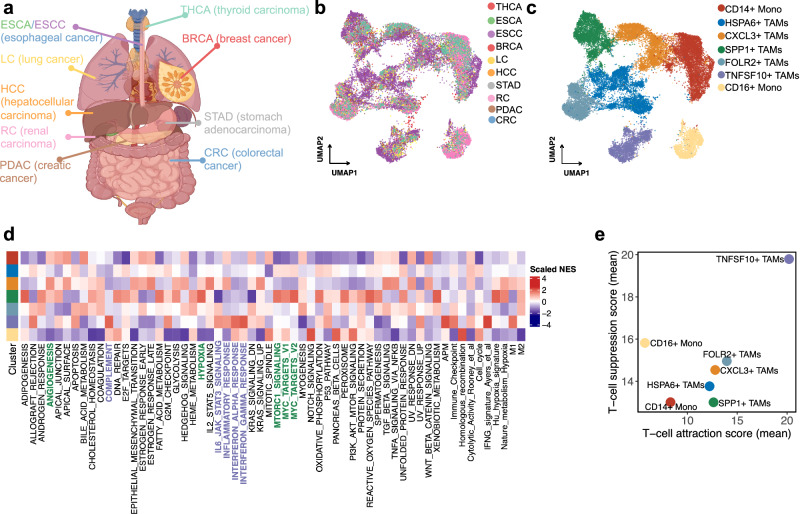
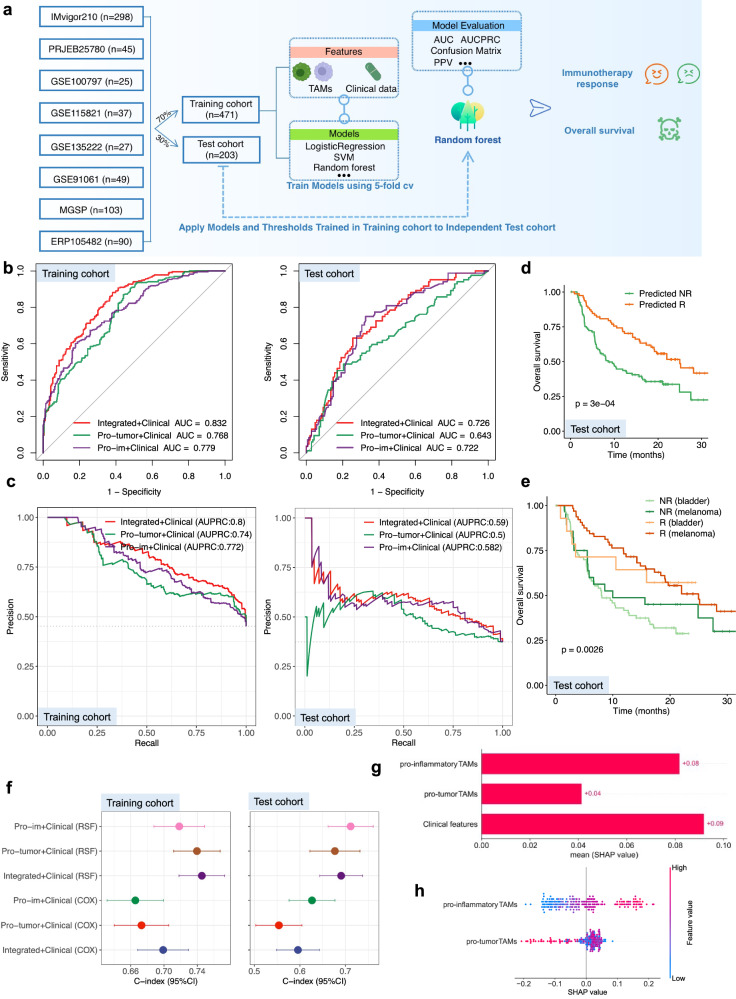
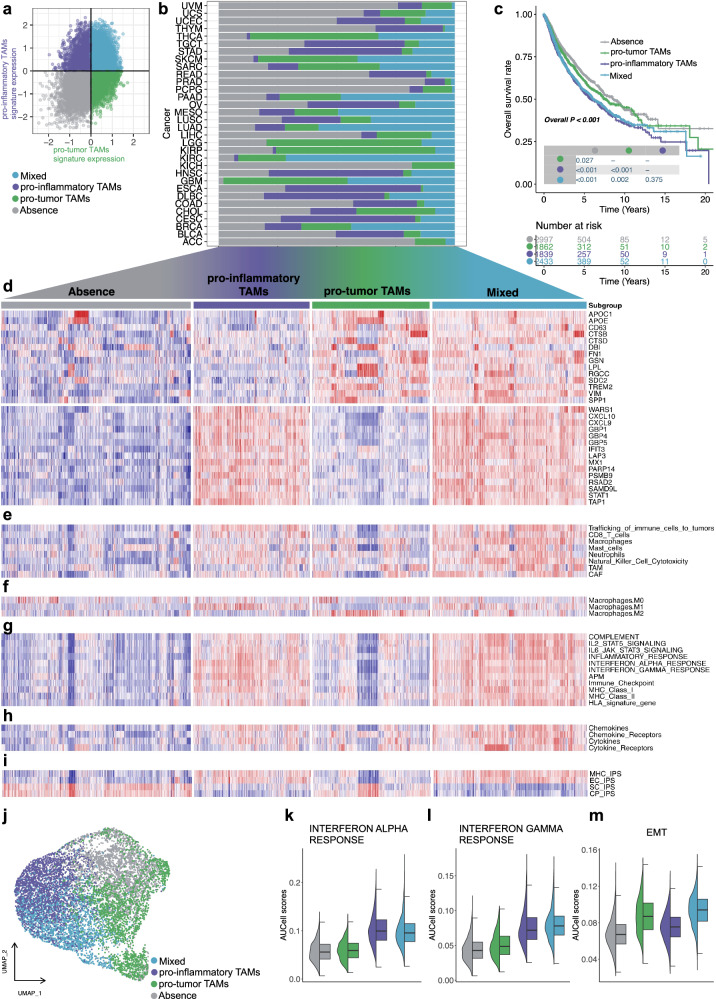
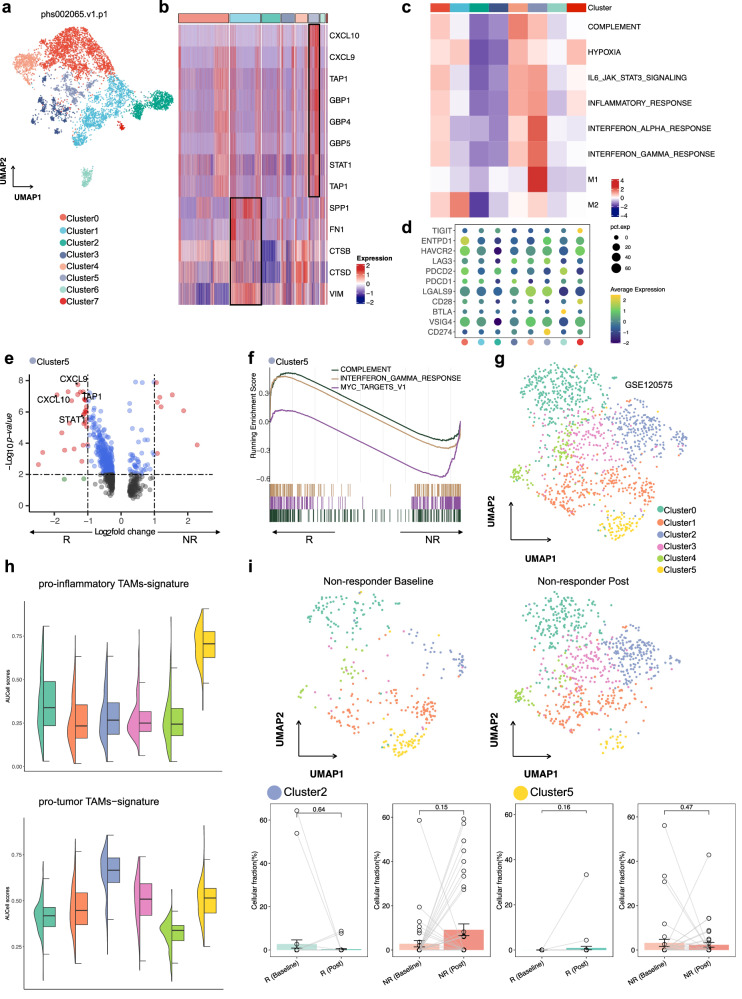
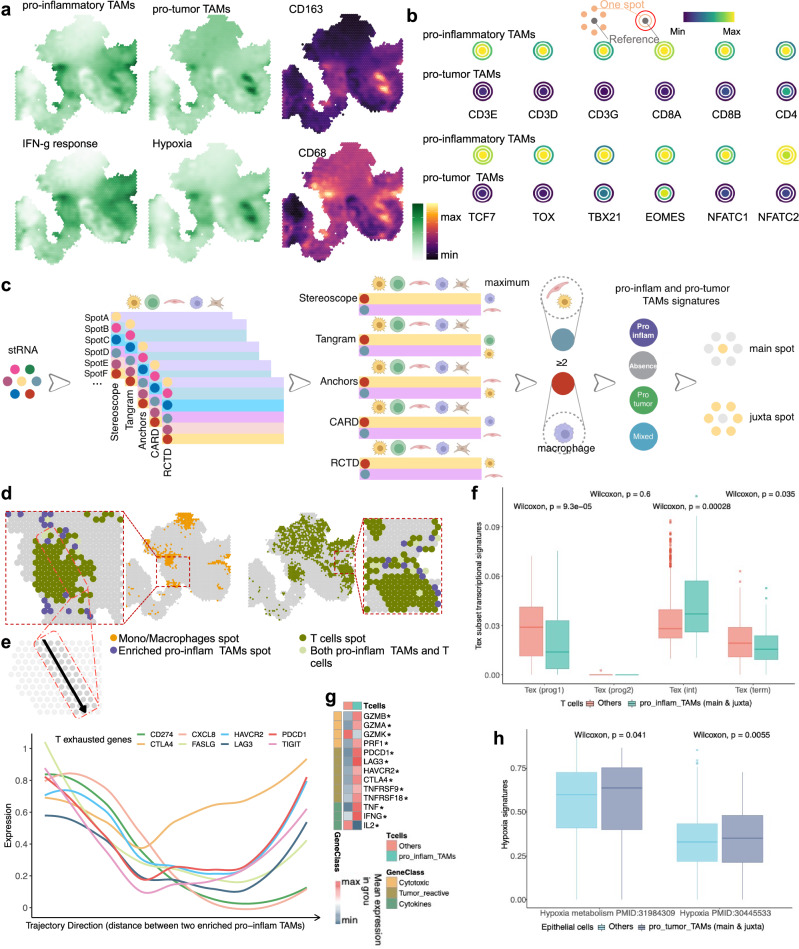
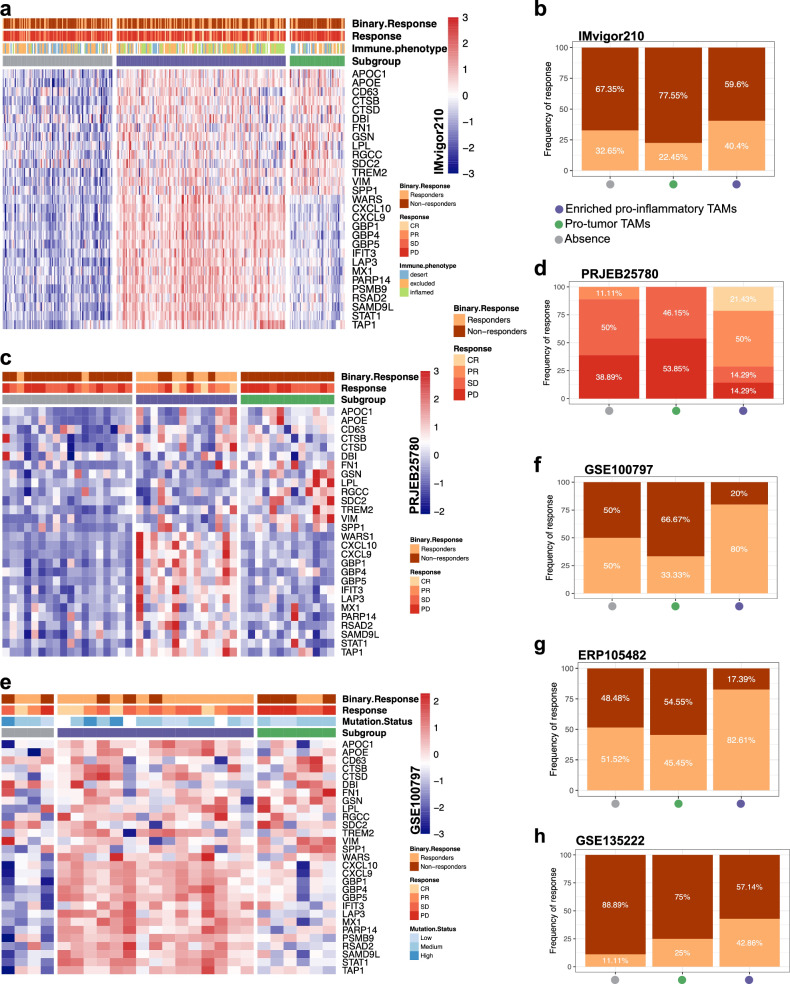
Transcriptional heterogeneity of tumor-associated macrophages (TAMs) has been investigated in individual cancers, but the extent to which these states transcend tumor types and represent a general feature of cancer remains unclear. We performed pan-cancer single-cell RNA sequencing analysis across nine cancer types and identified distinct monocyte/TAM composition patterns. Using spatial analysis from clinical study tissues, we assessed TAM functions in shaping the tumor microenvironment (TME) and influencing immunotherapy. Two specific TAM clusters (pro-inflammatory and pro-tumor) and four TME subtypes showed distinct immunological features, genomic profiles, immunotherapy responses, and cancer prognosis. Pro-inflammatory TAMs resided in immune-enriched niches with exhausted CD8+ T cells, while pro-tumor TAMs were restricted to niches associated with a T-cell-excluded phenotype and hypoxia. We developed a machine learning model to predict immune checkpoint blockade response by integrating TAMs and clinical data. Our study comprehensively characterizes the common features of TAMs and highlights their interaction with the TME.
肿瘤相关巨噬细胞(TAM)的转录异质性已在个别癌症中得到研究,但这些状态超越肿瘤类型并代表癌症普遍特征的程度仍不清楚。我们对九种癌症类型进行了泛癌单细胞RNA测序分析,并确定了不同的单核细胞/TAM组成模式。利用临床研究组织的空间分析,我们评估了TAM在塑造肿瘤微环境(TME)和影响免疫治疗方面的功能。两个特定的TAM簇(促炎和促肿瘤)以及四种TME亚型表现出不同的免疫学特征、基因组图谱、免疫治疗反应和癌症预后。促炎性TAM存在于富含免疫细胞且CD8 + T细胞耗竭的微环境中,而促肿瘤性TAM则局限于与T细胞排除表型和缺氧相关的微环境中。我们开发了一种机器学习模型,通过整合TAM和临床数据来预测免疫检查点阻断反应。我们的研究全面表征了TAM的共同特征,并突出了它们与TME的相互作用。