Nunes Hugo, Fernandes Luís Gonçalves, Martins Pedro Nunes, Ferreira Ricardo Maia
Polytechnic Institute of Maia, N2i, Social Sciences, Education and Sports School, Avenida Carlos de Oliveira Campos, Castêlo da Maia, 4475-690 Maia, Portugal.
Polytechnic Institute of Coimbra, Coimbra Health School, Scientific-Pedagogical Unit of Physiotherapy, Rua 5 de Outubro, São Martinho do Bispo, 3045-043 Coimbra, Portugal.
Healthcare (Basel). 2024 Jul 23;12(15):1462. doi: 10.3390/healthcare12151462.
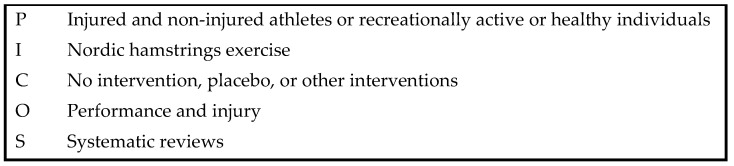
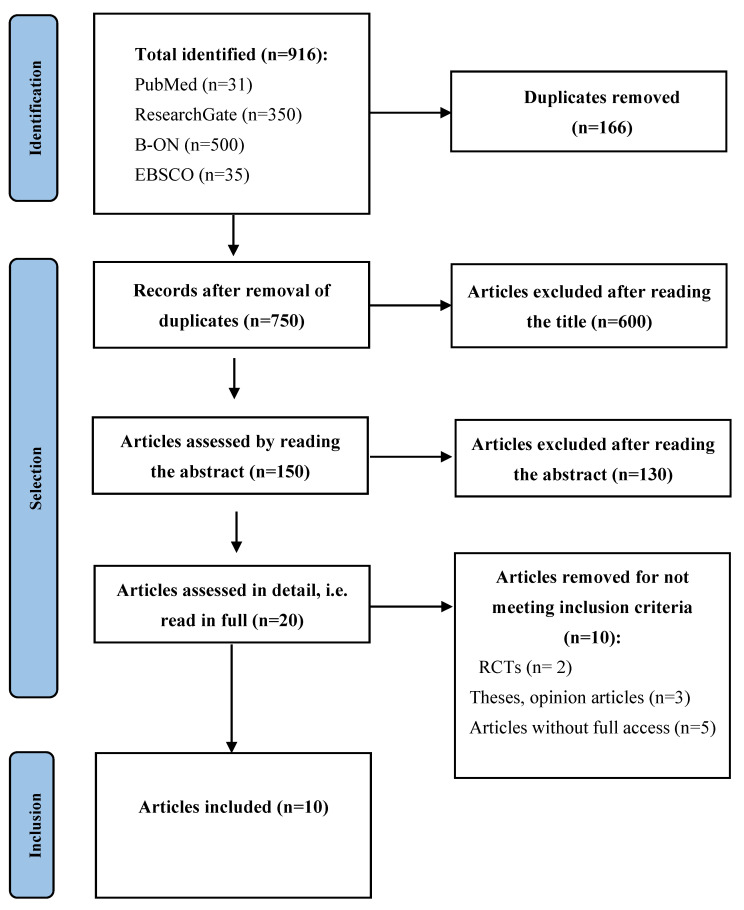
Due to their potential positive outcomes, hamstring eccentric exercises are becoming increasingly popular in training regimens. Among the various exercises, the Nordic Hamstring Exercise (NHE) is the most common. Despite its popularity, there are still some doubts about its benefits and risks. So, the aim of this umbrella review was to summarize the effects of NHE on performance and injury prevention. Following the PRISMA guidelines, a comprehensive literature search was conducted across multiple e-databases, according to the P (injured and non-injured athletes or recreationally active or healthy individuals) I (NHE) C (no intervention, placebo, or other interventions) O (performance or injury) S (systematic reviews) model. The quality of the studies was accessed with the AMSTAR-2. From the 916 systematic reviews found, only 10 could be included. They encompassed 125 studies, enrolling 17,260 subjects. The results from the studies indicate that NHE interventions demonstrated positive effects on sprint performance, muscle activation, eccentric strength, and muscle architecture (fascicle length, muscle thickness, and pennation angle). Furthermore, NHE is effective in preventing hamstring injuries (up to 51%). In conclusion, NHE should be integrated in training (especially, in the warm-up phase) for both enhancing athletic performance and preventing hamstring injuries. For achieving more positive results, it is recommended that high-volume is followed by low-volume maintenance, targeting 48 reps/week.
由于腘绳肌离心运动具有潜在的积极效果,其在训练方案中越来越受欢迎。在各种运动中,北欧腘绳肌运动(NHE)最为常见。尽管它很受欢迎,但人们对其益处和风险仍存在一些疑问。因此,本系统评价的目的是总结NHE对运动表现和损伤预防的影响。按照PRISMA指南,根据P(受伤和未受伤的运动员、休闲运动者或健康个体)I(NHE)C(无干预、安慰剂或其他干预)O(运动表现或损伤)S(系统评价)模型,在多个电子数据库中进行了全面的文献检索。使用AMSTAR-2评估研究质量。在找到的916篇系统评价中,仅纳入了10篇。它们涵盖了125项研究,涉及17260名受试者。研究结果表明,NHE干预对短跑成绩、肌肉激活、离心力量和肌肉结构(肌束长度、肌肉厚度和羽状角)有积极影响。此外,NHE在预防腘绳肌损伤方面有效(高达51%)。总之,NHE应纳入训练(特别是在热身阶段),以提高运动表现和预防腘绳肌损伤。为了取得更积极的效果,建议采用高训练量后低训练量维持的方式,目标是每周48次重复动作。