Department of Epidemiology and Health Monitoring, Robert Koch Institute, Berlin, Germany.
Eur J Nutr. 2024 Dec;63(8):2943-2956. doi: 10.1007/s00394-024-03476-x. Epub 2024 Aug 15.
To improve sustainability, adjustments to current diets are necessary. Therefore, limited planetary resources are considered within the healthy reference diet proposed by the EAT-Lancet Commission. The agreement with nationwide food intake was evaluated with two indices which reflect this reference and German food intake recommendations.
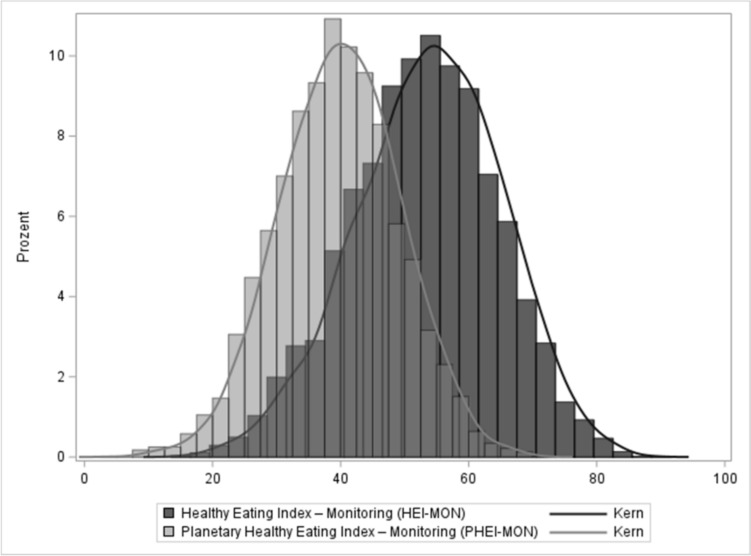
A healthy eating index (HEI-MON) reflecting the dietary guidelines of the German nutrition society and a planetary healthy eating index (PHEI-MON) reflecting the healthy reference diet were developed, with scores from 0 to 100. Both indices were applied to data from a nationally representative sample of the German population aged 18-79 years for which data from a 53-item food frequency questionnaire are available.
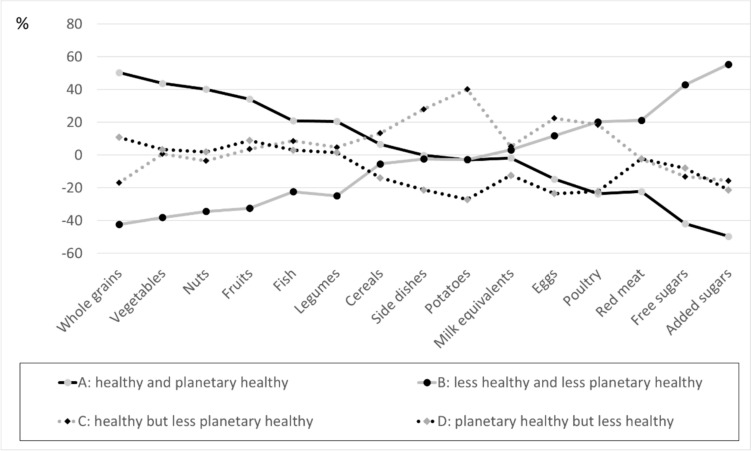
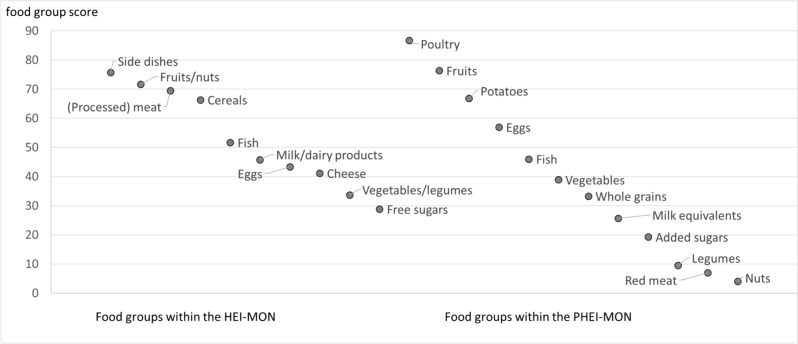
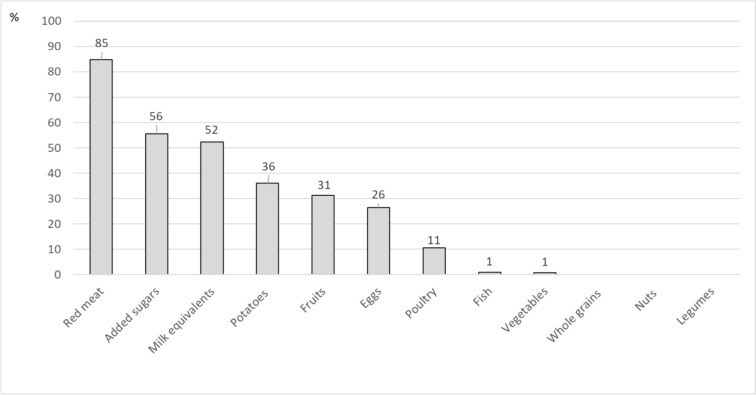
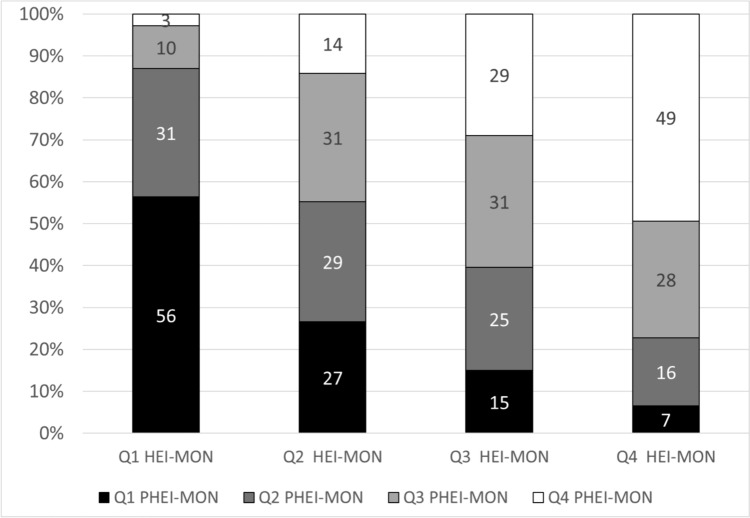
Mean scores for the indices were 53 for HEI-MON and 39 for PHEI-MON. A better adherence to either guideline could be found among women, persons of older age as well as persons with higher education level. The sub-scores for HEI-MON showed high agreement with the recommendations for side dishes, fruit/nuts, (processed) meat and cereals, but low agreement with the recommendations for free sugar and vegetables/legumes. PHEI-MON sub-scores were highest for poultry, fruits and potatoes, and lowest for nuts, red meat and legumes. High scores in one index do not necessarily correspond to high scores in the other index. Individuals with more plantbased diets had higher scores in both indices, while high sugar and meat consumption led to lower scores.
More plant-based diets are crucial for individual and planetary health. Both indices reflect such diets which consider already health and sustainability aspects. At an individual level, the scores for both indices may differ considerably, but overall there is a huge potential in the population to adapt to a diet more in line with both guidelines.
为了提高可持续性,有必要调整当前的饮食。因此,在 EAT-Lancet 委员会提出的健康参考饮食中,考虑了有限的行星资源。通过反映该参考和德国饮食建议的两个指数,评估了与全国性食物摄入量的一致性。
开发了一个反映德国营养学会饮食指南的健康饮食指数(HEI-MON)和一个反映健康参考饮食的行星健康饮食指数(PHEI-MON),得分范围为 0 到 100。这两个指数都应用于年龄在 18 至 79 岁的德国代表性人群的全国性样本数据,这些数据来自一个包含 53 种食物频率问卷的调查。
HEI-MON 和 PHEI-MON 的平均得分分别为 53 和 39。女性、年龄较大和受教育程度较高的人更遵守这两个指南中的任何一个。HEI-MON 的子分数与配菜、水果/坚果、(加工)肉和谷物的建议高度一致,但与自由糖和蔬菜/豆类的建议一致程度较低。PHEI-MON 的子分数在禽肉、水果和土豆中最高,在坚果、红肉和豆类中最低。一个指数的高分不一定对应另一个指数的高分。植物性饮食更多的人在两个指数中都有更高的分数,而高糖和肉类消费则导致分数较低。
更多的植物性饮食对个人和行星健康至关重要。这两个指数都反映了已经考虑到健康和可持续性方面的饮食。在个人层面上,两个指数的分数可能有很大差异,但总体而言,人口中存在巨大的潜力,可以适应更符合这两个指南的饮食。