Department of Experimental Radiation Oncology, The University of Texas MD Anderson Cancer Center, Houston, TX, USA.
Department of Molecular and Cellular Oncology, The University of Texas MD Anderson Cancer Center, Houston, TX, USA.
Nat Metab. 2024 Sep;6(9):1756-1774. doi: 10.1038/s42255-024-01110-y. Epub 2024 Aug 15.
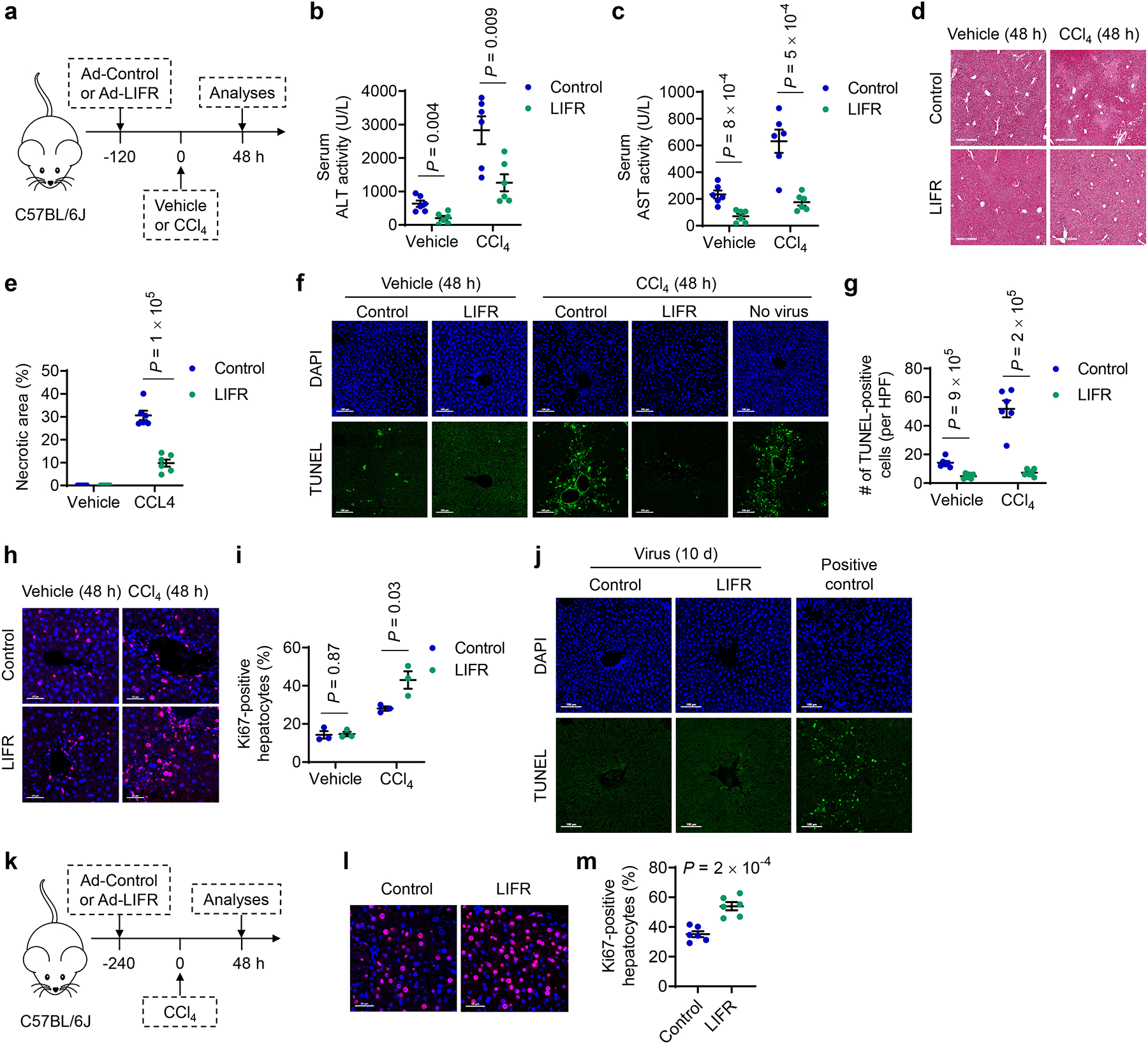
Liver regeneration is under metabolic and immune regulation. Despite increasing recognition of the involvement of neutrophils in regeneration, it is unclear how the liver signals to the bone marrow to release neutrophils after injury and how reparative neutrophils signal to hepatocytes to reenter the cell cycle. Here we report that loss of the liver tumour suppressor Lifr in mouse hepatocytes impairs, whereas overexpression of leukaemia inhibitory factor receptor (LIFR) promotes liver repair and regeneration after partial hepatectomy or toxic injury. In response to physical or chemical damage to the liver, LIFR from hepatocytes promotes the secretion of cholesterol and CXCL1 in a STAT3-dependent manner, leading to the efflux of bone marrow neutrophils to the circulation and damaged liver. Cholesterol, via its receptor ERRα, stimulates neutrophils to secrete hepatocyte growth factor to accelerate hepatocyte proliferation. Altogether, our findings reveal a LIFR-STAT3-CXCL1-CXCR2 axis and a LIFR-STAT3-cholesterol-ERRα-hepatocyte growth factor axis that form bidirectional hepatocyte-neutrophil cross-talk to repair and regenerate the liver.
肝脏再生受到代谢和免疫调节的影响。尽管人们越来越认识到中性粒细胞在再生中的作用,但肝脏在损伤后如何向骨髓发出释放中性粒细胞的信号,以及修复性中性粒细胞如何向肝细胞发出信号以重新进入细胞周期,目前仍不清楚。在这里,我们报告说,在小鼠肝细胞中缺失肝脏肿瘤抑制因子 Lifr 会损害部分肝切除或毒性损伤后的肝修复和再生,而过表达白血病抑制因子受体(LIFR)则会促进肝修复和再生。在对肝脏的物理或化学损伤作出反应时,肝细胞中的 LIFR 以 STAT3 依赖的方式促进胆固醇和 CXCL1 的分泌,导致骨髓中性粒细胞流出到循环系统和受损的肝脏。胆固醇通过其受体 ERRα 刺激中性粒细胞分泌肝细胞生长因子,以加速肝细胞增殖。总之,我们的研究结果揭示了 LIFR-STAT3-CXCL1-CXCR2 轴和 LIFR-STAT3-胆固醇-ERRα-肝细胞生长因子轴,形成双向的肝细胞-中性粒细胞相互作用,以修复和再生肝脏。