Di Dong, Zhang Chencheng, Sun Suping, Pei Ke, Gu Renjun, Sun Yan, Zhou Shihan, Wang Yanqing, Chen Xinyi, Jiang Shan, Wu Haoxin, Zhu Boran, Xu Xu
Nanjing University of Chinese Medicine, Nanjing, 210023, Jiangsu, China.
Key Laboratory of Integrative Biomedicine for Brain Diseases, College of Traditional Chinese Medicine, Nanjing University of Chinese Medicine, Nanjing, Jiangsu, 210046, China.
Heliyon. 2024 Jul 18;10(14):e34823. doi: 10.1016/j.heliyon.2024.e34823. eCollection 2024 Jul 30.
The incidence of Parkinson's disease (PD) rises rapidly with the increase of age. With the advent of global aging, the number of patients with PD is rising along with the elderly population, especially in China. Previously, we found that Yishen chuchan decoction (YCD), prescribed based on clinical experience, has the potential of alleviating symptoms, delaying the progression, and controlling the development of PD. Nonetheless, the underlying mechanistic role is yet to be explored.
This research examined the possible therapeutic effects of YCD in alleviating PD a systematic approach with network pharmacology and experimental validation, aiming at providing a new understanding of traditional Chinese medicine management regarding PD.
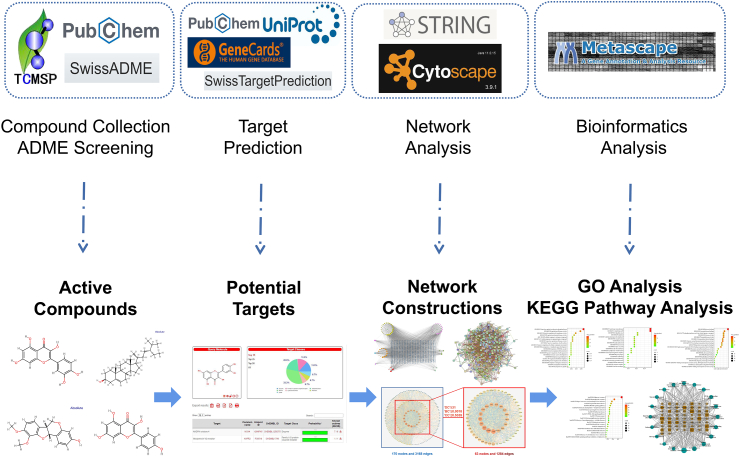
The chemical structure and properties of YCD were adopted from Traditional Chinese Medicine System Pharmacology Database (TCMSP), SwissADME, PubChem, and PubMed. The potential targets for YCD and PD were identified using Swiss Target Prediction, GeneCard, PubChem, and UniProt. The herbal-component-target network was created the Cytoscape software. Moreover, by using the STRING database, the protein-protein interaction (PPI) network was screened. Gene function GO and KEGG pathway enrichment analyses were performed the Metascape database. YCD-medicated Rat Serum from Sprague-Dawley (SD) Rats was prepared, and SH-SY5Y cells were preconditioned with rotenone to develop the PD model. To examine the impact of YCD on these cells and explore the mechanistic role of the p38 mitogen-activated protein kinase (MAPK) pathway, the cells were pretreated with either serum or a p38 MAPK pathway inhibitor. This study employed the Cell Counting Kit (CCK)-8 assay and Hoechst 33,342 staining to evaluate the viability and morphological changes induced by the YCD-medicated rat serum on rotenone-treated SH-SY5Y cells. Apoptosis was assessed by Flow cytometry. Immunofluorescence staining assessed the microtubule-associated protein 2 (MAP2) level. Enzyme-linked immunosorbent assay (ELISA) was employed to quantify the concentrations of inflammatory mediators interleukin-1β (IL-1β), interleukin-6 (IL-6) and tumor necrosis factor-alpha (TNF-α). Also, reactive oxygen species (ROS) and superoxide dismutase (SOD) levels were determined. Western Blotting measured the expression of total and phospho-p38 MAPK (p-p38).
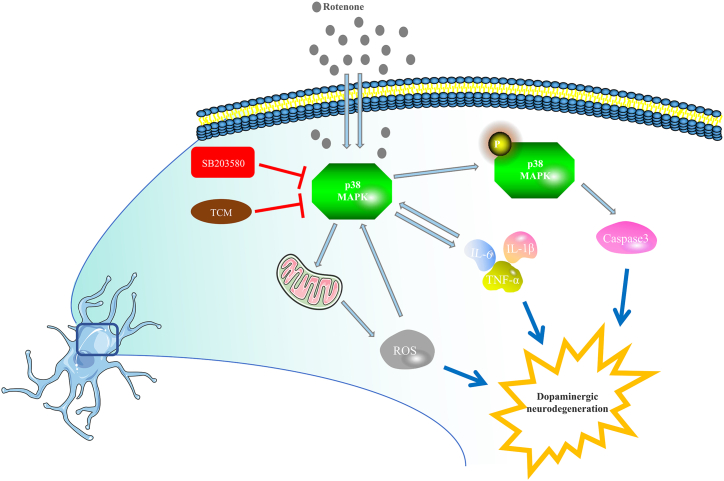
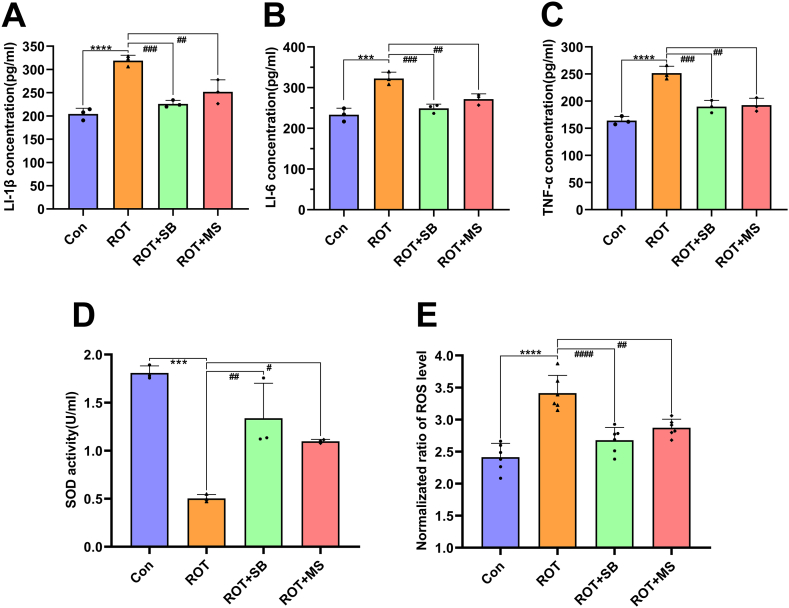
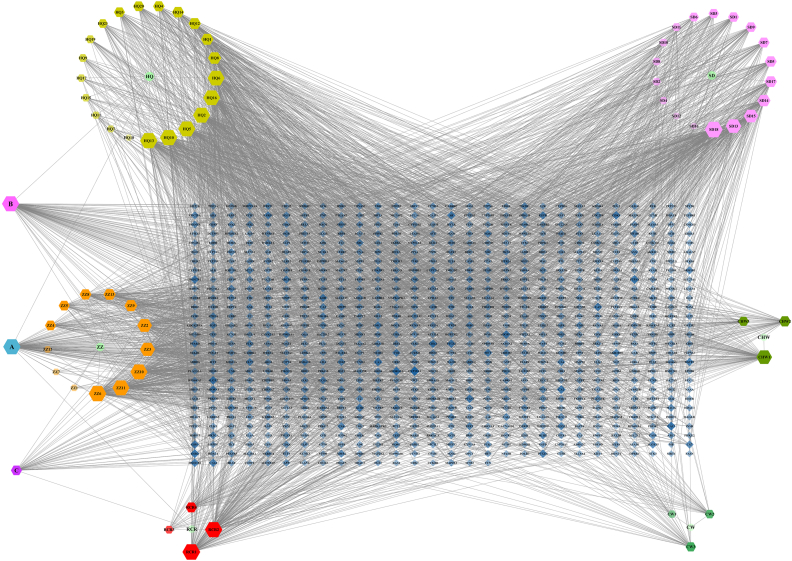
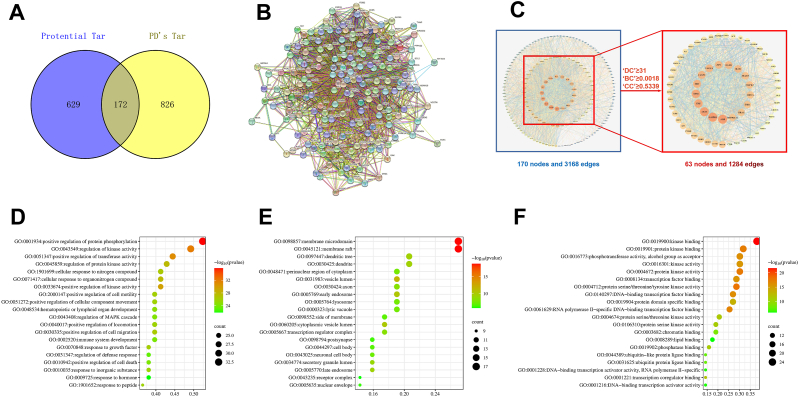
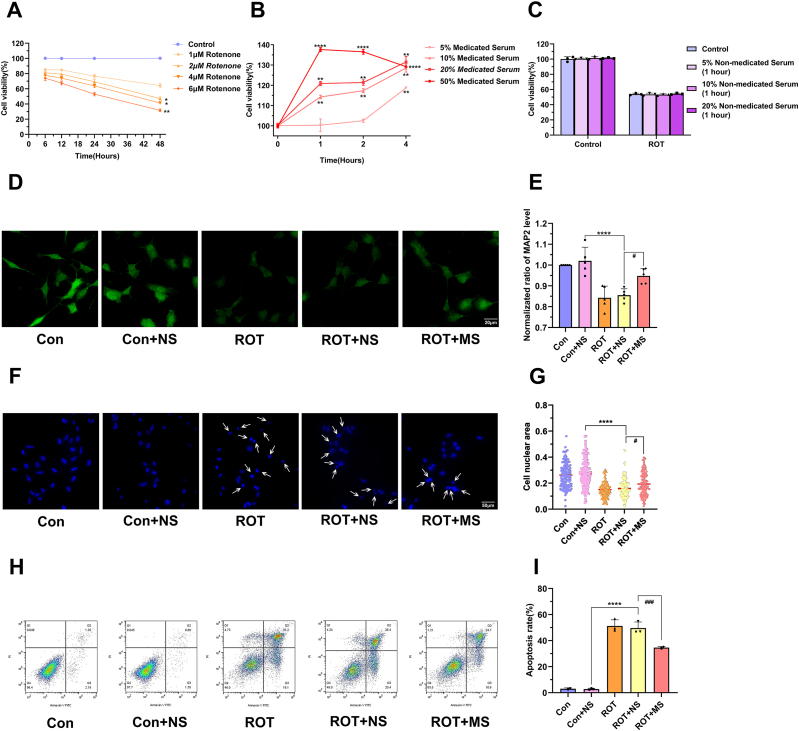
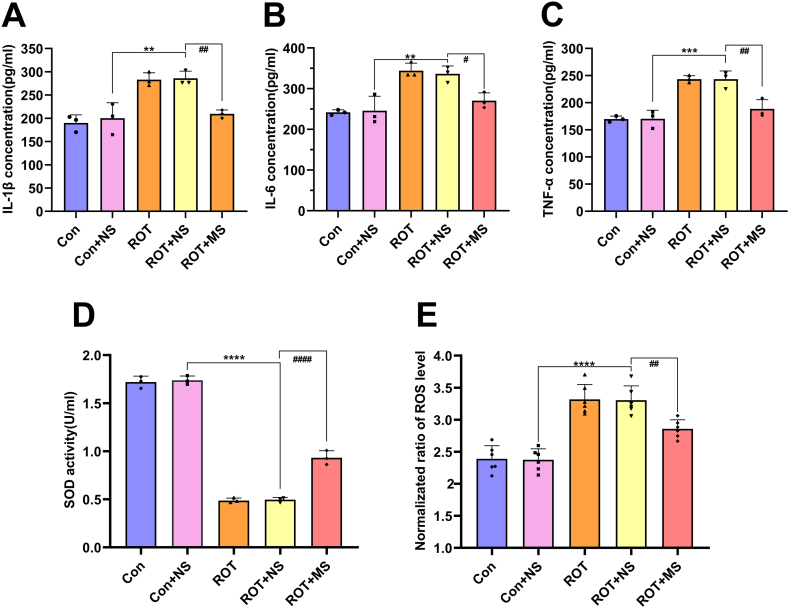
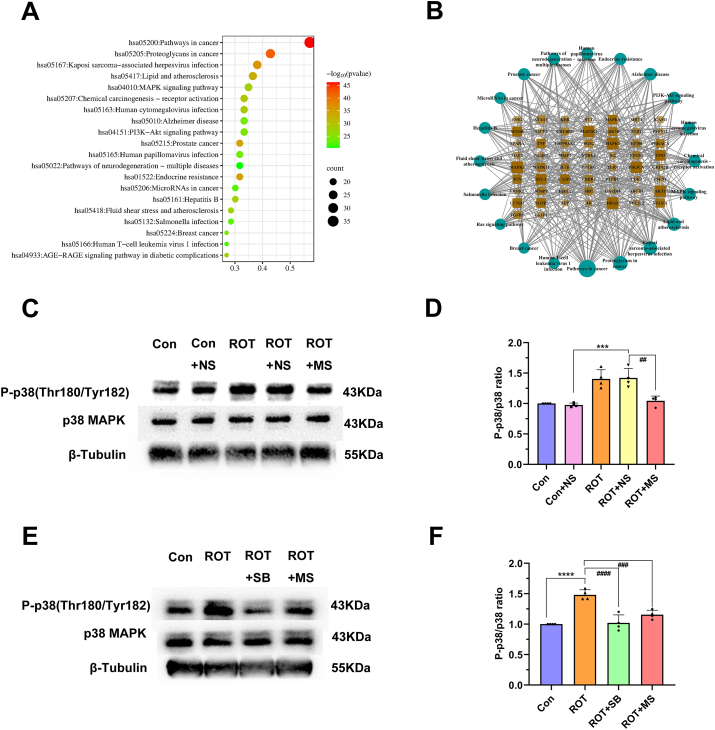
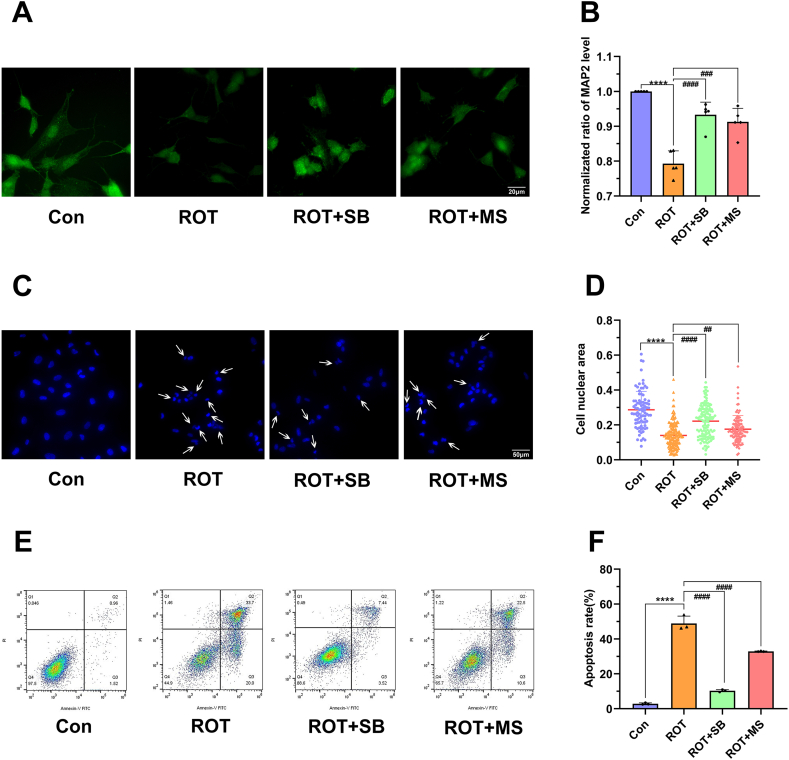
This study identified 65 active components in YCD, which were found to target 801 specific genes. By screening, 63 potential core targets were identified from a pool of 172 overlapping targets between PD and YCD. These targets were examined by GO and KEGG analyses revealing their substantial correlation to MAPK, PI3K-Akt signaling pathways, positively controlling protein phosphorylation, and pathways of neurodegenerative diseases. SH-SY5Y cells were treated with 2 μM rotenone for 48 h, which reduced cell viability to 50 %, and reduced MAP2 expression, increased the rate of apoptosis, oxidative stress, inflammation, and p-p38 expressions. YCD-medicated rat serum significantly improved the viability, reduced the apoptosis rate, and increased the MAP2 expression. YCD-medicated serum increased SOD, reduced ROS and suppressed IL-6 IL-1β and TNF-α levels, thus inhibiting oxidative stress and inflammation in rotenone-treated SH-SY5Y cells. Moreover, YCD-medicated serum substantially lowered the p-p38 expression induced by rotenone. SB203580, a specific inhibitor of p38 MAPK, could also inhibit the p-p38 expression, apoptosis, and restore morphological damage of cells, also improve inflammation and oxidative stress.
YCD enhanced cell viability and reduced apoptosis rate, inflammation, and oxidative stress in vitro. These beneficial effects could potentially involve the suppression of p38 pathway and suppressed the phosphorylation of p38 MAPK.
帕金森病(PD)的发病率随着年龄的增长而迅速上升。随着全球老龄化的到来,PD患者数量随着老年人口的增加而上升,尤其是在中国。此前,我们发现基于临床经验开具的益肾除颤汤(YCD)具有缓解症状、延缓病程和控制PD发展的潜力。然而,其潜在的作用机制尚待探索。
本研究采用网络药理学和实验验证的系统方法,研究YCD对缓解PD的可能治疗作用,旨在为中医药治疗PD提供新的认识。
YCD的化学结构和性质取自中医系统药理学数据库(TCMSP)、SwissADME、PubChem和PubMed。使用Swiss Target Prediction、GeneCard、PubChem和UniProt确定YCD和PD的潜在靶点。通过Cytoscape软件构建草药-成分-靶点网络。此外,利用STRING数据库筛选蛋白质-蛋白质相互作用(PPI)网络。通过Metascape数据库进行基因功能GO和KEGG通路富集分析。制备来自Sprague-Dawley(SD)大鼠的含YCD的大鼠血清,并用鱼藤酮预处理SH-SY5Y细胞以建立PD模型。为了研究YCD对这些细胞的影响并探索p38丝裂原活化蛋白激酶(MAPK)通路的作用机制,用血清或p38 MAPK通路抑制剂对细胞进行预处理。本研究采用细胞计数试剂盒(CCK)-8法和Hoechst 33342染色评估含YCD的大鼠血清对鱼藤酮处理的SH-SY5Y细胞诱导的活力和形态变化。通过流式细胞术评估细胞凋亡。免疫荧光染色评估微管相关蛋白2(MAP2)水平。采用酶联免疫吸附测定(ELISA)定量炎症介质白细胞介素-1β(IL-1β)、白细胞介素-6(IL-6)和肿瘤坏死因子-α(TNF-α)的浓度。同时,测定活性氧(ROS)和超氧化物歧化酶(SOD)水平。蛋白质印迹法检测总p38 MAPK(p-p38)和磷酸化p38 MAPK的表达。
本研究确定了YCD中的65种活性成分,发现它们靶向801个特定基因。通过筛选,从PD和YCD之间的172个重叠靶点中确定了63个潜在的核心靶点。通过GO和KEGG分析对这些靶点进行检查,发现它们与MAPK、PI3K-Akt信号通路、正向控制蛋白质磷酸化以及神经退行性疾病通路密切相关。用2μM鱼藤酮处理SH-SY5Y细胞48小时,细胞活力降低至50%,MAP2表达降低,细胞凋亡率、氧化应激、炎症和p-p38表达增加。含YCD的大鼠血清显著提高了细胞活力,降低了细胞凋亡率,并增加了MAP2表达。含YCD的血清增加了SOD,降低了ROS,并抑制了IL-6、IL-1β和TNF-α水平,从而抑制了鱼藤酮处理的SH-SY5Y细胞中的氧化应激和炎症。此外,含YCD的血清显著降低了鱼藤酮诱导的p-p38表达。p38 MAPK的特异性抑制剂SB203580也可以抑制p-p38表达、细胞凋亡,并恢复细胞的形态损伤,还可以改善炎症和氧化应激。
YCD在体外增强了细胞活力,降低了细胞凋亡率、炎症和氧化应激。这些有益作用可能涉及抑制p38通路并抑制p38 MAPK的磷酸化。