Department of Health Outcomes and Behavior, Moffitt Cancer Center, Tampa, FL, USA.
Research Department, Health Choice Network Inc, Miami, FL, USA.
Cancer Control. 2024 Jan-Dec;31:10732748241275389. doi: 10.1177/10732748241275389.
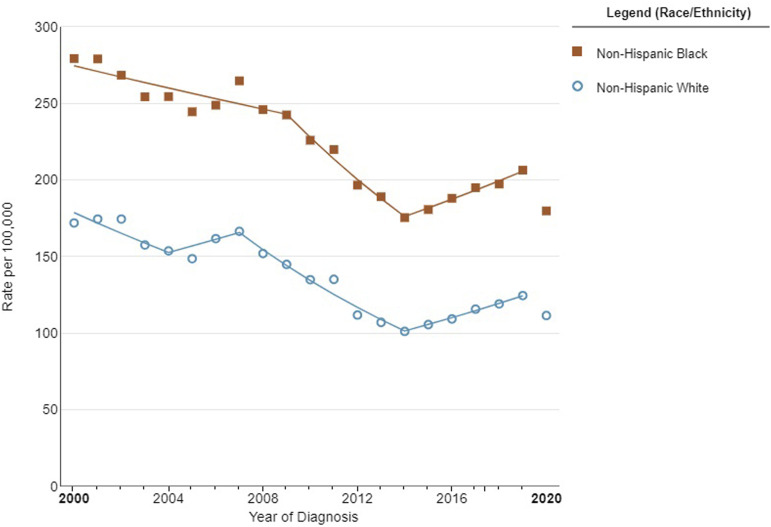
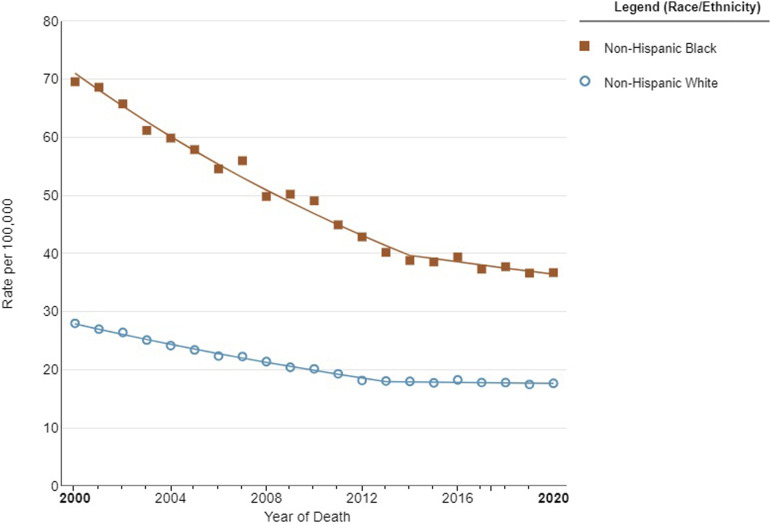
Despite advances in screening, diagnosis, and treatment for prostate cancer (PCa), Black men tend to be diagnosed at younger ages, have higher mortality rates, and are at increased risk of recurrence or metastasis compared to their White counterparts. PCa disparities among Black men are caused by a complex interaction of social, behavioral, and biological factors across the public policy, community, organizational, interpersonal, and individual levels. Key contributing factors include mistrust in the health care system, poor communication between patients and providers, low awareness of screening guidelines, and high medical costs. These disparities are further exacerbated by the low representation of Black men in clinical trials, which limits access to high-quality cancer care and generalizability for PCa treatments. In this narrative review of the existing literature, we examined the epidemiology and identified contributing factors, and propose multi-level strategies to address and mitigate disparities among Black men with PCa.
尽管在前列腺癌 (PCa) 的筛查、诊断和治疗方面取得了进展,但与白人男性相比,黑人男性往往在更年轻时被诊断出患有该病,死亡率更高,且复发或转移的风险更高。黑人男性中存在的 PCa 差异是由公共政策、社区、组织、人际和个人层面的社会、行为和生物因素的复杂相互作用引起的。主要促成因素包括对医疗保健系统的不信任、患者与提供者之间沟通不畅、对筛查指南的认识不足以及医疗费用高。由于黑人男性在临床试验中的代表性不足,这进一步加剧了这些差异,限制了高质量癌症护理的可及性和 PCa 治疗的普遍性。在对现有文献的叙述性综述中,我们检查了流行病学并确定了促成因素,并提出了多层次的策略来解决和减轻黑人男性中 PCa 存在的差异。