Department of Chemical Engineering, University of Texas at Austin (UT Austin), Austin, TX, USA.
Research and Clinical Development, Nestlé Health Science, Lausanne, 1000, Switzerland.
Nat Commun. 2024 Aug 16;15(1):7068. doi: 10.1038/s41467-024-51133-y.
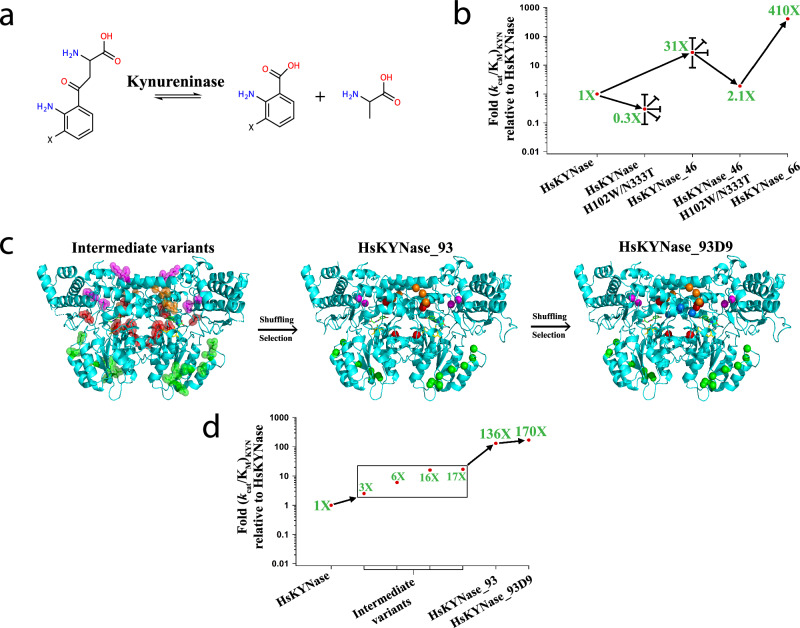
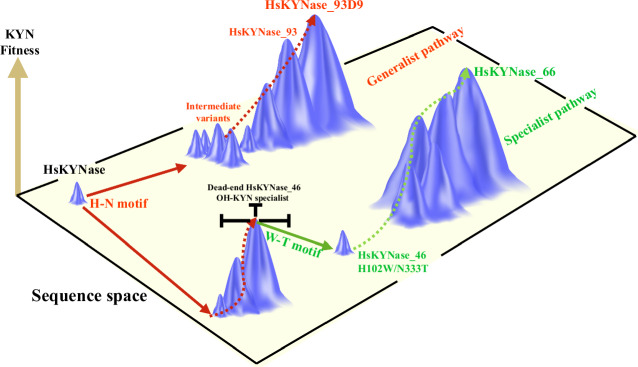
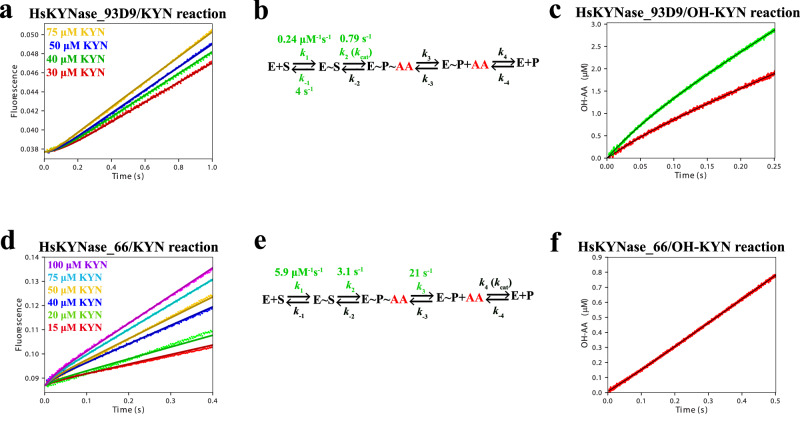
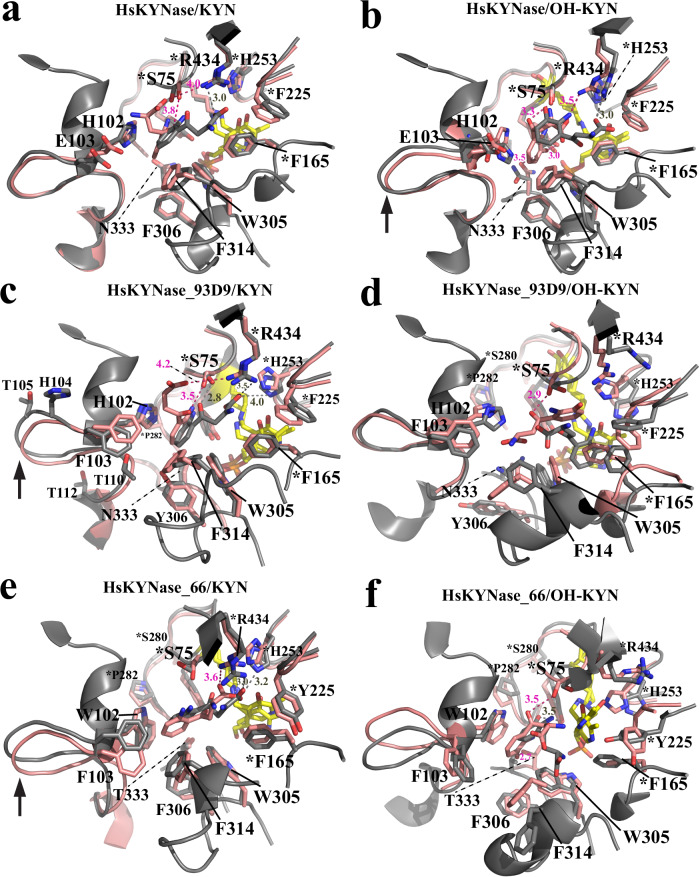
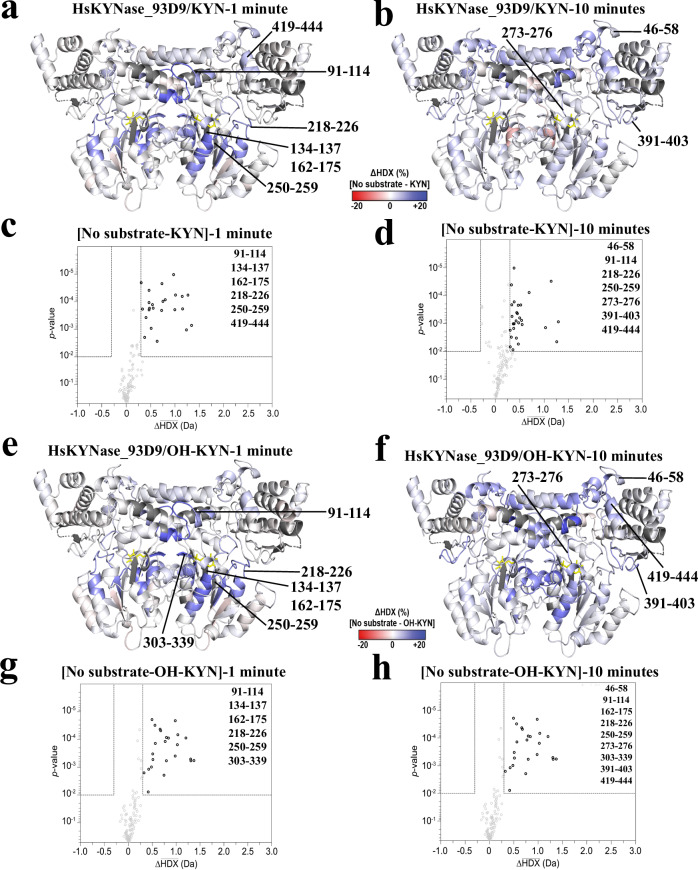
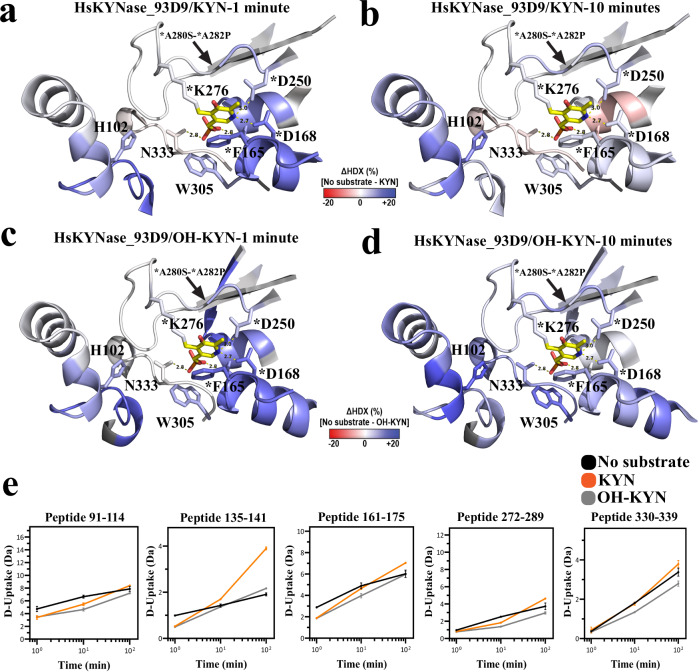
Laboratory evolution studies have demonstrated that parallel evolutionary trajectories can lead to genetically distinct enzymes with high activity towards a non-preferred substrate. However, it is unknown whether such enzymes have convergent conformational dynamics and mechanistic features. To address this question, we use as a model the wild-type Homo sapiens kynureninase (HsKYNase), which is of great interest for cancer immunotherapy. Earlier, we isolated HsKYNase_66 through an unusual evolutionary trajectory, having a 410-fold increase in the k/K for kynurenine (KYN) and reverse substrate selectivity relative to HsKYNase. Here, by following a different evolutionary trajectory we generate a genetically distinct variant, HsKYNase_93D9, that exhibits KYN catalytic activity comparable to that of HsKYNase_66, but instead it is a "generalist" that accepts 3'-hydroxykynurenine (OH-KYN) with the same proficiency. Pre-steady-state kinetic analysis reveals that while the evolution of HsKYNase_66 is accompanied by a change in the rate-determining step of the reactions, HsKYNase_93D9 retains the same catalytic mechanism as HsKYNase. HDX-MS shows that the conformational dynamics of the two enzymes are markedly different and distinct from ortholog prokaryotic enzymes with high KYN activity. Our work provides a mechanistic framework for understanding the relationship between evolutionary mechanisms and phenotypic traits of evolved generalist and specialist enzyme species.
实验室进化研究表明,平行的进化轨迹可以导致具有高非天然底物活性的遗传上不同的酶。然而,目前尚不清楚这些酶是否具有趋同的构象动力学和机制特征。为了解决这个问题,我们以野生型人类犬尿酸酶(HsKYNase)为模型,该酶对癌症免疫治疗非常重要。早些时候,我们通过一条不寻常的进化轨迹分离出 HsKYNase_66,它对犬尿氨酸(KYN)的 k/K 值增加了 410 倍,与 HsKYNase 相比具有反转的底物选择性。在这里,通过遵循不同的进化轨迹,我们产生了一个遗传上不同的变体 HsKYNase_93D9,它表现出与 HsKYNase_66 相当的 KYN 催化活性,但它是一种“通才”,可以同样熟练地接受 3'-羟基犬尿氨酸(OH-KYN)。准稳态动力学分析表明,虽然 HsKYNase_66 的进化伴随着反应的速率决定步骤的变化,但 HsKYNase_93D9 保留了与 HsKYNase 相同的催化机制。HDX-MS 表明,两种酶的构象动力学明显不同,与具有高 KYN 活性的同源原核酶也不同。我们的工作为理解进化机制与进化的通用酶和特化酶的表型特征之间的关系提供了一个机制框架。