Park So-Young, Fowler Stephen, Shaw Dominic E, Adcock Ian M, Sousa Ana R, Djukanovic Ratko, Dahlen Sven-Erik, Sterk Peter J, Kermani Nazanin Zounemat, Calhoun William, Israel Elliot, Castro Mario, Mauger Dave, Meyers Deborah, Bleecker Eugene, Moore Wendy, Busse William, Jarjour Nizar, Denlinger Loren, Levy Bruce, Choi Byoung-Hwui, Kim Sae-Hoon, Jang An-Soo, Lee Taehoon, Cho Young-Joo, Shin Yoo Seob, Cho Sang-Heon, Won Sungho, Cruz Alvaro A, Wenzel Sally E, Chung Kian Fan, Kim Tae-Bum
Department of Allergy and Clinical Immunology, Asan Medical Center, University of Ulsan College of Medicine, Seoul, Korea.
Department of Internal Medicine, Chung-Ang University Gwangmyeong Hospital, Gwangmyeong, Korea.
Allergy Asthma Immunol Res. 2024 Jul;16(4):338-352. doi: 10.4168/aair.2024.16.4.338.
Asthma is a clinical syndrome with various underlying pathomechanisms and clinical phenotypes. Genetic, ethnic, and geographic factors may influence the differences in clinical presentation, severity, and prognosis. We compared the characteristics of asthma based on the geographical background by analyzing representative cohorts from the United States, Europe, South America, and Asia using the Severe Asthma Research Program (SARP), Unbiased Biomarkers for the Prediction of Respiratory Disease Outcomes (U-BIOPRED), Program for Control of Asthma in Bahia (ProAR), and Cohort for Reality and Evolution of Adult Asthma in Korea (COREA), respectively.
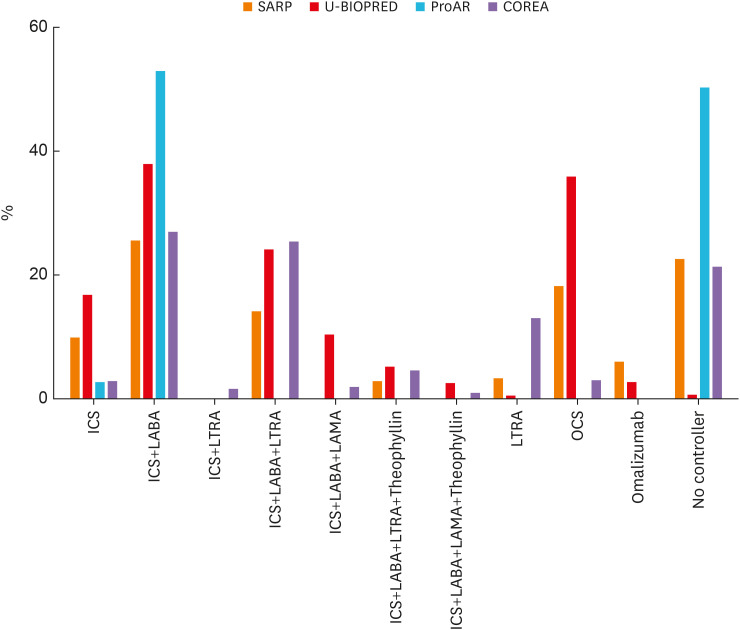
The clinical characteristics and medications for the SARP (n = 669), U-BIOPRED (n = 509), ProAR (n = 996), and COREA (n = 3,748) were analyzed. Subgroup analysis was performed for severe asthma.
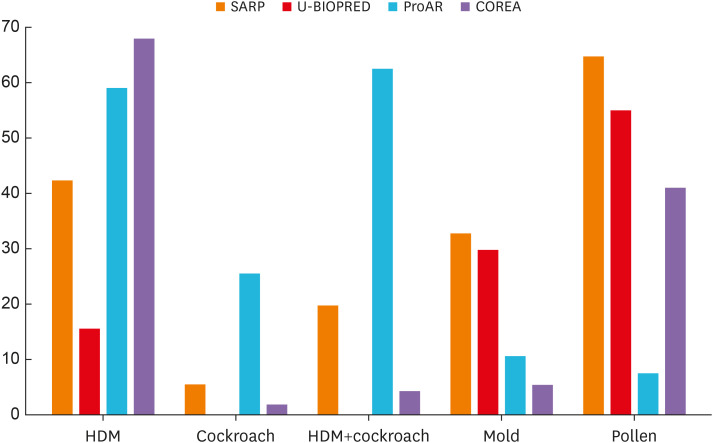
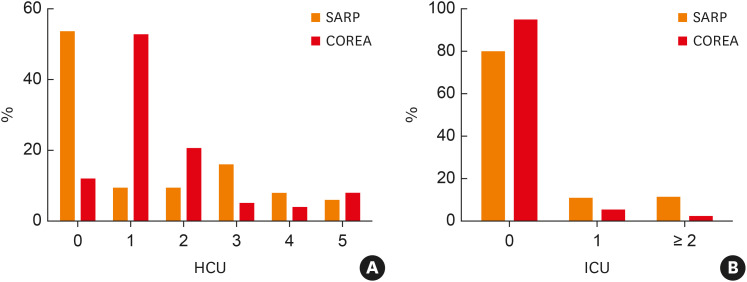
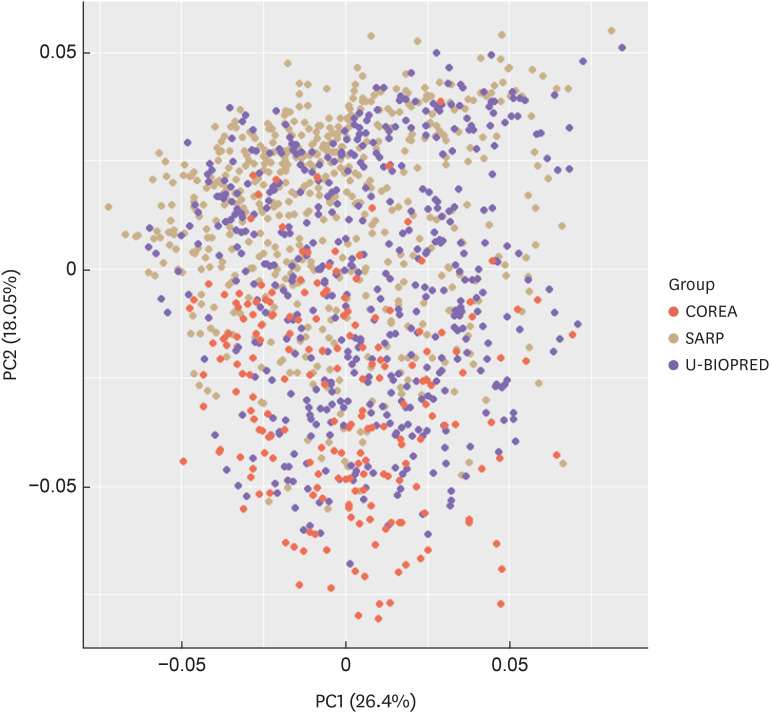
The mean age was highest and lowest in the COREA and SARP, respectively. The asthma onset age was lowest in the ProAR. The mean body mass index was highest and lowest in the SARP and COREA, respectively. Baseline pulmonary function was lowest and highest in the U-BIOPRED and COREA, respectively. The number of patients with acute exacerbation in the previous year was highest in U-BIOPRED. The mean blood eosinophil count was highest in COREA. The total immunoglobulin E was highest in the ProAR. The frequency of atopy was highest in the SARP. The principal component analysis plot revealed differences among all cohorts.
The cohorts from 4 different continents exhibited different clinical and physiological characteristics, probably resulting from the interplay between genetic susceptibility and geographical factors.
哮喘是一种具有多种潜在发病机制和临床表型的临床综合征。遗传、种族和地理因素可能影响临床表现、严重程度和预后的差异。我们分别使用重度哮喘研究项目(SARP)、呼吸疾病结局预测无偏倚生物标志物(U-BIOPRED)、巴伊亚哮喘控制项目(ProAR)和韩国成人哮喘现状与演变队列研究(COREA),分析来自美国、欧洲、南美洲和亚洲的代表性队列,比较基于地理背景的哮喘特征。
分析了SARP(n = 669)、U-BIOPRED(n = 509)、ProAR(n = 996)和COREA(n = 3748)的临床特征和用药情况。对重度哮喘进行了亚组分析。
平均年龄在COREA队列中最高,在SARP队列中最低。哮喘发病年龄在ProAR队列中最低。平均体重指数在SARP队列中最高,在COREA队列中最低。基线肺功能在U-BIOPRED队列中最低,在COREA队列中最高。前一年急性加重患者数量在U-BIOPRED队列中最多。平均血嗜酸性粒细胞计数在COREA队列中最高。总免疫球蛋白E在ProAR队列中最高。特应性频率在SARP队列中最高。主成分分析图显示所有队列之间存在差异。
来自4个不同大陆的队列表现出不同的临床和生理特征,这可能是遗传易感性和地理因素相互作用的结果。