Zhang Yang, Tu Jinqi, Wang Jian, Dai Tiancheng, Zheng Lin, Sun Sinan, Tu Conyin, Li Heng, Qian Liting
Department of Comprehensive Surgery, The First Affiliated Hospital of University of Science and Technology of China West District, Hefei, Anhui 230031, P.R. China.
Department of Hepatobiliary Surgery, The First Affiliated Hospital of Wannan Medical College (Yijishan Hospital of Wannan Medical College), Wuhu, Anhui 241001, P.R. China.
Oncol Lett. 2024 Aug 6;28(4):480. doi: 10.3892/ol.2024.14613. eCollection 2024 Oct.
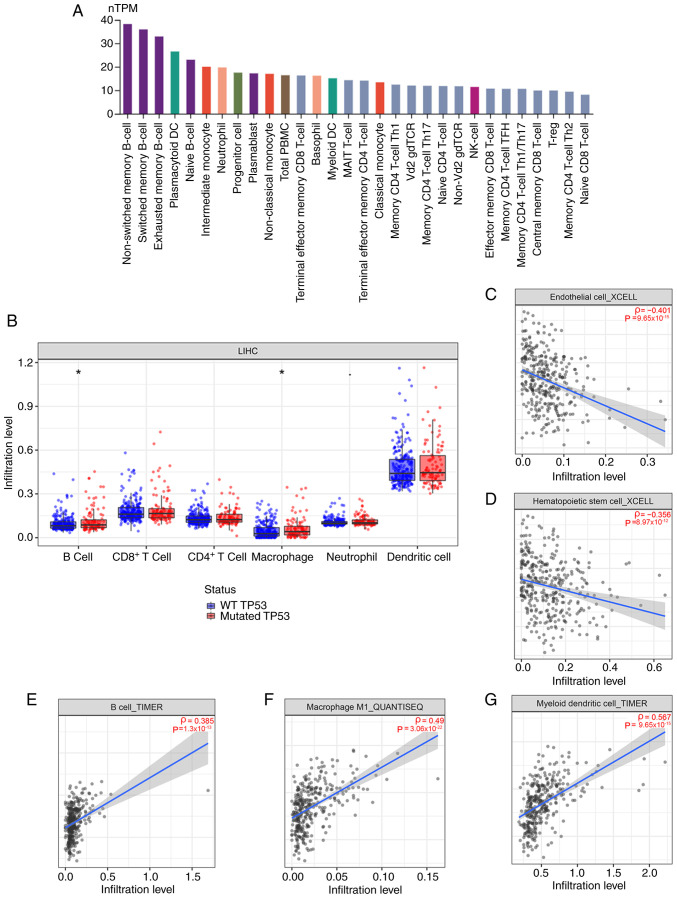
The important role of the nuclear factor κB (NFκB) pathway in tumour development has long been recognized; however, the role of the NFκB inhibitor family in liver cancer has not been elucidated. Hepatocellular carcinoma (HCC) is a serious public health burden with a high incidence, poor prognosis, and early detection, especially in Asia, where hepatitis is prevalent. In the present study, the mRNA expression level of the NFκB inhibitor family was assessed in HCC and normal tissues using the Metabolic Gene Rapid Visualizer, University of Alabama at Birmingham Cancer Data Analysis Portal, and the Tumor Immune Estimation Resource database (TIMER). Survival curves of nuclear factor of κ light polypeptide gene enhancer in B-cells inhibitor (NFKBI)E were obtained using the Kaplan-Meier method. Genes co-expressed with NFKBIE in HCC samples were studied using data from the LinkedOmics and the Hepatocellular Carcinoma Databases. Protein-protein interaction networks, Gene Ontology and Kyoto Encyclopedia of Genes and Genomes enrichment pathway analyses were used to assess the NFKBIE mechanism in HCC. Using the TIMER database, the association between immune infiltration and NFKBIE was determined. RNA-sequencing (RNA-seq) was used to evaluate the function of NFKBIE in HCC and its impact on proliferation and migration. Western blotting was used to confirm the expression of NFKBIE in HCC cell lines. In addition, NFKBIE overexpression in HCC was demonstrated using tissue microarrays encompassing 80 pairs of HCC and normal liver tissues. NFKBIE was the only NFκB inhibitor with high expression and an improved prognosis in HCC compared with other NFκB inhibitors. NFKBIE was correlated with clinical characteristics, such as tumour grade, tumour protein P53 mutation status and tumour stage. Data obtained from Gene Set Cancer Analysis suggested that NFKBIE may inhibit the PI3K/AKT, RAS/MAPK, RTK and TSC/mTOR pathways. In addition, NFKBIE was significantly associated with B-cell immune infiltration and the RNA-seq data demonstrated that knockdown of NFKBIE significantly affected 'Antigen processing and presentation' and 'hepatocellular carcinoma' pathways. Immunohistochemistry of microarrays of tissue samples revealed that NFKBIE was overexpressed in several stages of HCC. Finally, inhibition of NFKBIE decreased the proliferation and migration of HCC cells. In conclusion, due to its prognostic value and overexpression in HCC, NFKBIE distinguished itself from other NFκB inhibitors. As such, it may provide a novel prognostic indicator and immunotherapeutic target for HCC.
核因子κB(NFκB)通路在肿瘤发生发展中的重要作用早已为人所知;然而,NFκB抑制因子家族在肝癌中的作用尚未阐明。肝细胞癌(HCC)是一项严重的公共卫生负担,其发病率高、预后差且难以早期发现,在肝炎流行的亚洲地区尤为如此。在本研究中,利用代谢基因快速可视化工具、阿拉巴马大学伯明翰分校癌症数据分析平台以及肿瘤免疫评估资源数据库(TIMER)评估了HCC组织和正常组织中NFκB抑制因子家族的mRNA表达水平。采用Kaplan-Meier法绘制B细胞κ轻链多肽基因增强子抑制因子(NFKBI)E的生存曲线。利用LinkedOmics和肝细胞癌数据库的数据研究了HCC样本中与NFKBIE共表达的基因。通过蛋白质-蛋白质相互作用网络、基因本体论和京都基因与基因组百科全书富集通路分析来评估NFKBIE在HCC中的作用机制。利用TIMER数据库确定免疫浸润与NFKBIE之间的关联。采用RNA测序(RNA-seq)评估NFKBIE在HCC中的功能及其对增殖和迁移的影响。利用蛋白质免疫印迹法证实NFKBIE在HCC细胞系中的表达。此外,使用包含80对HCC组织和正常肝组织的组织芯片证实了NFKBIE在HCC中的过表达。与其他NFκB抑制因子相比,NFKBIE是HCC中唯一高表达且预后较好的NFκB抑制因子。NFKBIE与肿瘤分级、肿瘤蛋白P53突变状态和肿瘤分期等临床特征相关。基因集癌症分析获得的数据表明,NFKBIE可能抑制PI3K/AKT、RAS/MAPK、RTK和TSC/mTOR通路。此外,NFKBIE与B细胞免疫浸润显著相关,RNA-seq数据表明,敲低NFKBIE会显著影响“抗原加工与呈递”和“肝细胞癌”通路。组织样本芯片的免疫组织化学结果显示,NFKBIE在HCC的多个阶段均过表达。最后,抑制NFKBIE可降低HCC细胞的增殖和迁移能力。总之,由于其在HCC中的预后价值和过表达,NFKBIE有别于其他NFκB抑制因子。因此,它可能为HCC提供一种新的预后指标和免疫治疗靶点。