Salivary Gland Disease Center and Beijing Key Laboratory of Tooth Regeneration and Function Reconstruction, Beijing Laboratory of Oral Health and Beijing Stomatological Hospital, Capital Medical University, Beijing, 100050, China.
Department of Biochemistry and Molecular Biology, Capital Medical University School of Basic Medical Sciences, Beijing, 100069, China.
Biogerontology. 2024 Nov;25(6):1171-1187. doi: 10.1007/s10522-024-10127-5. Epub 2024 Aug 20.
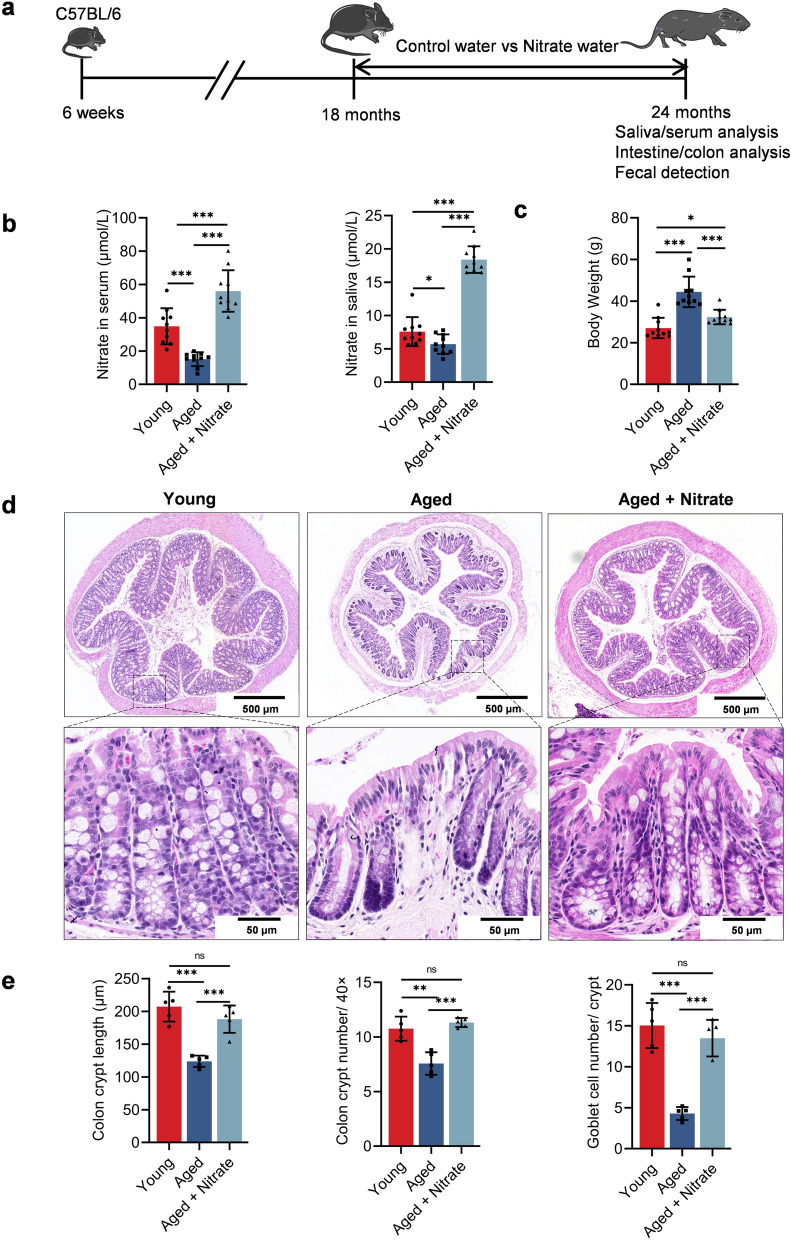
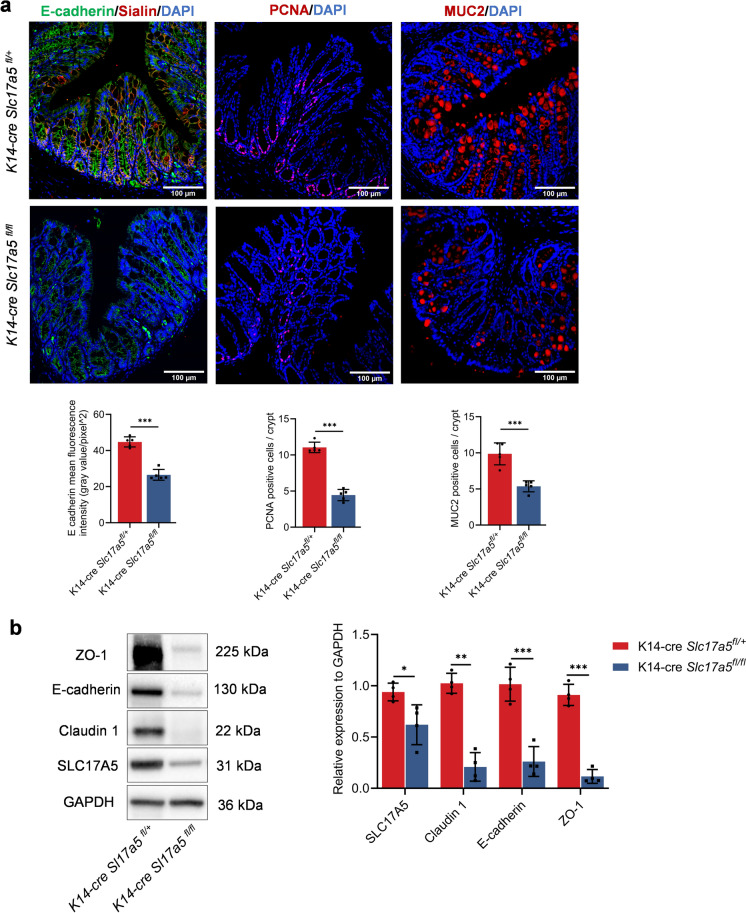
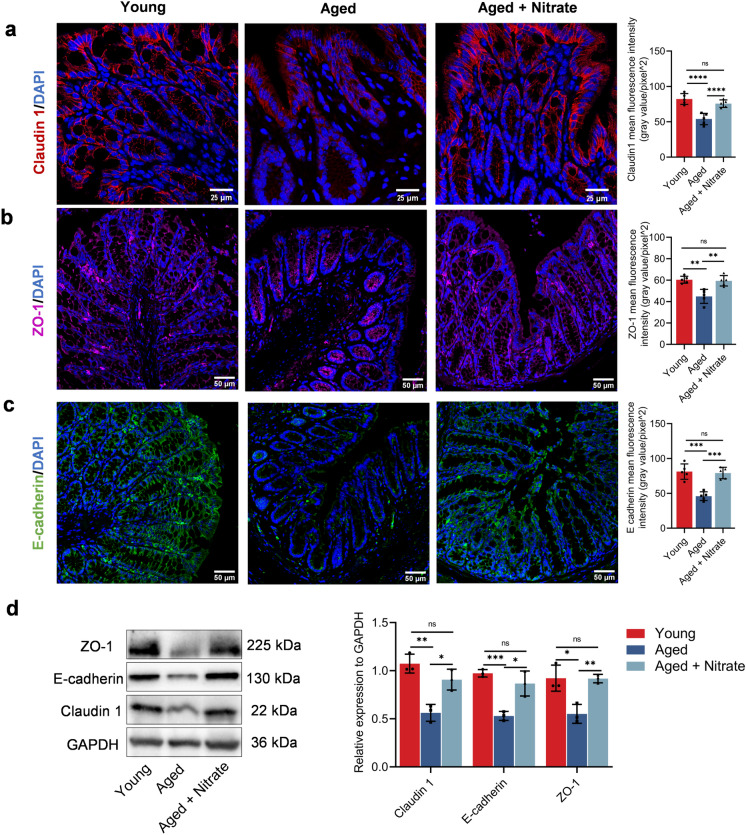
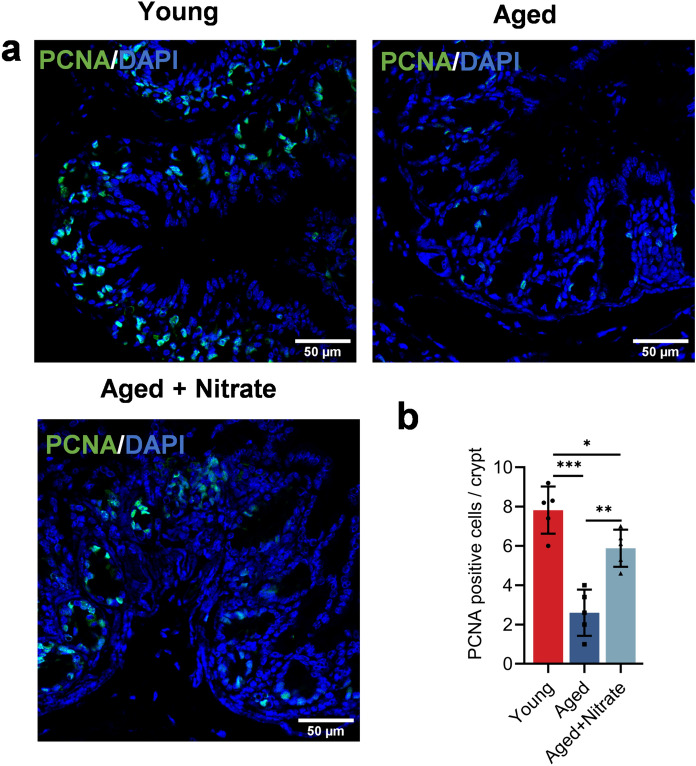
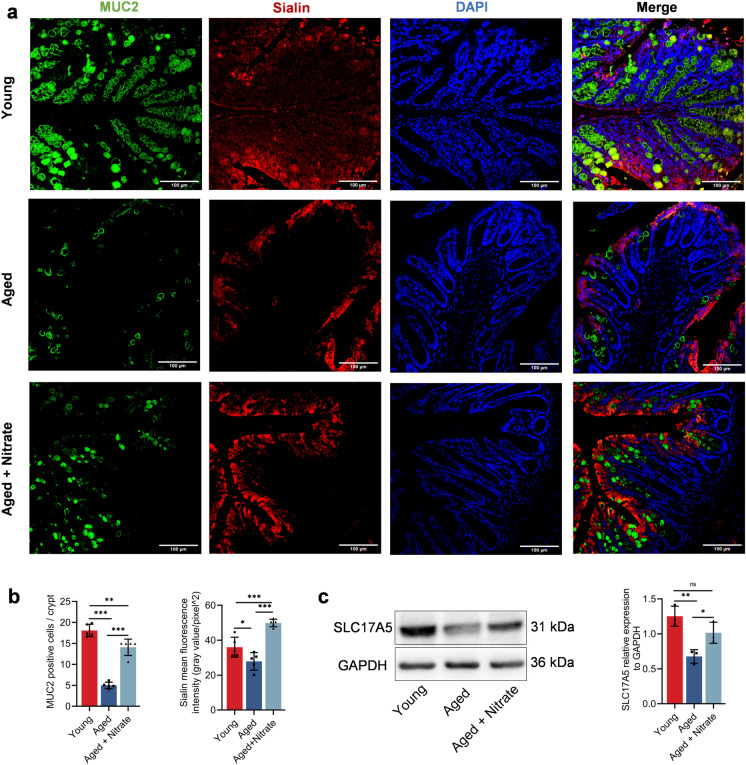
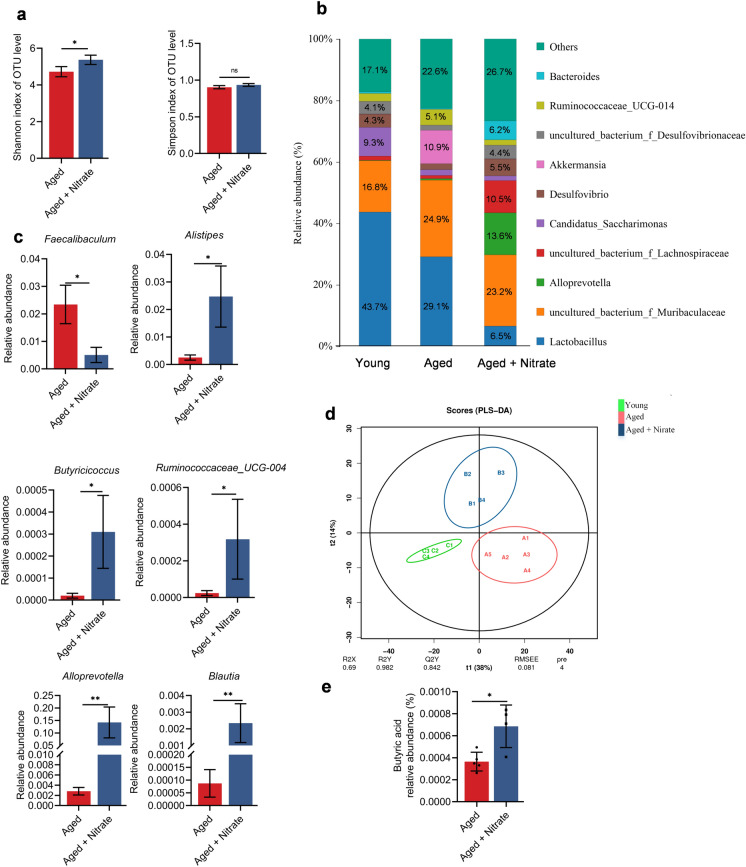
The intestinal tract, which is the primary site of digestion and absorption of nutrients, is one of the most vulnerable organs during aging. Dietary nitrate, which is mainly derived from the diet and absorbed in the intestinal tract, is a key messenger that connecting oral and general health. However, whether dietary nitrate regulates intestinal tract homeostasis remains unclear. Our data revealed that the serum and salivary nitrate levels decreased during mice aging. The functional proteins of the epithelial barrier (E-cadherin, Claudin-1 and Zonula Occludens-1) in the colon tissues decreased during the aging process. Long-term nitrate supplement in drinking water restored the serum and salivary nitrate levels and increased the functional proteins expression of the colon epithelial barrier. Dietary nitrates increase the relative abundance of some intestinal probiotics, particularly those associated with the production of short-chain fatty acids, such as Blautia, Alloprevotella, Butyricicoccus, and Ruminococcaceae, while promoting the butyric acid production in the colon. Moreover, the expression of Sialin (encoded by Slc17a5), which is a nitrate transporter, increased in the colon epithelial cells by nitrate supplementation. The epithelial cell-conditional Slc17a5-knockout mutant mice (K14-cre; Slc17a5) revealed that the functional proteins expression of the colon epithelial barrier and the proliferation of PCNA-positive intestinal epithelial cells in the colon crypts was significantly decreased compared with those of the K14-cre; Slc17a5 mice. Taken together, our findings suggested that nitrate supplementations were associated with the increased expression of colonic epithelial barriers-related proteins and the increased Sialin expression. Nitrate may serve as a potential therapeutic approach in maintaining aged colonic homeostasis.
肠道是营养消化和吸收的主要部位,也是衰老过程中最脆弱的器官之一。膳食硝酸盐主要来源于饮食并在肠道吸收,是连接口腔和整体健康的关键信使。然而,膳食硝酸盐是否调节肠道内稳态尚不清楚。我们的数据显示,在小鼠衰老过程中,血清和唾液中的硝酸盐水平下降。结肠组织中上皮屏障的功能蛋白(E-钙黏蛋白、Claudin-1 和紧密连接蛋白-1)在衰老过程中减少。长期在饮用水中补充硝酸盐可恢复血清和唾液中的硝酸盐水平,并增加结肠上皮屏障的功能蛋白表达。膳食硝酸盐增加了一些肠道益生菌的相对丰度,特别是那些与短链脂肪酸产生相关的益生菌,如布劳特氏菌、Alloprevotella、Butyricicoccus 和 Ruminococcaceae,同时促进了结肠中丁酸的产生。此外,硝酸盐补充可增加结肠上皮细胞中 Sialin(由 Slc17a5 编码)的表达。上皮细胞条件性 Slc17a5 敲除突变体小鼠(K14-cre;Slc17a5)显示,与 K14-cre;Slc17a5 小鼠相比,结肠上皮屏障的功能蛋白表达和结肠隐窝中 PCNA 阳性肠上皮细胞的增殖显著降低。综上所述,我们的研究结果表明,硝酸盐补充与结肠上皮屏障相关蛋白表达的增加和 Sialin 表达的增加有关。硝酸盐可能是维持老年结肠内稳态的一种潜在治疗方法。