Weill Cornell Graduate School of Medical Sciences, Weill Cornell Medical College, New York, NY 10065, USA; Developmental Biology Program, Sloan Kettering Institute, Memorial Sloan Kettering Cancer Center, New York, NY 10065, USA.
Weill Cornell Graduate School of Medical Sciences, Weill Cornell Medical College, New York, NY 10065, USA; Computational and Systems Biology Program, Sloan Kettering Institute, Memorial Sloan Kettering Cancer Center, New York, NY 10065, USA.
Cell Rep. 2024 Aug 27;43(8):114640. doi: 10.1016/j.celrep.2024.114640. Epub 2024 Aug 21.
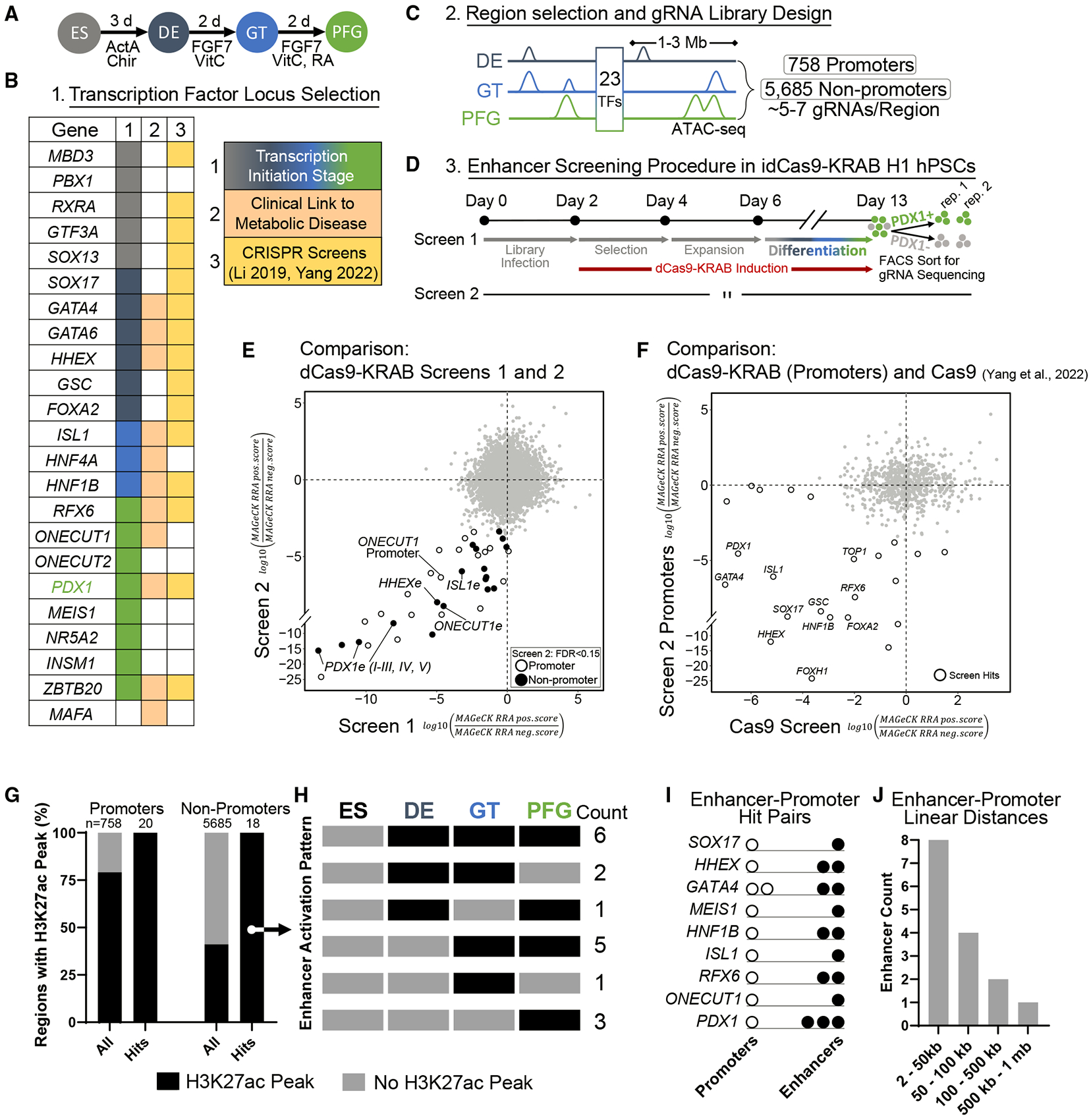
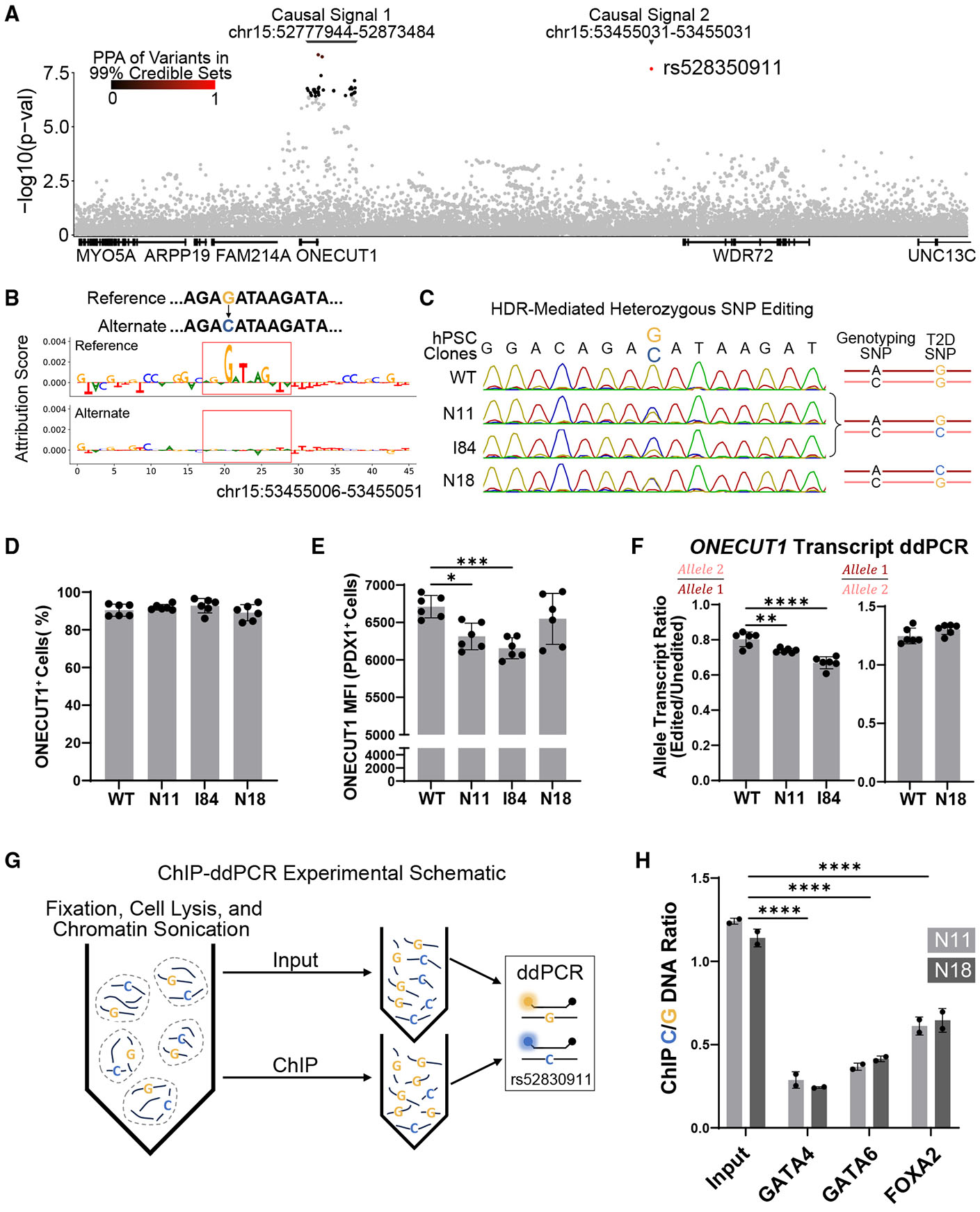
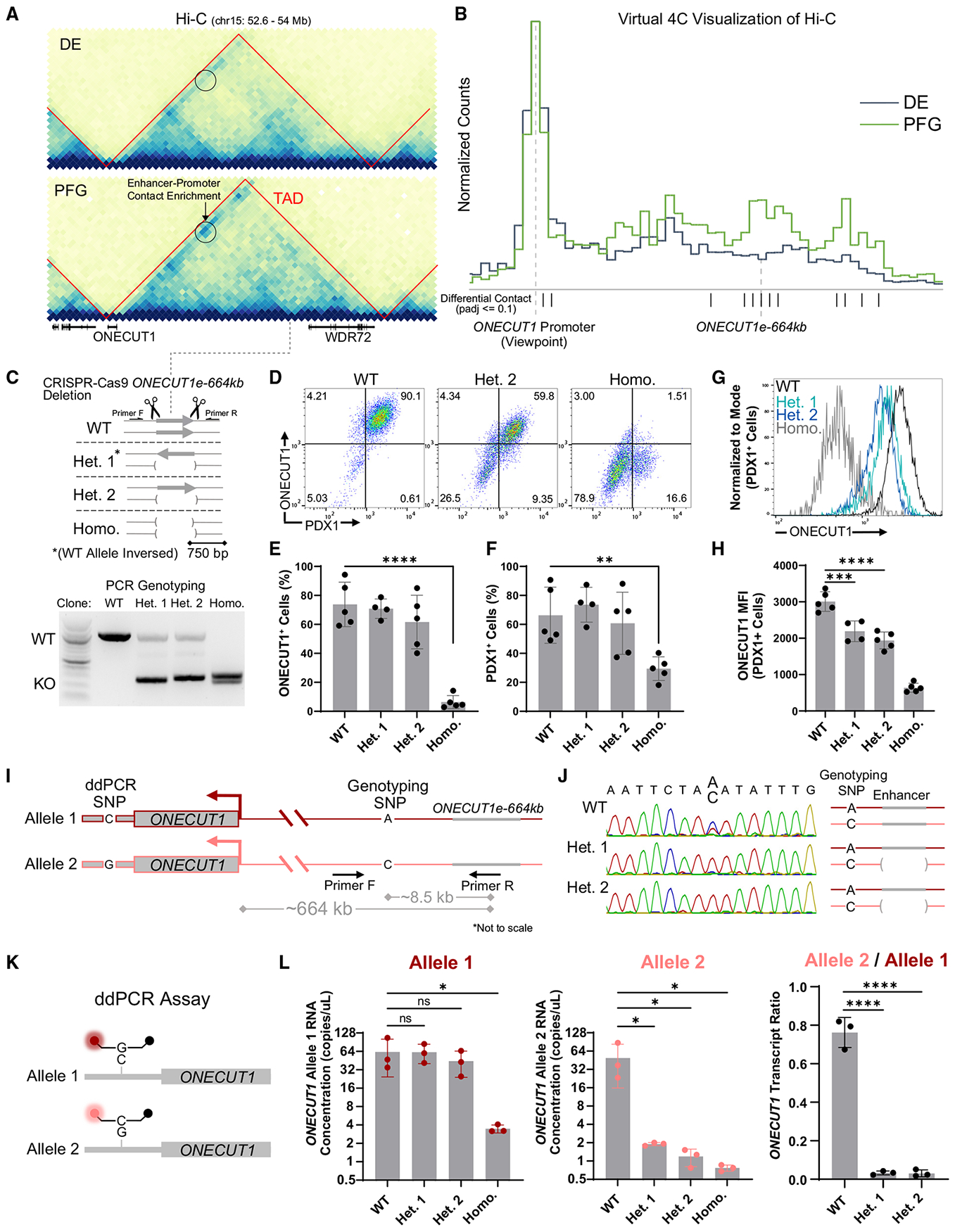
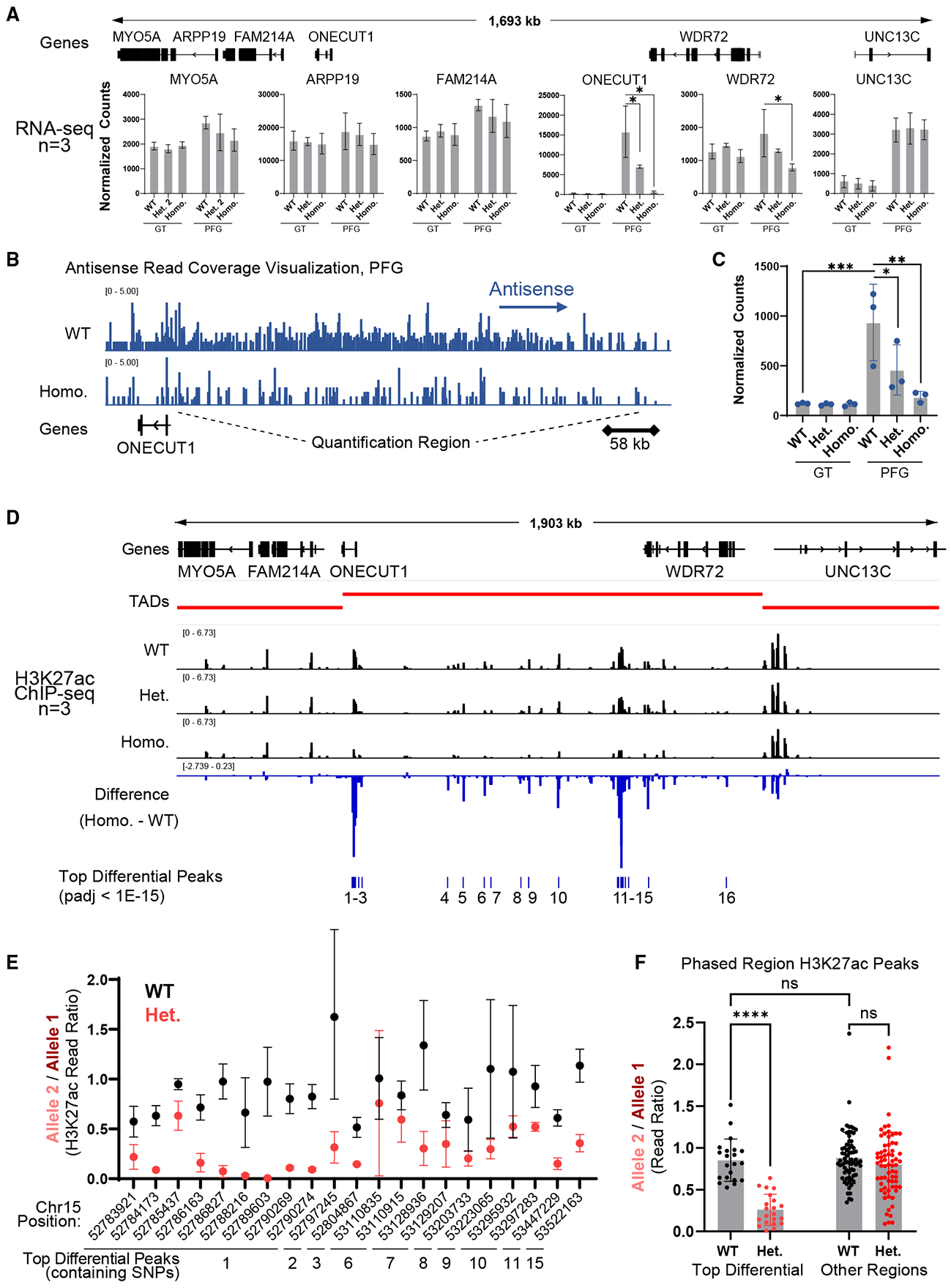
Functional enhancer annotation is critical for understanding tissue-specific transcriptional regulation and prioritizing disease-associated non-coding variants. However, unbiased enhancer discovery in disease-relevant contexts remains challenging. To identify enhancers pertinent to diabetes, we conducted a CRISPR interference (CRISPRi) screen in the human pluripotent stem cell (hPSC) pancreatic differentiation system. Among the enhancers identified, we focused on an enhancer we named ONECUT1e-664kb, ∼664 kb from the ONECUT1 promoter. Previous studies have linked ONECUT1 coding mutations to pancreatic hypoplasia and neonatal diabetes. We found that homozygous deletion of ONECUT1e-664kb in hPSCs leads to a near-complete loss of ONECUT1 expression and impaired pancreatic differentiation. ONECUT1e-664kb contains a type 2 diabetes-associated variant (rs528350911) disrupting a GATA motif. Introducing the risk variant into hPSCs reduced binding of key pancreatic transcription factors (GATA4, GATA6, and FOXA2), supporting its causal role in diabetes. This work highlights the utility of unbiased enhancer discovery in disease-relevant settings for understanding monogenic and complex disease.
功能增强子注释对于理解组织特异性转录调控和优先考虑与疾病相关的非编码变异至关重要。然而,在与疾病相关的背景下进行无偏的增强子发现仍然具有挑战性。为了鉴定与糖尿病相关的增强子,我们在人类多能干细胞(hPSC)胰腺分化系统中进行了 CRISPR 干扰(CRISPRi)筛选。在鉴定的增强子中,我们专注于一个名为 ONECUT1e-664kb 的增强子,它距离 ONECUT1 启动子约 664kb。先前的研究将 ONECUT1 编码突变与胰腺发育不良和新生儿糖尿病联系起来。我们发现,hPSC 中 ONECUT1e-664kb 的纯合缺失导致 ONECUT1 表达几乎完全丧失,并损害胰腺分化。ONECUT1e-664kb 包含一个与 2 型糖尿病相关的变异(rs528350911),破坏了 GATA 基序。将风险变异引入 hPSC 会减少关键胰腺转录因子(GATA4、GATA6 和 FOXA2)的结合,支持其在糖尿病中的因果作用。这项工作强调了在与疾病相关的背景下进行无偏的增强子发现对于理解单基因和复杂疾病的重要性。