Faculty of Health Sciences (Kinesiology), University of Ontario Institute of Technology, Oshawa, ON, Canada.
Faculty of Science (Biology), University of Ontario Institute of Technology, Oshawa, ON, Canada.
PLoS One. 2024 Aug 20;19(8):e0308838. doi: 10.1371/journal.pone.0308838. eCollection 2024.
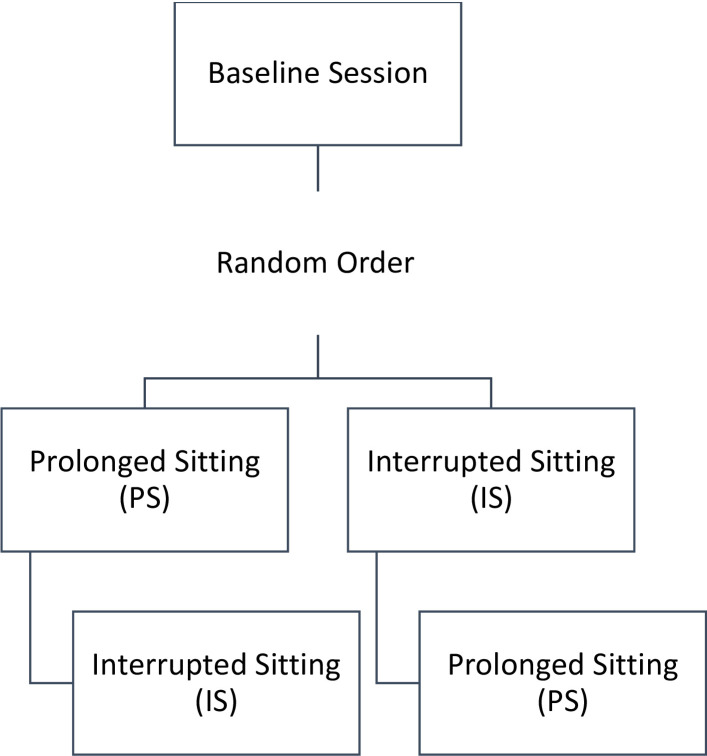
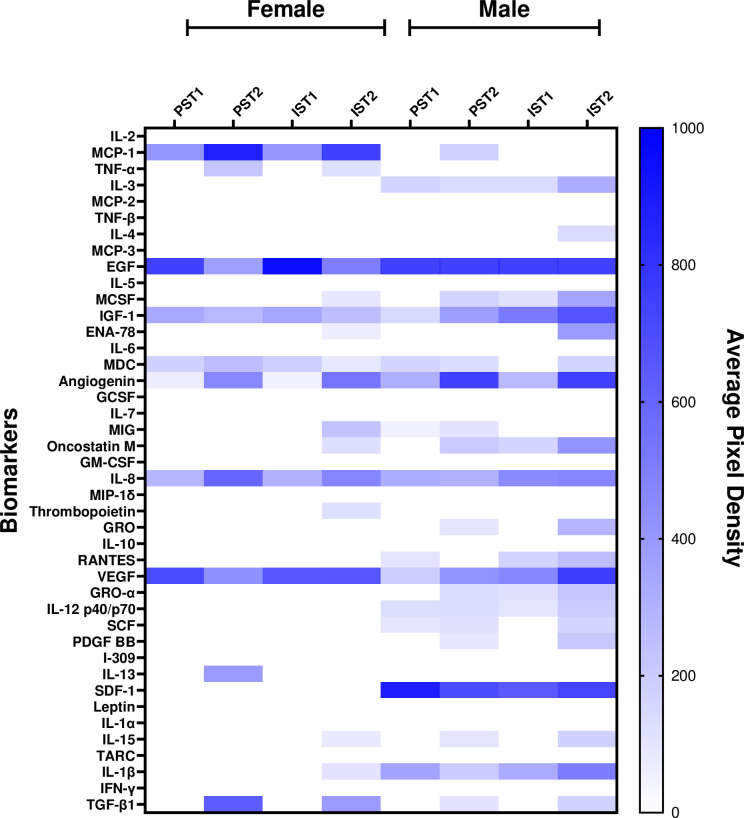
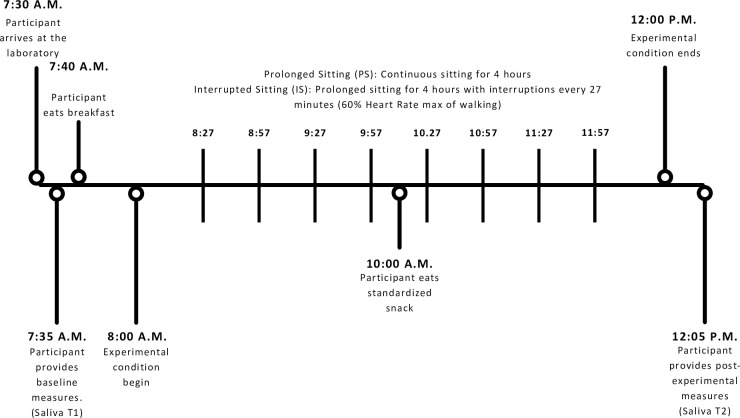
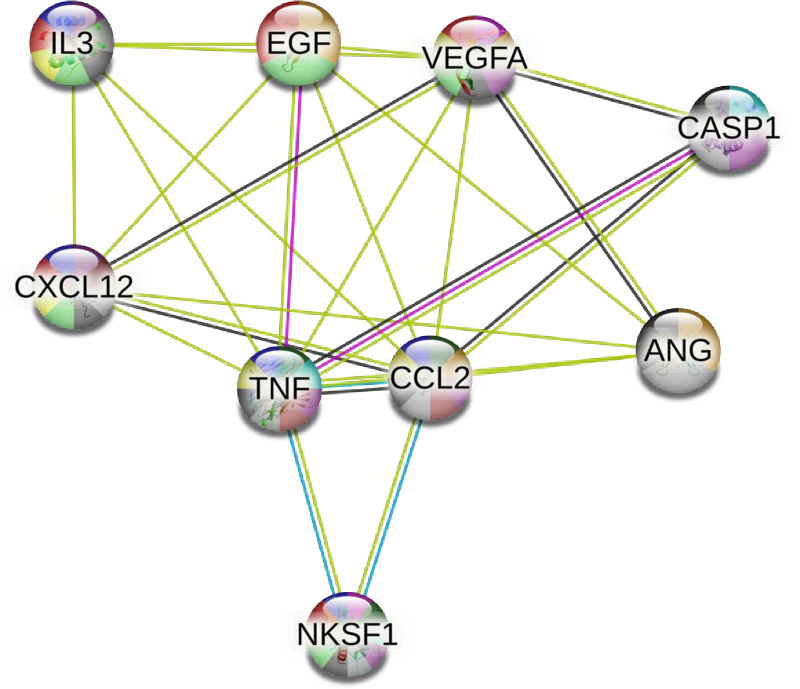
Several known biomarkers have been used to understand the physiological responses of humans to various short and long-term interventions such as exercise or dietary interventions. However, little exploratory work has been conducted to identify novel biomarkers in human saliva that could enable non-invasive physiological research to understand acute responses to interventions such as reducing sedentary time. The purpose of this study was to identify novel biomarkers in the saliva (cytokines, growth factors and vascular factors) that respond to prolonged (4 hours) and interrupted sitting (4 hours of sitting interrupted by 3 minutes of walking at 60% of maximal heart rate every 27 minutes) in young, healthy males and females. We also sought to determine whether responsive biomarkers would differ by sex. Participants (n = 24, 21.2 ± 2.2 years, 50% female) completed a prolonged sitting (PS) session and an interrupted sitting (IS) session in random order. Individual saliva samples were pooled into a male sample and a female sample to identify responsive biomarkers using a human cytokine antibody membrane array (42 targets). Several novel biomarkers were responsive in both sexes (e.g., IL-8, Angiogenin, VEGF, and EGF), in females only (e.g., TNF-α and IL-13), and in males only (e.g., IL-3, RANTES, and IL-12p40/p70). Importantly, several biomarkers appear to be responsive to the 4-hour prolonged and interrupted sitting sessions (e.g., TNF-α, IL-8, IL-3, RANTES, EGF, Angiogenin, and VEGF). This work highlights new directions for researchers aiming to investigate the effect of short-term or acute interventions on different physiological pathways using non-invasive methods. Our work clearly indicates that human saliva samples can provide a wealth of insight into physiological responses, and that a number of biomarkers can be used to understand changes induced by acute interventions such as interrupting prolonged sitting.
几种已知的生物标志物已被用于了解人类对各种短期和长期干预(如运动或饮食干预)的生理反应。然而,很少有探索性工作来确定人类唾液中的新型生物标志物,这些标志物可以使非侵入性生理研究能够了解对干预(如减少久坐时间)的急性反应。本研究的目的是确定唾液中的新型生物标志物(细胞因子、生长因子和血管因子),这些生物标志物对长时间(4 小时)和中断坐姿(4 小时的坐姿每隔 27 分钟中断 3 分钟,以 60%最大心率步行)在年轻、健康的男性和女性中做出反应。我们还试图确定响应性生物标志物是否会因性别而异。参与者(n=24,21.2±2.2 岁,50%为女性)随机完成了长时间坐姿(PS)和中断坐姿(IS)的会话。将个体唾液样本混合到男性样本和女性样本中,使用人类细胞因子抗体膜阵列(42 个靶标)来识别响应性生物标志物。在两性中均有几种新型生物标志物有反应(例如,IL-8、血管生成素、VEGF 和 EGF),仅在女性中(例如,TNF-α 和 IL-13),仅在男性中(例如,IL-3、RANTES 和 IL-12p40/p70)。重要的是,几种生物标志物似乎对 4 小时的延长和中断坐姿会话有反应(例如,TNF-α、IL-8、IL-3、RANTES、EGF、血管生成素和 VEGF)。这项工作为研究人员提供了新的方向,旨在使用非侵入性方法研究短期或急性干预对不同生理途径的影响。我们的工作清楚地表明,人类唾液样本可以提供丰富的生理反应信息,并且可以使用许多生物标志物来了解急性干预(如中断长时间坐姿)引起的变化。