DiPSCo-Department of Psychology and Cognitive Sciences, University of Trento, Corso Bettini, 84, 38068, Rovereto, Italy.
Department of Experimental Psychology, Faculty of Psychology and Pedagogical Sciences, Ghent University, Ghent, Belgium.
Sci Rep. 2024 Aug 20;14(1):19232. doi: 10.1038/s41598-024-68490-9.
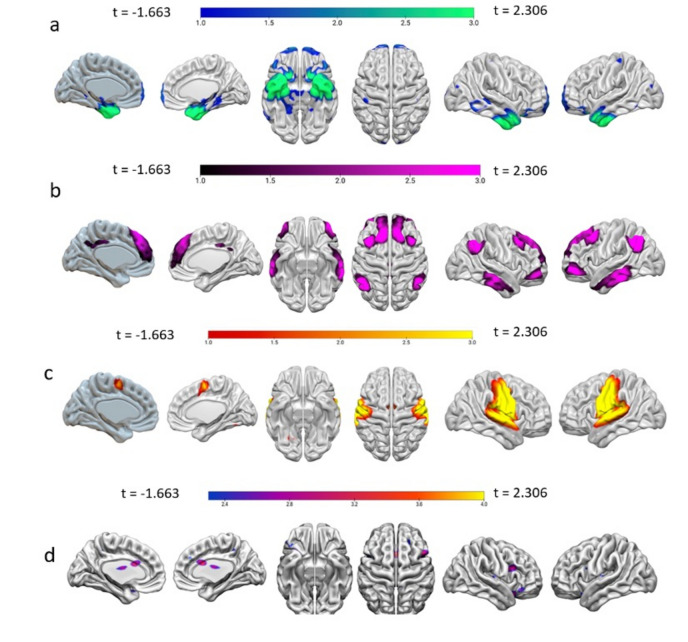
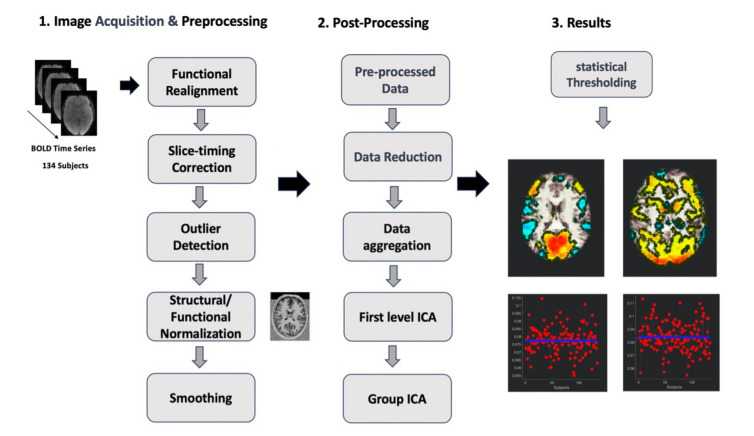
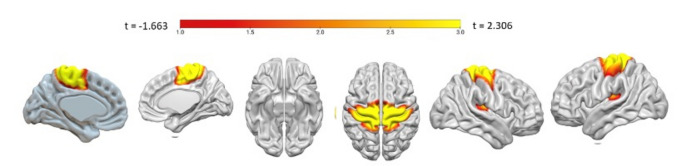
Acceptance and reappraisal are considered adaptive emotion regulation strategies. While previous studies have explored the neural underpinnings of these strategies using task-based fMRI and sMRI, a gap exists in the literature concerning resting-state functional brain networks' contributions to these abilities, especially regarding acceptance. Another intriguing question is whether these strategies rely on similar or different neural mechanisms. Building on the well-known improved emotion regulation and increased cognitive flexibility of individuals who rely on acceptance, we expected to find decreased activity inside the affective network and increased activity inside the executive and sensorimotor networks to be predictive of acceptance. We also expect that these networks may be associated at least in part with reappraisal, indicating a common mechanism behind different strategies. To test these hypotheses, we conducted a functional connectivity analysis of resting-state data from 134 individuals (95 females; mean age: 30.09 ± 12.87 years, mean education: 12.62 ± 1.41 years). To assess acceptance and reappraisal abilities, we used the Cognitive Emotion Regulation Questionnaire (CERQ) and a group-ICA unsupervised machine learning approach to identify resting-state networks. Subsequently, we conducted backward regression to predict acceptance and reappraisal abilities. As expected, results indicated that acceptance was predicted by decreased affective, and executive, and increased sensorimotor networks, while reappraisal was predicted by an increase in the sensorimotor network only. Notably, these findings suggest both distinct and overlapping brain contributions to acceptance and reappraisal strategies, with the sensorimotor network potentially serving as a core common mechanism. These results not only align with previous findings but also expand upon them, illustrating the complex interplay of cognitive, affective, and sensory abilities in emotion regulation.
接受和再评估被认为是适应性的情绪调节策略。虽然之前的研究已经使用任务态 fMRI 和 sMRI 探索了这些策略的神经基础,但在静息态功能脑网络对这些能力的贡献方面,文献中存在空白,特别是关于接受能力。另一个有趣的问题是这些策略是否依赖于相似或不同的神经机制。基于依赖接受的个体改善情绪调节和提高认知灵活性的已知事实,我们预计在情感网络内部活动减少和执行与感觉运动网络内部活动增加将预测接受能力。我们还期望这些网络至少部分与再评估相关,表明不同策略背后存在共同的机制。为了检验这些假设,我们对 134 名个体(95 名女性;平均年龄:30.09±12.87 岁,平均教育程度:12.62±1.41 年)的静息态数据进行了功能连接分析。为了评估接受和再评估能力,我们使用了认知情绪调节问卷(CERQ)和群组独立成分分析(group-ICA)无监督机器学习方法来识别静息态网络。随后,我们进行了反向回归以预测接受和再评估能力。正如预期的那样,结果表明,接受能力由情感、执行和感觉运动网络的减少以及感觉运动网络的增加所预测,而再评估能力仅由感觉运动网络的增加所预测。值得注意的是,这些发现表明接受和再评估策略具有独特和重叠的大脑贡献,感觉运动网络可能是一个核心共同机制。这些结果不仅与之前的发现一致,而且还扩展了它们,说明了认知、情感和感觉能力在情绪调节中的复杂相互作用。