Department of Ophthalmology and Vision Science, Department of Dermatology, School of Medicine, University of California, Davis, Sacramento, CA, USA.
Department of Internal Medicine, School of Medicine, University of California, Davis, Sacramento, CA, USA.
Nat Microbiol. 2024 Oct;9(10):2653-2665. doi: 10.1038/s41564-024-01778-8. Epub 2024 Aug 20.
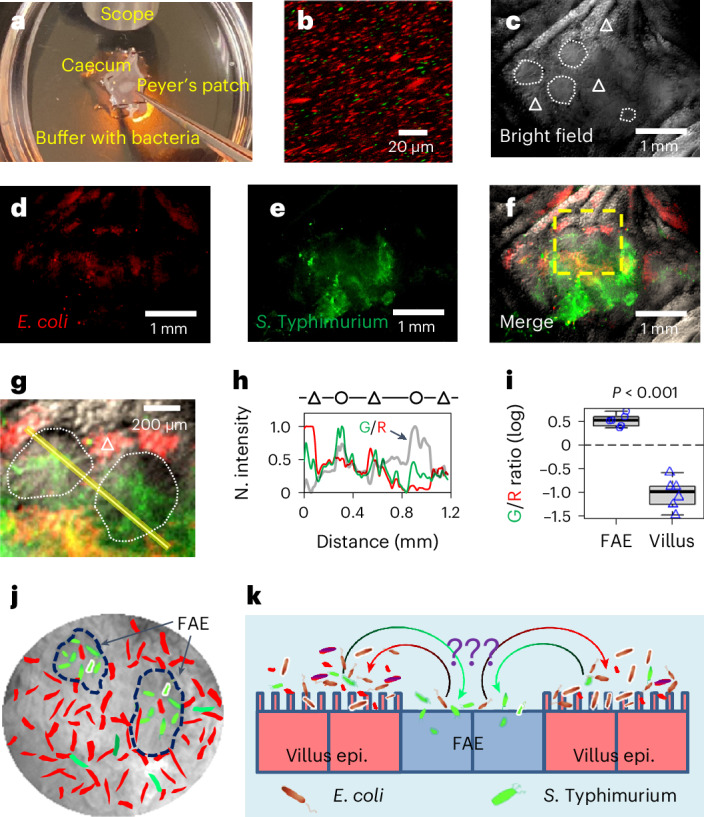
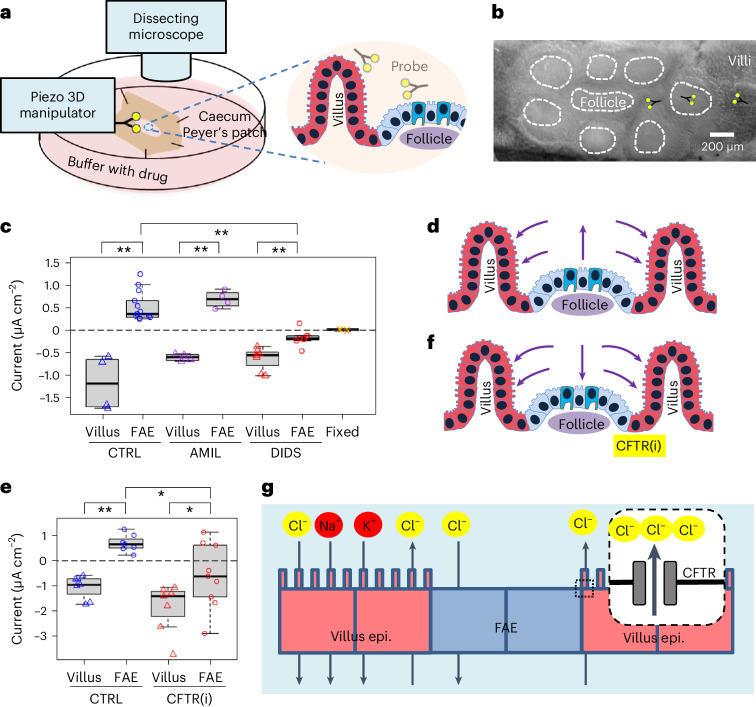
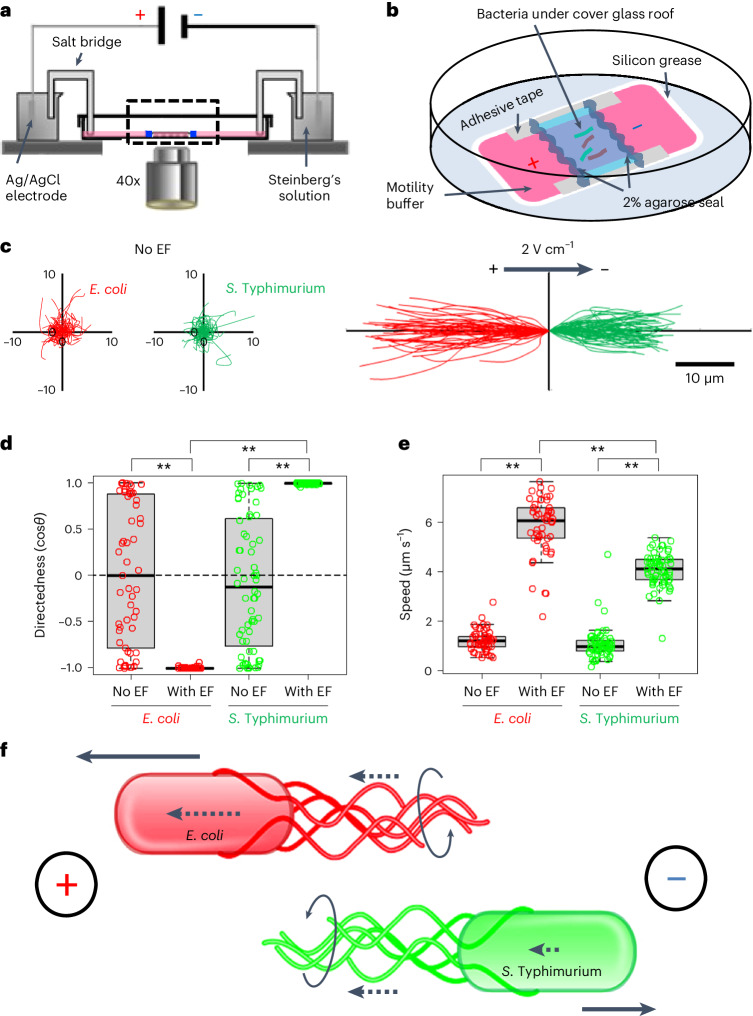
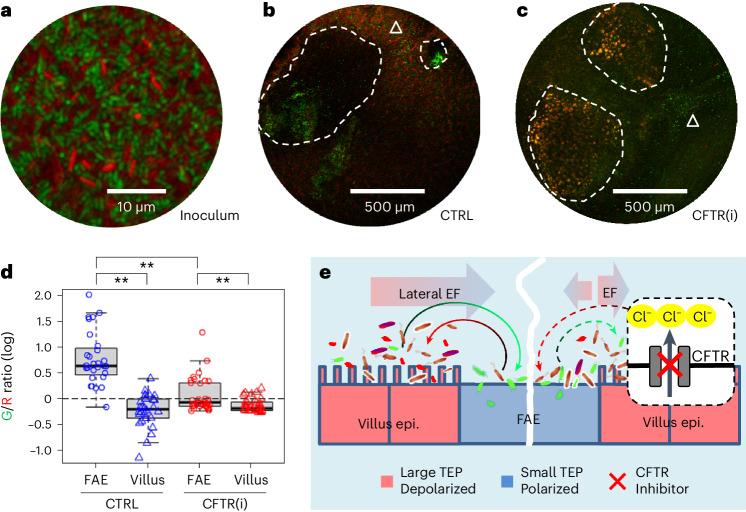
Salmonella translocate to the gut epithelium via microfold cells lining the follicle-associated epithelium (FAE). How Salmonella localize to the FAE is not well characterized. Here we use live imaging and competitive assays between wild-type and chemotaxis-deficient mutants to show that Salmonella enterica serotype Typhimurium (S. Typhimurium) localize to the FAE independently of chemotaxis in an ex vivo mouse caecum infection model. Electrical recordings revealed polarized FAE with sustained outward current and small transepithelial potential, while the surrounding villus is depolarized with inward current and large transepithelial potential. The distinct electrical potentials attracted S. Typhimurium to the FAE while Escherichia coli (E. coli) localized to the villi, through a process called galvanotaxis. Chloride flux involving the cystic fibrosis transmembrane conductance regulator (CFTR) generated the ionic currents around the FAE. Pharmacological inhibition of CFTR decreased S. Typhimurium FAE localization but increased E. coli recruitment. Altogether, our findings demonstrate that bioelectric cues contribute to S. Typhimurium targeting of specific gut epithelial locations, with potential implications for other enteric bacterial infections.
沙门氏菌通过衬里滤泡相关上皮(FAE)的微褶皱细胞转移到肠道上皮。沙门氏菌如何定位到 FAE 尚不清楚。在这里,我们使用活细胞成像和野生型与趋化性缺陷突变体之间的竞争测定,表明鼠伤寒沙门氏菌(S. Typhimurium)在体外小鼠盲肠感染模型中独立于趋化性定位到 FAE。电记录显示极化的 FAE 具有持续的外向电流和小的跨上皮电位,而周围的绒毛则具有内向电流和大的跨上皮电位。通过称为电流趋化性的过程,不同的电潜力将 S. Typhimurium 吸引到 FAE,而大肠杆菌(E. coli)则定位于绒毛。涉及囊性纤维化跨膜电导调节剂(CFTR)的氯离子通量产生了围绕 FAE 的离子电流。CFTR 的药理学抑制减少了 S. Typhimurium 的 FAE 定位,但增加了 E. coli 的募集。总的来说,我们的发现表明生物电线索有助于 S. Typhimurium 靶向特定的肠道上皮位置,这可能对其他肠道细菌感染有潜在影响。