Charité Comprehensive Cancer Center, Charité - Universitätsmedizin Berlin, Berlin, Germany.
Faculty of Life Sciences, Humboldt-Universität zu Berlin, Berlin, Germany.
Nat Commun. 2024 Aug 22;15(1):7205. doi: 10.1038/s41467-024-51611-3.
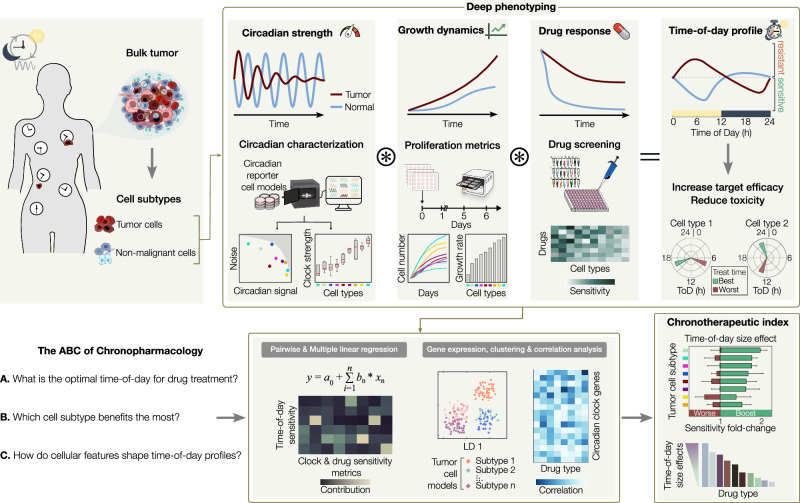
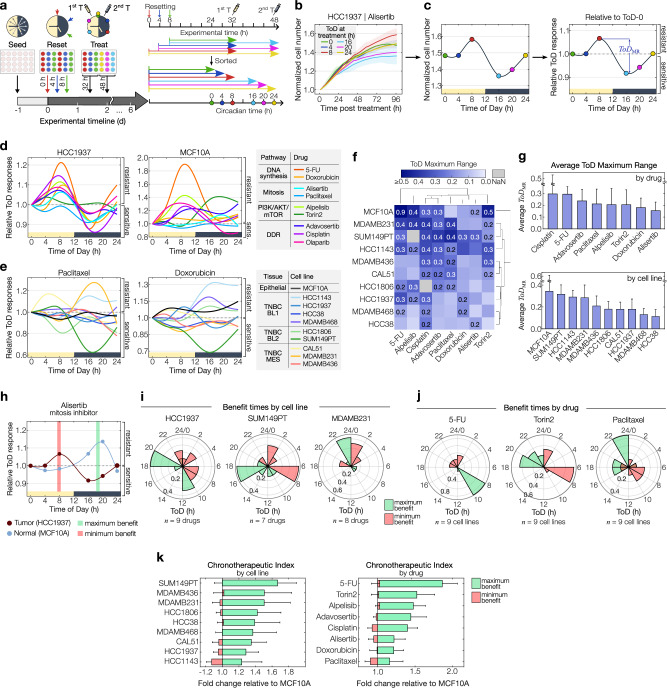
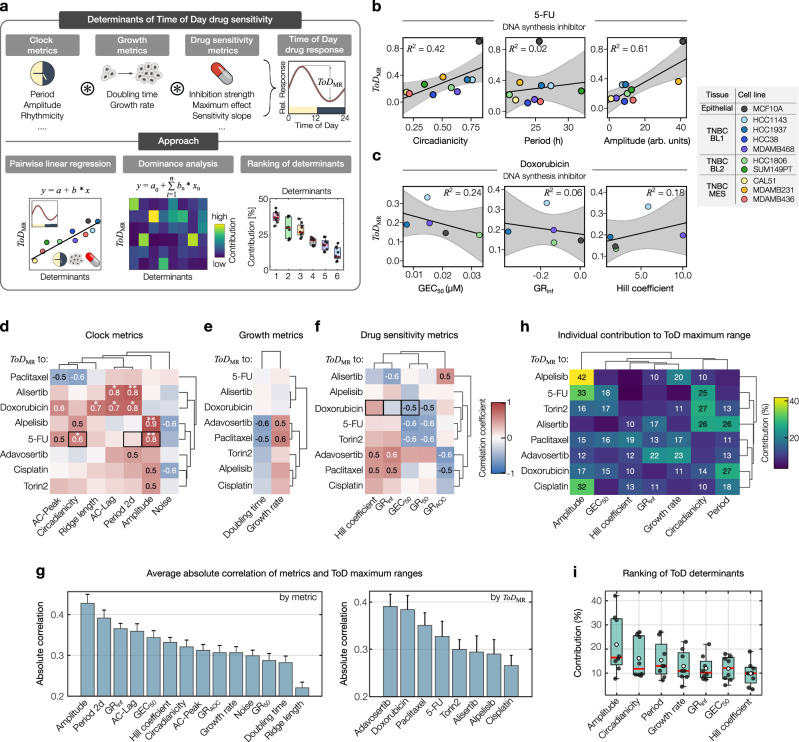
The circadian clock, a fundamental biological regulator, governs essential cellular processes in health and disease. Circadian-based therapeutic strategies are increasingly gaining recognition as promising avenues. Aligning drug administration with the circadian rhythm can enhance treatment efficacy and minimize side effects. Yet, uncovering the optimal treatment timings remains challenging, limiting their widespread adoption. In this work, we introduce a high-throughput approach integrating live-imaging and data analysis techniques to deep-phenotype cancer cell models, evaluating their circadian rhythms, growth, and drug responses. We devise a streamlined process for profiling drug sensitivities across different times of the day, identifying optimal treatment windows and responsive cell types and drug combinations. Finally, we implement multiple computational tools to uncover cellular and genetic factors shaping time-of-day drug sensitivity. Our versatile approach is adaptable to various biological models, facilitating its broad application and relevance. Ultimately, this research leverages circadian rhythms to optimize anti-cancer drug treatments, promising improved outcomes and transformative treatment strategies.
生物钟是一种基本的生物调节剂,它控制着健康和疾病中的基本细胞过程。基于生物钟的治疗策略作为一种很有前途的方法正越来越受到关注。将药物管理与生物钟同步可以提高治疗效果,减少副作用。然而,发现最佳治疗时机仍然具有挑战性,限制了它们的广泛应用。在这项工作中,我们引入了一种高通量的方法,该方法整合了活细胞成像和数据分析技术,对癌症细胞模型进行深度表型分析,评估它们的生物钟节律、生长和药物反应。我们设计了一个简化的流程来分析一天中不同时间的药物敏感性,确定最佳的治疗窗口和敏感细胞类型以及药物组合。最后,我们利用多种计算工具来揭示塑造时间药物敏感性的细胞和遗传因素。我们的多功能方法适用于各种生物模型,促进了其广泛应用和相关性。最终,这项研究利用生物钟来优化抗癌药物治疗,有望改善治疗效果并提供变革性的治疗策略。