State Key Laboratory of Cellular Stress Biology, School of Life Sciences, Xiamen University, Xiamen, PR China.
Cell Commun Signal. 2024 Aug 21;22(1):409. doi: 10.1186/s12964-024-01784-7.
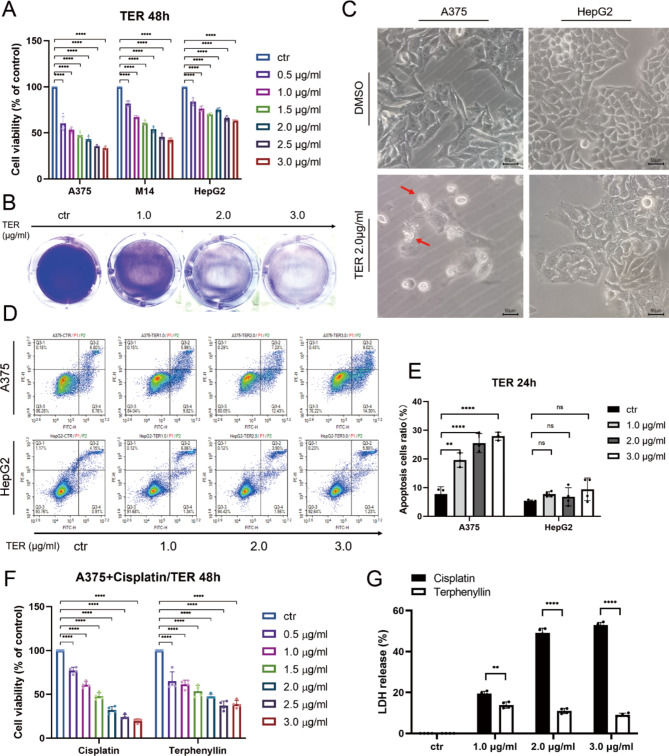
Melanoma, one of the most lethal forms of skin cancer, has the potential to develop in any area where melanocytes are present. Currently, postoperative recurrence due to the emergence of systemic drug resistance represents a significant challenge in the treatment of melanoma. In this study, terphenyllin (TER), a distinctive inhibitory impact on melanoma cells was identified from the natural p-terphenyl metabolite. This study aimed to elucidate the intrinsic mechanism of this inhibitory effect, which may facilitate the discovery of novel chemotherapeutic agents.
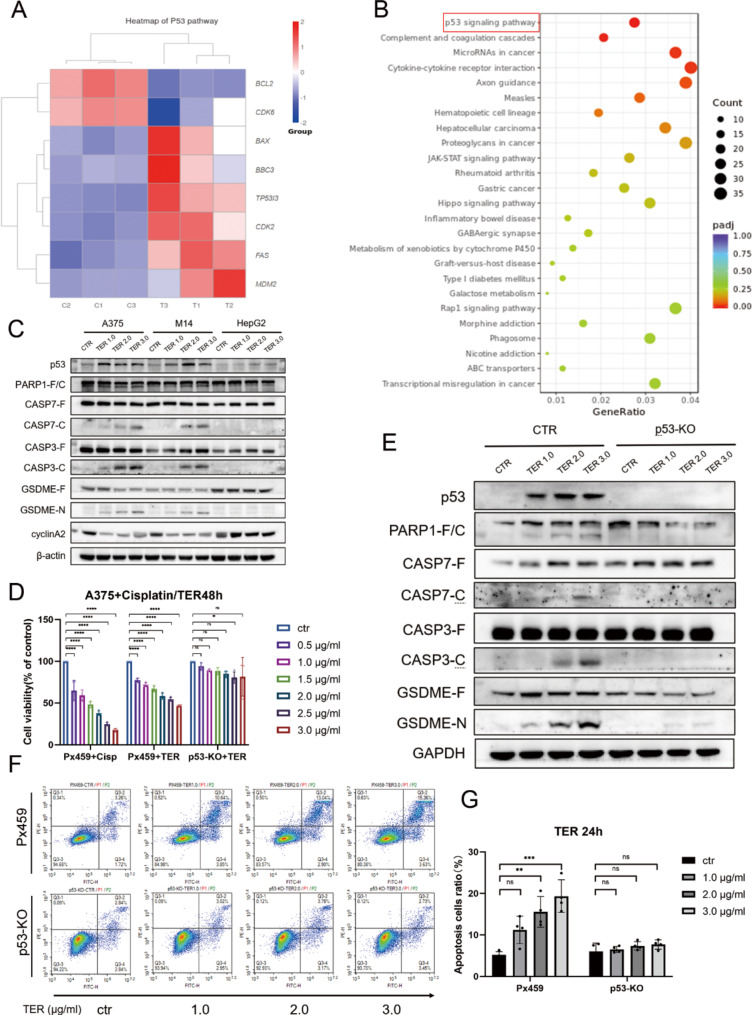
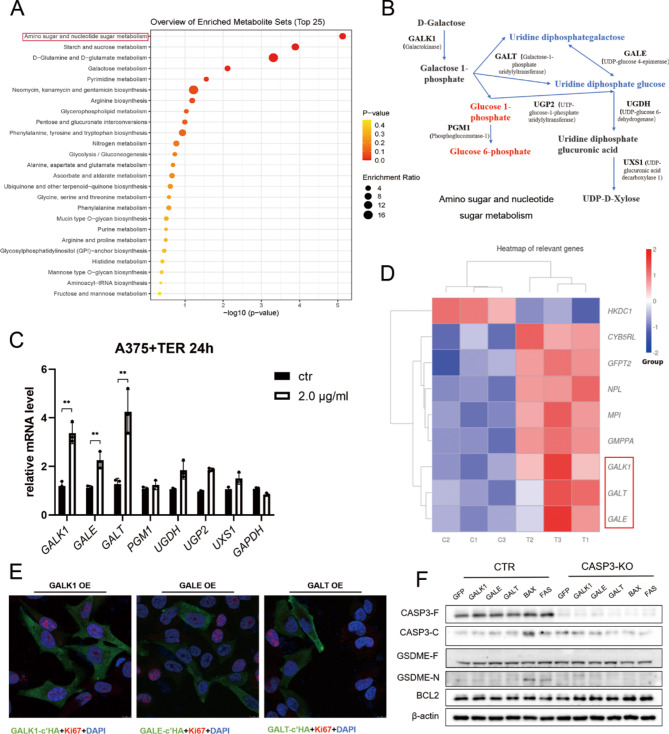
A transcriptome sequencing and metabolomic analysis of TER-treated A375 cells was conducted to identify potential pathways of action. The key proteins were knocked out and backfilled using CRISPR-Cas9 technology and molecular cloning. Subsequently, the results of cytosolic viability, LDH release, immunofluorescence and flow cytometry were employed to demonstrate the cell death status of the drug-treated cells.
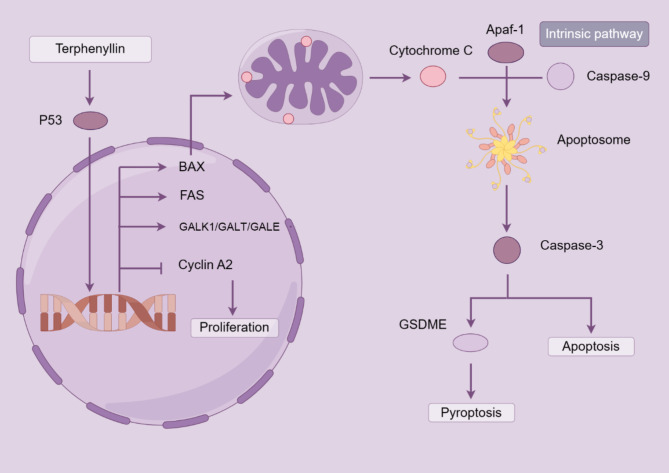
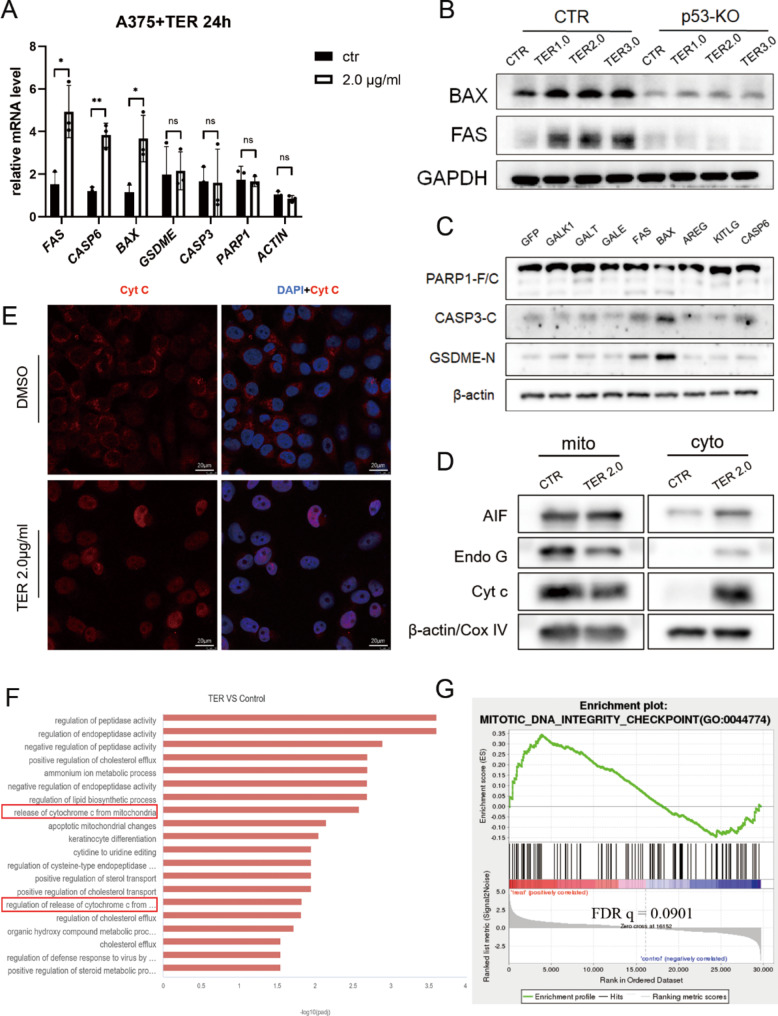
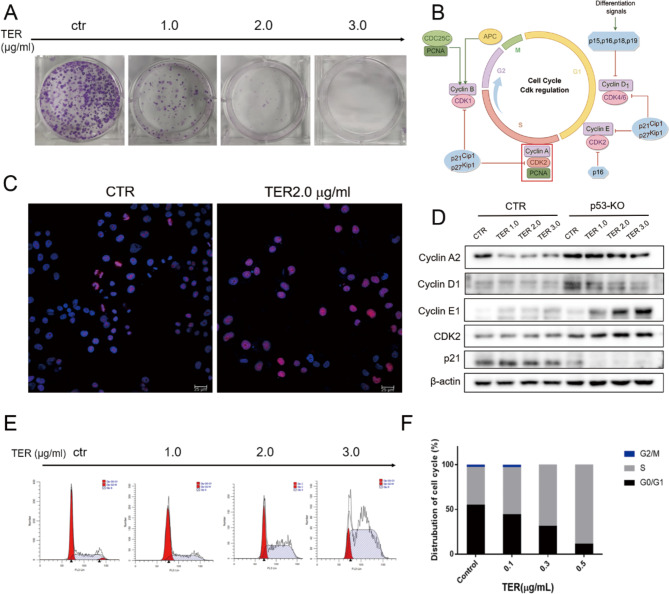
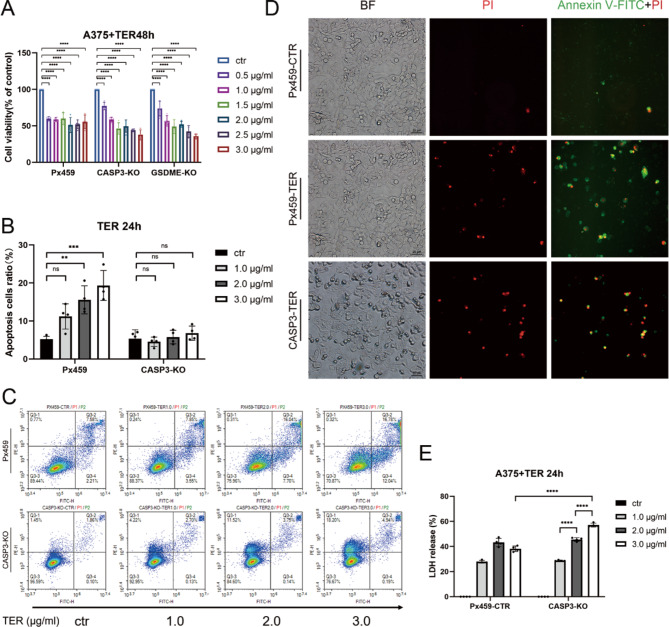
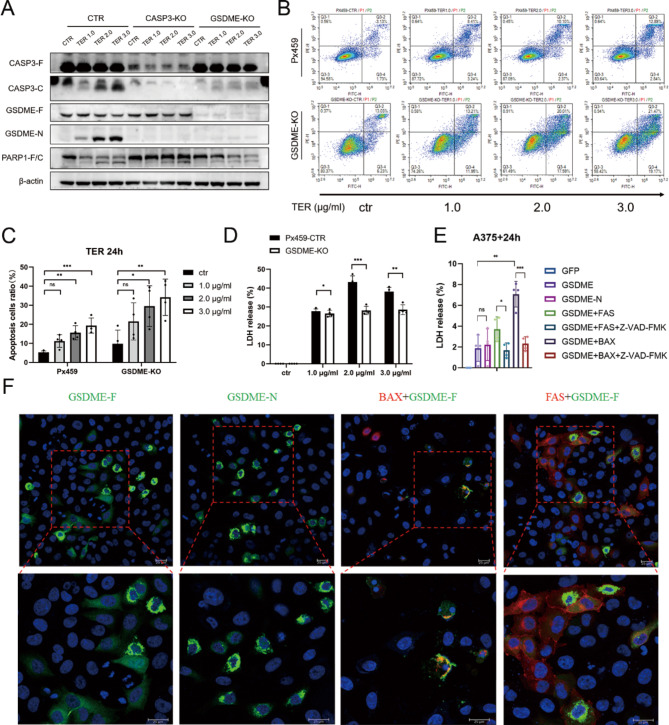
The p53 signalling pathway was markedly upregulated following TER treatment, leading to the activation of CASP3 via the intrinsic apoptotic pathway. The activated CASP3 initiated apoptosis, while simultaneously continuing to cleave the GSDME, thereby triggering pyroptosis. The knockout of p53, a key protein situated upstream of this pathway, resulted in a significant rescue of TER-induced cell death, as well as an alleviation of the decrease in cell viability. However, the knockout of key proteins situated downstream of the pathway (CASP3 and GSDME) did not result in a rescue of TER-induced cell death, but rather a transformation of the cells from apoptosis and pyroptosis.
The induction of apoptosis and pyroptosis in A375 cells by TER is mediated via the p53-BAX/FAS-CASP3-GSDME signalling pathway. This lays the foundation for TER as a potential anti-melanoma drug in the future. It should be noted that CASP3 and GSDME in this pathway solely regulate the mode of cell death, rather than determine whether cell death occurs. This distinction may prove valuable in future studies of apoptosis and pyroptosis.
黑色素瘤是最致命的皮肤癌之一,有可能在任何存在黑色素细胞的区域发展。目前,由于出现系统性药物耐药性,术后复发是黑色素瘤治疗的一个重大挑战。在这项研究中,从天然对三联苯代谢物中发现了一种独特的抑制黑色素瘤细胞的化合物——三苯乙烯(TER)。本研究旨在阐明这种抑制作用的内在机制,这可能有助于发现新的化疗药物。
通过对 TER 处理的 A375 细胞进行转录组测序和代谢组学分析,确定潜在的作用途径。使用 CRISPR-Cas9 技术和分子克隆技术敲除和回补关键蛋白。随后,采用细胞质活力、LDH 释放、免疫荧光和流式细胞术的结果来证明药物处理细胞的死亡状态。
TER 处理后,p53 信号通路明显上调,通过内在凋亡途径激活 CASP3。激活的 CASP3 引发细胞凋亡,同时继续切割 GSDME,从而引发细胞焦亡。该途径上游关键蛋白 p53 的敲除导致 TER 诱导的细胞死亡显著挽救,以及细胞活力下降的缓解。然而,该途径下游关键蛋白(CASP3 和 GSDME)的敲除并未导致 TER 诱导的细胞死亡挽救,而是导致细胞从凋亡和细胞焦亡转化。
TER 诱导 A375 细胞凋亡和细胞焦亡是通过 p53-BAX/FAS-CASP3-GSDME 信号通路介导的。这为 TER 作为未来潜在的抗黑色素瘤药物奠定了基础。需要注意的是,该途径中的 CASP3 和 GSDME 仅调节细胞死亡的方式,而不决定细胞是否死亡。这一区别在未来对凋亡和细胞焦亡的研究中可能具有重要价值。