Fang Yuxia, Zhao Yilu, Qin Lei, Song Ziyue, Zhang Ruzhi
Department of Dermatology and STD, The Second Affiliated Hospital of Wannan Medical College, Wuhu, Anhui, 241001, People's Republic of China.
Department of Dermatology, The First Affiliated Hospital of Bengbu Medical University, Bengbu Medical University, Bengbu, Anhui, People's Republic of China.
Infect Drug Resist. 2024 Aug 17;17:3599-3604. doi: 10.2147/IDR.S473416. eCollection 2024.
Intramuscular (IM) injection of penicillin G Benzathine (PGB) is widely recognized as the primary treatment for patients at all stages of syphilis. However, the discomfort and induration associated with PGB injections are often a challenge for patients. While lidocaine is already known to reduce injection pain and is standard practice in some countries, the added value of combining lidocaine with the z-track technique has not been thoroughly investigated. This study aims to observe the use of combining lidocaine with the Z-track technique in the treatment of syphilis, and to explore less painful methods of administering IM PGB for the treatment of syphilis in adult patients.
32 syphilis patients requiring penicillin treatment were injected with 1.2 million units of penicillin on both sides of the buttocks. The left side was injected using the traditional method with 0.9% saline as the solvent (control Group), while the right side was injected using a "z" injection method with 0.2% lidocaine as the solvent (experimental Group). The success rate of the single injection, the intensity and duration of the post-injection pain and the induration reaction were observed and recorded.
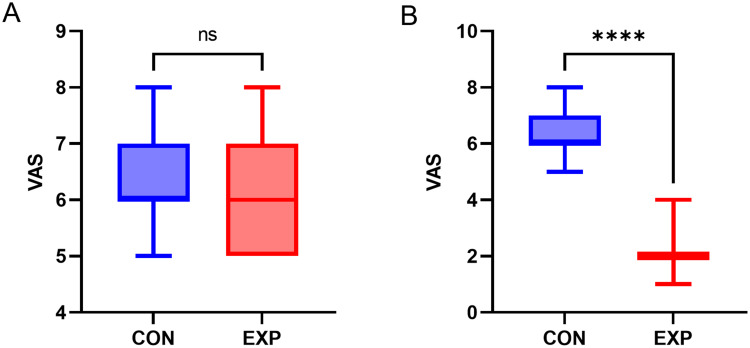
There was no statistically significant difference in single injection success rate and immediate post injection pain score between the two sides (>0.05). However, the right side had a lower pain score at 30 minutes post injection and fewer induration reactions, showing a statistically significant difference between the two sides (<0.05). Chi-squared analysis showed that age, gender and BMI had no significant effect on pain scores 30 minutes after injection in either the control or intervention groups. ().
The lidocaine + Z-track penicillin method can reduce delayed pain and induration reactions in patients with syphilis, and provides an additional approach to improving patient comfort beyond the standard use of lidocaine alone. This method merits clinical promotion.
肌内注射苄星青霉素(PGB)被广泛认为是梅毒各阶段患者的主要治疗方法。然而,PGB注射带来的不适和硬结对患者来说常常是一项挑战。虽然利多卡因已知可减轻注射疼痛,且在一些国家是标准做法,但将利多卡因与Z形注射技术联合使用的附加价值尚未得到充分研究。本研究旨在观察利多卡因联合Z形注射技术在梅毒治疗中的应用,并探索在成年梅毒患者中进行肌内注射PGB时减轻疼痛的方法。
32例需要青霉素治疗的梅毒患者在双侧臀部注射120万单位青霉素。左侧采用传统方法,以0.9%生理盐水作为溶剂进行注射(对照组),右侧采用“Z”形注射法,以0.2%利多卡因作为溶剂进行注射(实验组)。观察并记录单次注射成功率、注射后疼痛强度和持续时间以及硬结反应。
两侧单次注射成功率和注射后即刻疼痛评分无统计学显著差异(>0.05)。然而,右侧在注射后30分钟时疼痛评分较低,硬结反应较少,两侧之间存在统计学显著差异(<0.05)。卡方分析表明,年龄、性别和体重指数对对照组或干预组注射后30分钟的疼痛评分均无显著影响。
利多卡因+Z形注射青霉素法可减轻梅毒患者的延迟性疼痛和硬结反应,并提供了一种超越单独使用利多卡因标准用法来提高患者舒适度的额外方法。该方法值得临床推广。