Department of Radiation Oncology, Guangxi Medical University Cancer Hospital, No 71, Hedi Road, Nanning, 530021, Guangxi, People's Republic of China.
Sci Rep. 2024 Aug 22;14(1):19477. doi: 10.1038/s41598-024-68931-5.
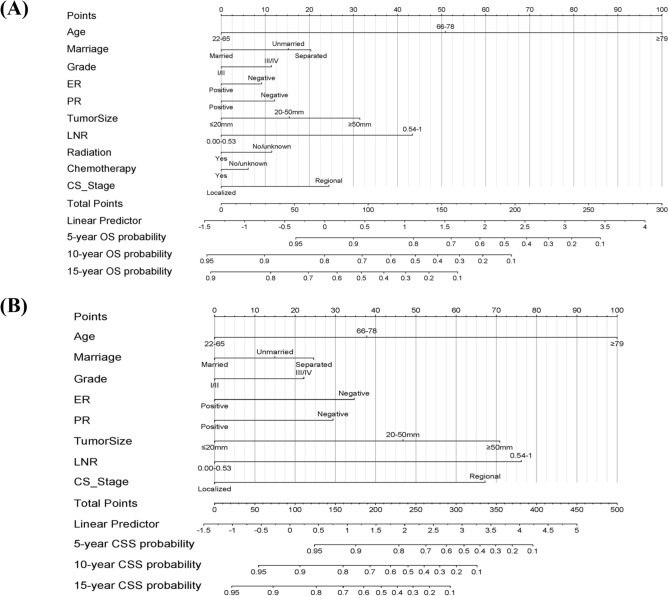
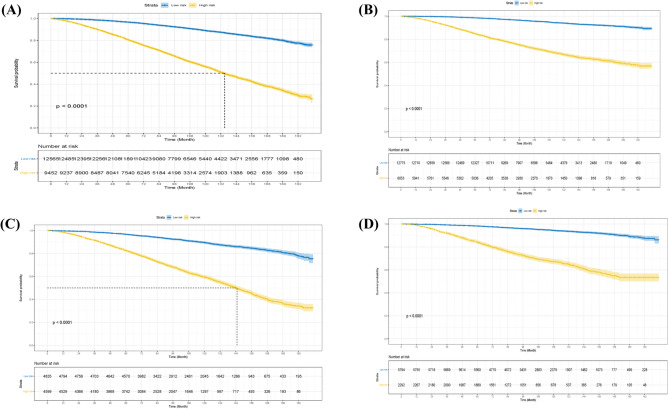
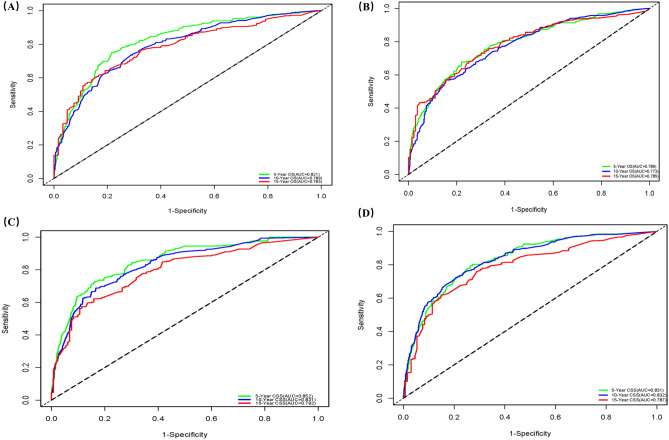
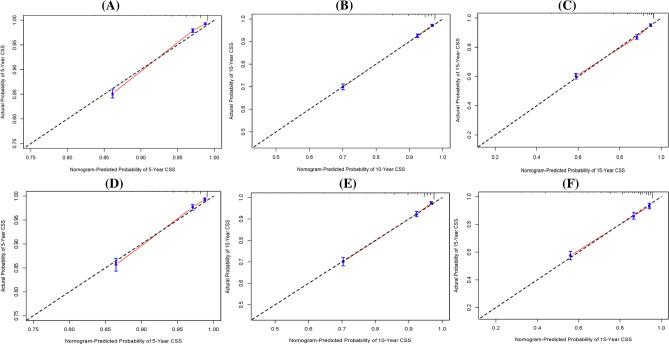
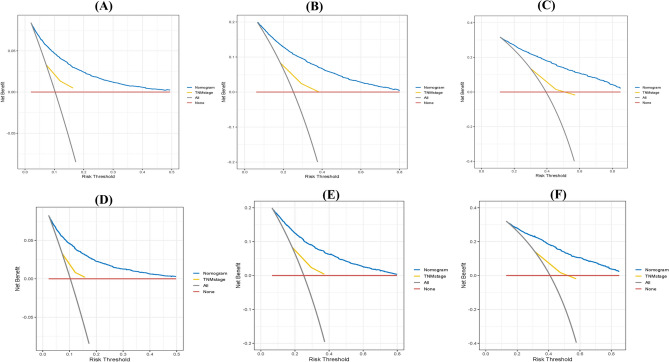
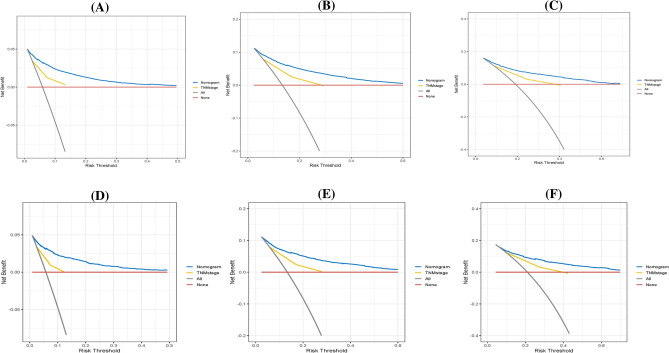
Invasive lobular breast carcinoma (ILC) is one potential subset that "clinicopathologic features" can conflict with "long-term outcome" and the optimal management strategy is unknown in such discordant situations. The present study aims to predict the long-term, overall survival (OS) and cancer-specific survival (CSS) of ILC. The clinical information of patients with non-metastatic ILC was retrieved from the Surveillance, Epidemiology, and End Results (SEER) database between 2004 and 2020. A total of 31451 patients were enrolled and divided into the training cohort (n=22,017) and validation cohort (n=9434). The last follow-up was December, 31, 2020 and the median follow-up period was 99 months (1-203). Age, marriage, estrogen (ER) status, progesterone (PR) status, grade, tumor size, lymph node ratio (LNR) and combined summary (CS) stage were prognostic factors for both OS and CSS of ILC, whereas chemotherapy and radiation were independent protect factors for OS. The nomograms exhibited satisfactory discriminative ability. For the training and validation cohorts, the C-index of the OS nomogram was 0.765 (95% CI 0.762-0.768) and 0.757 (95% CI 0.747-0.767), and the C-index of the CSS nomogram were 0.812 (95% CI 0.804-0.820) and 0.813 (95% CI 0.799-0.827), respectively. Additionally, decision curve analysis (DCA) demonstrated that the nomograms had superior predictive performance than traditional American Joint Committee on Cancer (AJCC) TNM stage. The novel nomograms to predict long-term prognosis based on LNR are reliable tools to predict survival, which may assist clinicians in identifying high-risk patients and devising individual treatments for patients with ILC. Our findings should aid public health prevention strategies to reduce cancer burden. We provide two R/Shiny apps ( https://ilc-survival2024.shinyapps.io/osnomogram/ ; https://ilc-survival2024.shinyapps.io/cssnomogram/ ) to visualize findings.
浸润性小叶乳腺癌(ILC)是一种潜在的亚组,其“临床病理特征”可能与“长期预后”相冲突,在这种不一致的情况下,最佳的管理策略尚不清楚。本研究旨在预测 ILC 的长期总生存(OS)和癌症特异性生存(CSS)。从 2004 年至 2020 年,从监测、流行病学和最终结果(SEER)数据库中检索出非转移性 ILC 患者的临床信息。共纳入 31451 例患者,并分为训练队列(n=22017)和验证队列(n=9434)。最后一次随访时间为 2020 年 12 月 31 日,中位随访时间为 99 个月(1-203)。年龄、婚姻、雌激素(ER)状态、孕激素(PR)状态、分级、肿瘤大小、淋巴结比率(LNR)和综合总结(CS)分期是 ILC OS 和 CSS 的预后因素,而化疗和放疗是 OS 的独立保护因素。列线图显示出良好的区分能力。对于训练队列和验证队列,OS 列线图的 C 指数分别为 0.765(95%CI 0.762-0.768)和 0.757(95%CI 0.747-0.767),CSS 列线图的 C 指数分别为 0.812(95%CI 0.804-0.820)和 0.813(95%CI 0.799-0.827)。此外,决策曲线分析(DCA)表明,列线图的预测性能优于传统的美国癌症联合委员会(AJCC)TNM 分期。基于 LNR 的预测长期预后的新列线图是预测生存的可靠工具,可帮助临床医生识别高危患者并为 ILC 患者制定个体化治疗方案。我们的研究结果应该有助于制定公共卫生预防策略以减轻癌症负担。我们提供了两个 R/Shiny 应用程序(https://ilc-survival2024.shinyapps.io/osnomogram/;https://ilc-survival2024.shinyapps.io/cssnomogram/)来可视化研究结果。