Faculty of Geosciences, Department of Earth Sciences, Utrecht University, Vening Meinesz building A, Princetonlaan 8A, Utrecht, 3584 CB, The Netherlands.
Faculty of Biology, Biological and Chemical Research Centre, Institute of Evolutionary Biology, University of Warsaw, ul. Żwirki i Wigury 101, Warsaw, 02-089, Poland.
BMC Ecol Evol. 2024 Aug 23;24(1):113. doi: 10.1186/s12862-024-02287-2.
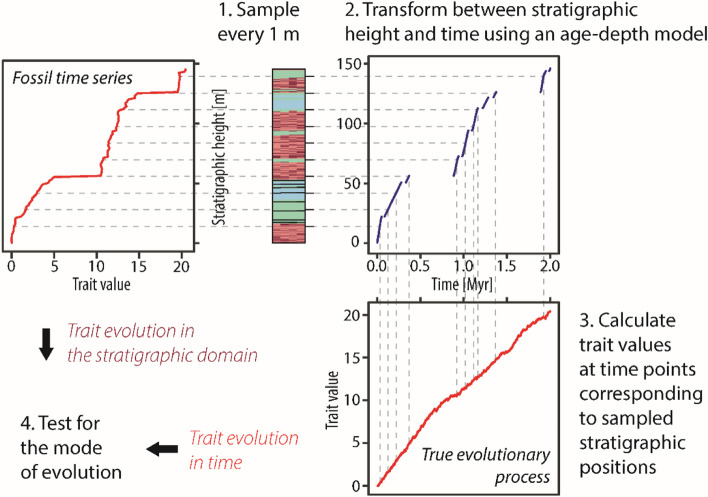
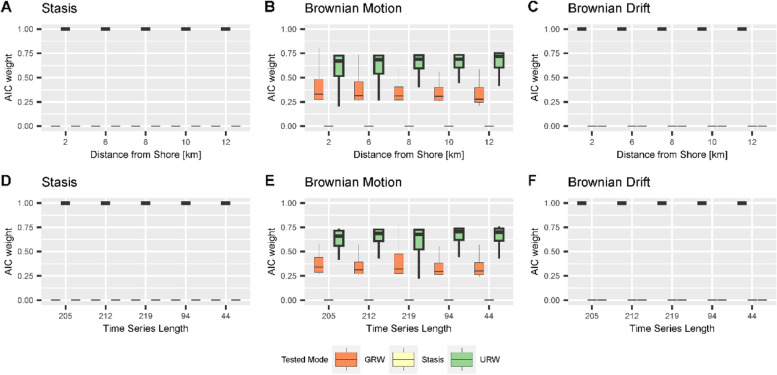
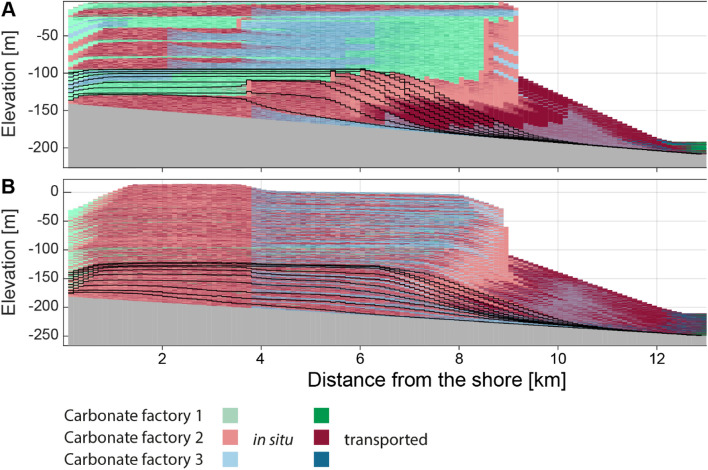
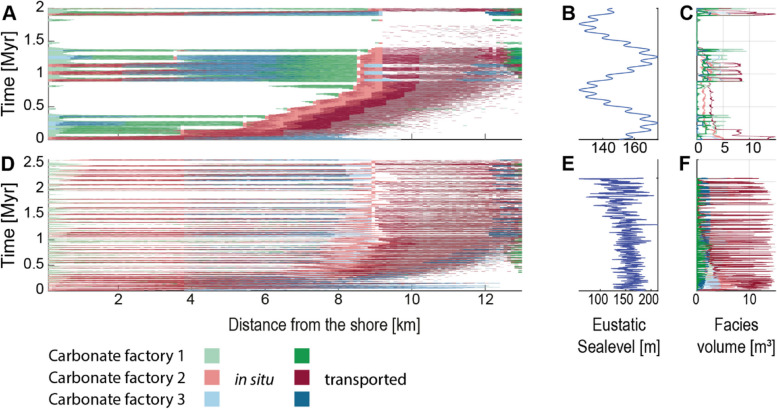
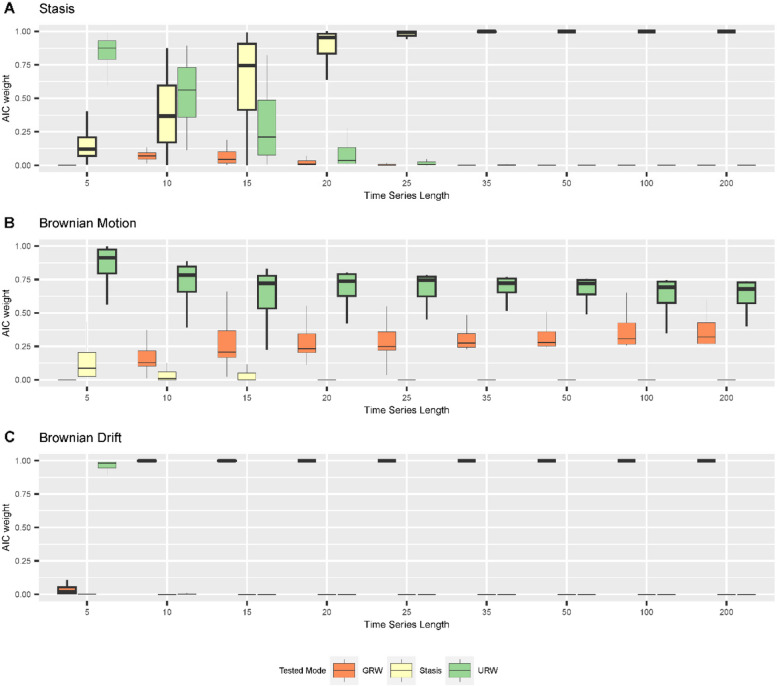
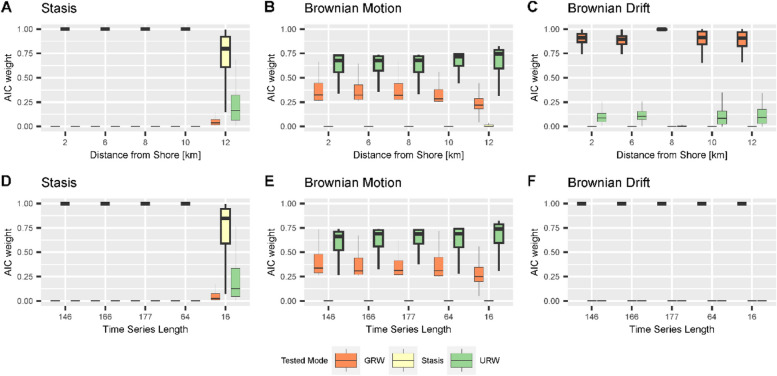
The fossil record provides the unique opportunity to observe evolution over millions of years, but is known to be incomplete. While incompleteness varies spatially and is hard to estimate for empirical sections, computer simulations of geological processes can be used to examine the effects of the incompleteness in silico. We combine simulations of different modes of evolution (stasis, (un)biased random walks) with deposition of carbonate platforms strata to examine how well the mode of evolution can be recovered from fossil time series, and how test results vary between different positions in the carbonate platform and multiple stratigraphic architectures generated by different sea level curves.
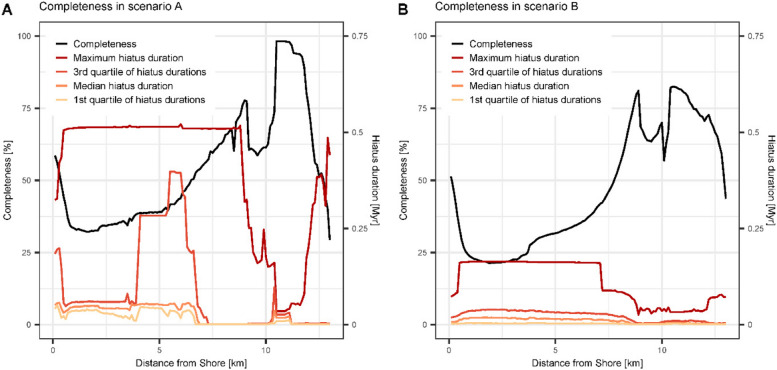
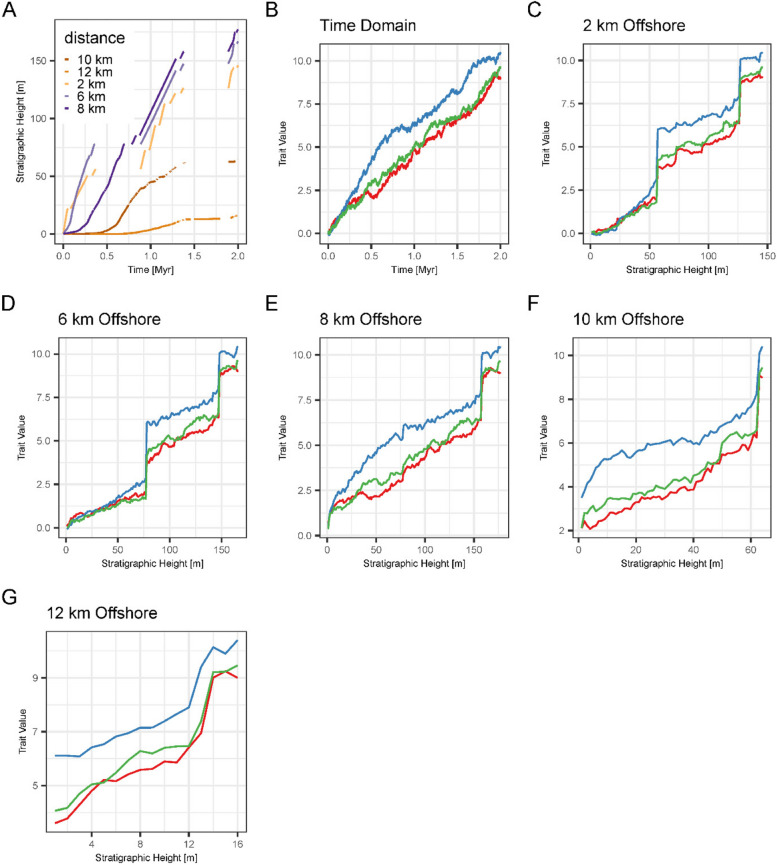
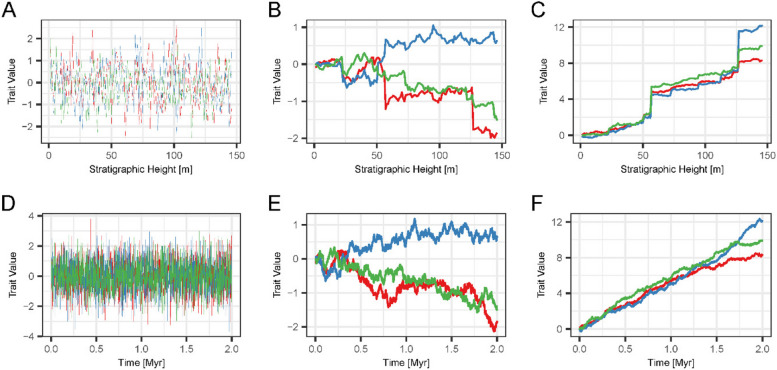
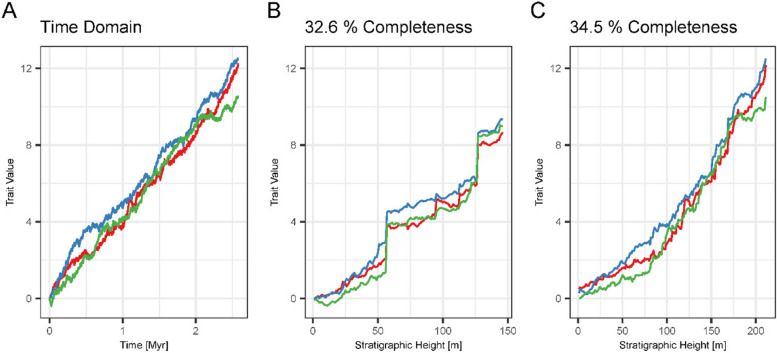
Stratigraphic architecture and position along an onshore-offshore gradient has only a small influence on the mode of evolution recovered by statistical tests. For simulations of random walks, support for the correct mode decreases with time series length. Visual examination of trait evolution in lineages shows that rather than stratigraphic incompleteness, maximum hiatus duration determines how much fossil time series differ from the original evolutionary process. Gradual directional evolution is more susceptible to stratigraphic effects, turning it into punctuated evolution. In contrast, stasis remains unaffected.
• Fossil time series favor the recognition of both stasis and complex, punctuated modes of evolution. • Not stratigraphic incompleteness, but the presence of rare, prolonged gaps has the largest effect on trait evolution. This suggests that incomplete sections with regular hiatus frequency and durations can potentially preserve evolutionary history without major biases. Understanding external controls on stratigraphic architectures such as sea level fluctuations is crucial for distinguishing between stratigraphic effects and genuine evolutionary process.
化石记录为观察数百万年来的进化提供了独特的机会,但已知其并不完整。虽然空间上的不完整性难以估计,而且对于经验性的地层也难以评估,但地质过程的计算机模拟可以用来在计算机中检查不完整性的影响。我们将不同进化模式(停滞、(非)随机漫步)的模拟与碳酸盐台地层的沉积相结合,以研究从化石时间序列中可以很好地恢复进化模式的程度,以及测试结果在碳酸盐台地的不同位置以及由不同海平面曲线生成的多个地层结构之间如何变化。
地层结构和沿陆岸到岸滨梯度的位置对统计测试中恢复的进化模式只有很小的影响。对于随机漫步的模拟,支持正确模式的能力随时间序列长度的增加而降低。对谱系特征进化的直观检查表明,不是地层的不完整性,而是最大停顿时长决定了化石时间序列与原始进化过程的差异程度。渐进的定向进化更容易受到地层效应的影响,从而将其转变为间断进化。相比之下,停滞不受影响。
化石时间序列有利于识别停滞和复杂的、间断的进化模式。
不是地层的不完整性,而是罕见的、长时间的空白对特征进化有最大的影响。这表明,具有规则停顿时长和频率的不完整部分有可能在没有主要偏差的情况下保留进化历史。了解海平面波动等外部因素对地层结构的控制对于区分地层效应和真正的进化过程至关重要。