Joint Medical Services, Institute of Military Psychiatry, Norwegian Armed Forces, Grev Wedels plass 2, Oslo, 0015, Norway.
Department of Psychology, Norwegian University of Science and Technology (NTNU), Trondheim, Norway.
BMC Psychol. 2024 Aug 23;12(1):451. doi: 10.1186/s40359-024-01955-8.
Problematic anger, characterized by excessive frequency, intensity, and duration of anger which causes substantial emotional distress and functional interference, poses a marked challenge in military populations. Despite its importance, research on this topic is limited. This study contributes to the literature by exploring problematic anger in a large sample of Norwegian military personnel who served in NATO missions in Afghanistan.
All Norwegian military personnel who deployed to Afghanistan between 2001 and 2020 were sent a link to a cross-sectional web-based survey by the Joint Medical Services of the Norwegian Armed Forces in 2020. A total of 6205 individuals (response rate: 67.7%) participated. The cross-sectional survey assessed problematic anger, mental and physical health, war zone stressor exposure, and quality of life.
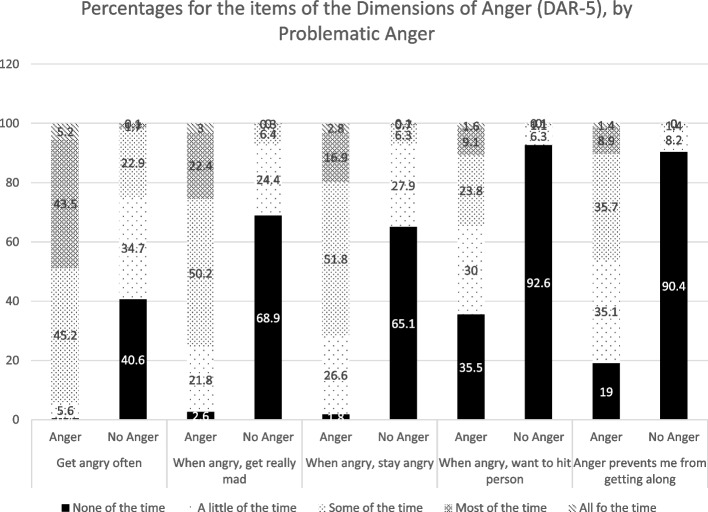
Overall, 8.4% of participants reported problematic anger. Mental health disorders, deployment-related shame and guilt, chronic pain, and challenges with the military-to-civilian transition were independently associated with problematic anger. Both staying in service and maintaining a part-time connection with the military as a reservist mitigated the risk of problematic anger after deployment, compared to complete separation from military service.
Findings demonstrate a sizeable prevalence of problematic anger among veterans of combat deployments. Given the associations between problematic anger and mental health disorders, chronic pain, and transition challenges, interventions designed to mitigate problematic anger need to be multi-faceted, including the possibility of maintaining an ongoing connection to military service. By reducing the risk of problematic anger, occupational, interpersonal and health outcomes may be improved for service members. Future research should examine the impact of problematic anger on adjustment over time, prevention strategies, and problematic anger in other high-risk occupations.
问题性愤怒的特点是愤怒的频率、强度和持续时间过高,导致明显的情绪困扰和功能障碍,这对军事人群构成了重大挑战。尽管这一问题很重要,但关于这一主题的研究仍然有限。本研究通过探索在挪威军事人员这一大样本中出现的问题性愤怒,为这一领域的文献做出了贡献,这些军事人员曾在北约在阿富汗的任务中服役。
2020 年,挪威武装部队联合医疗服务机构向 2001 年至 2020 年间部署到阿富汗的所有挪威军事人员发送了一份参加横断面网络调查的链接。共有 6205 人(回应率:67.7%)参加了调查。这项横断面调查评估了问题性愤怒、心理健康、战区应激源暴露和生活质量。
总体而言,8.4%的参与者报告存在问题性愤怒。心理健康障碍、与部署相关的羞耻感和内疚感、慢性疼痛以及与军事向平民过渡的挑战,与问题性愤怒独立相关。与完全脱离军事服务相比,继续服役和作为预备役军人保持与军队的兼职联系,都可以降低部署后出现问题性愤怒的风险。
研究结果表明,在战斗部署的退伍军人中,存在相当大比例的问题性愤怒。鉴于问题性愤怒与心理健康障碍、慢性疼痛和过渡挑战之间的关联,需要设计多方面的干预措施来减轻问题性愤怒,包括保持与军队持续联系的可能性。通过降低问题性愤怒的风险,可能会改善服务人员的职业、人际关系和健康结果。未来的研究应该研究问题性愤怒对随时间调整的影响、预防策略以及其他高风险职业中的问题性愤怒。