Oregon Health & Science University, Portland, OR, USA.
OCHIN Inc., Portland, OR, USA.
J Prim Care Community Health. 2024 Jan-Dec;15:21501319241274351. doi: 10.1177/21501319241274351.
To describe telemedicine use patterns and understand clinic's approaches to shifting care delivery during the COVID-19 pandemic.
We used electronic health record data from 203 community health centers across 13 states between 01/01/2019 and 6/31/2021 to describe trends in telemedicine visit rates over time. Qualitative data were collected from 13 of those community health centers to understand factors influencing adoption and implementation of telemedicine.
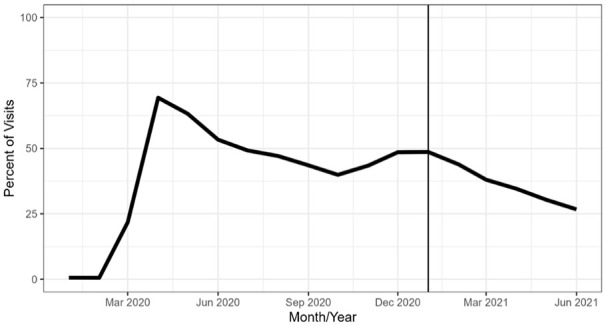
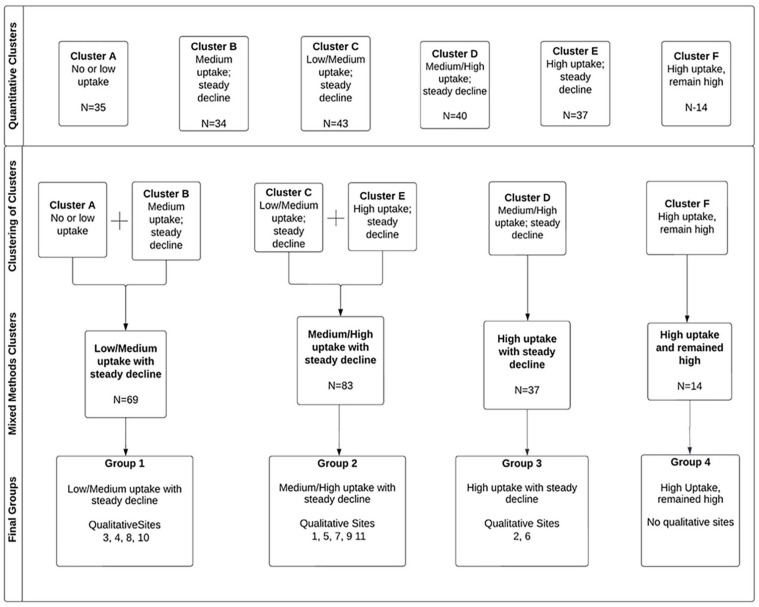
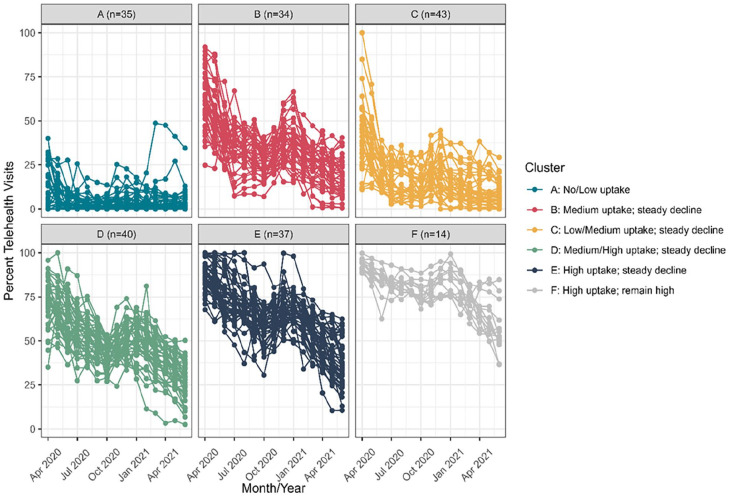
Most clinics in our sample were in urban areas (n = 176) and served a majority of uninsured and publicly insured patients (12.8% and 44.4%, respectively) across racial and ethnic minority groups (16.6% Black and 29.3% Hispanic). During our analysis period there was a 791% increase in telemedicine visits from before the pandemic (.06% pre- vs 47.5% during). A latent class growth analysis was used to examine differences in patterns of adoption of telemedicine across the 203 CHCs. The model resulted in 6 clusters representing various levels of telemedicine adoption. A mixed methods approach streamlined these clusters into 4 final groups. Clinics that reported rapid adoption of telemedicine attributed this change to leadership prioritization of telemedicine, robust quality improvement processes (eg, using PDSA processes), and emphasis on training and technology support.
In response to the COVID-19 pandemic, telemedicine adoption rates varied across clinics. Our study highlight that organizational factors contributed to the clinic's ability to rapidly uptake and use telemedicine services throughout the pandemic. These approaches could inform future non-pandemic practice change and care delivery.
描述远程医疗的使用模式,并了解在 COVID-19 大流行期间各诊所如何转变医疗服务提供方式。
我们使用了来自 13 个州的 203 个社区医疗中心的电子健康记录数据,这些数据的时间跨度为 2019 年 1 月 1 日至 2021 年 6 月 31 日,以描述远程医疗就诊率随时间的变化趋势。我们从这 203 个社区医疗中心中的 13 个收集了定性数据,以了解影响远程医疗采用和实施的因素。
我们的样本中大多数诊所位于城市地区(n=176),服务于不同种族和族裔群体的大多数未参保和参保患者(分别为 12.8%和 44.4%)。在我们的分析期间,远程医疗就诊量与大流行前相比增加了 791%(从大流行前的 0.06%增加到 47.5%)。使用潜在类别增长分析来研究 203 个 CHC 之间远程医疗采用模式的差异。该模型产生了 6 个代表不同程度远程医疗采用的聚类。采用混合方法将这些聚类简化为 4 个最终组。报告快速采用远程医疗的诊所将这一变化归因于领导层对远程医疗的重视、强大的质量改进流程(例如,使用 PDSA 流程)以及对培训和技术支持的重视。
为应对 COVID-19 大流行,远程医疗的采用率在各诊所之间有所不同。我们的研究强调,组织因素有助于诊所在整个大流行期间迅速采用和使用远程医疗服务。这些方法可以为未来的非大流行实践变革和医疗服务提供信息。