
PI-YOLO:基于动态稀疏注意力和轻量级卷积的YOLO,用于病理图像中的血管检测。
PI-YOLO: dynamic sparse attention and lightweight convolutional based YOLO for vessel detection in pathological images.
作者信息
Li Cong, Che Shuanlong, Gong Haotian, Ding Youde, Luo Yizhou, Xi Jianing, Qi Ling, Zhang Guiying
机构信息
The Affiliated Qingyuan Hospital (Qingyuan Peoples’s Hospital), Guangzhou Medical University, Qingyuan, China.
Department of Pathology, Guangzhou KingMed Center for Clinical Laboratory, Guangzhou, China.
出版信息
Front Oncol. 2024 Jul 29;14:1347123. doi: 10.3389/fonc.2024.1347123. eCollection 2024.
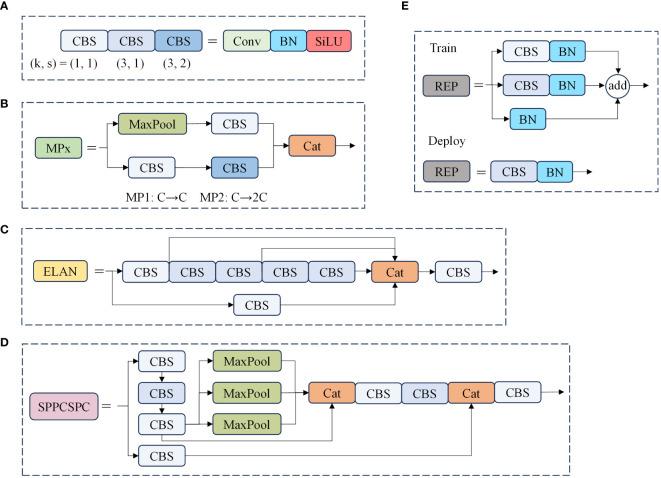
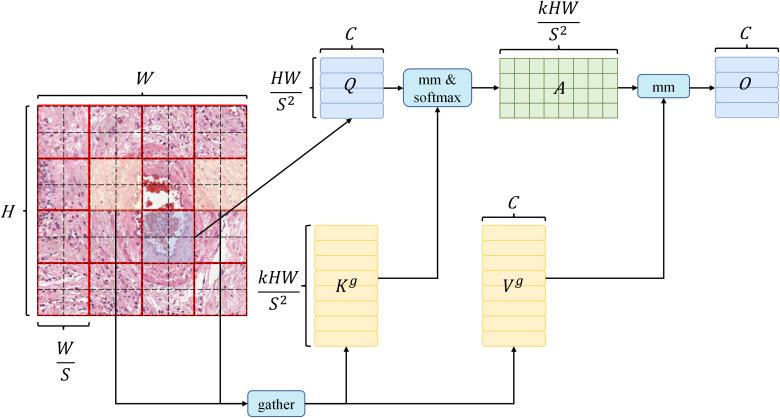
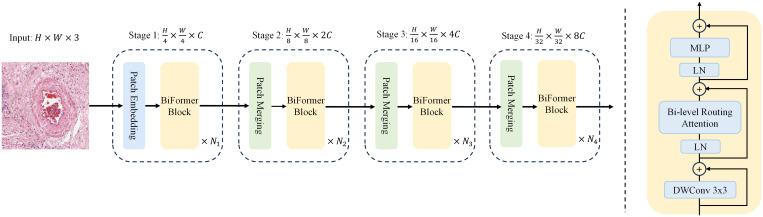
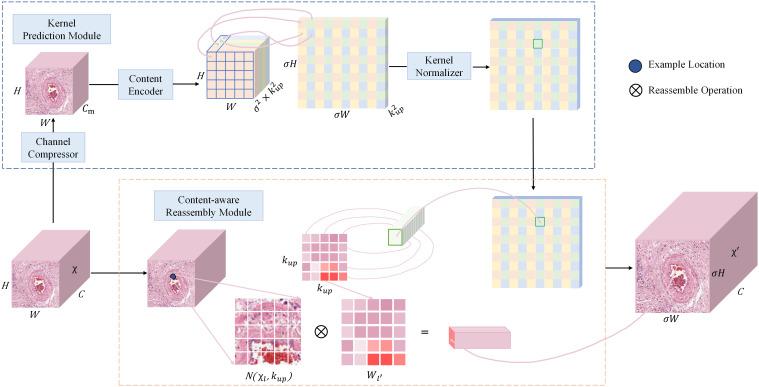
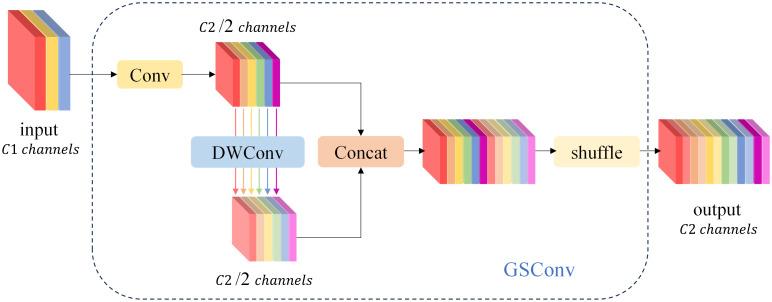
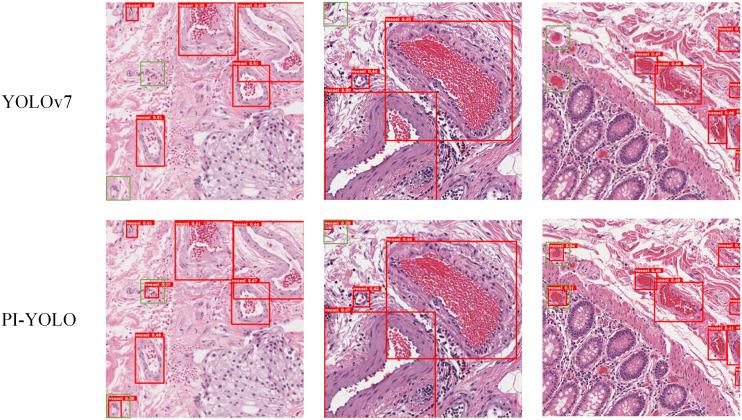
Vessel density within tumor tissues strongly correlates with tumor proliferation and serves as a critical marker for tumor grading. Recognition of vessel density by pathologists is subject to a strong inter-rater bias, thus limiting its prognostic value. There are many challenges in the task of object detection in pathological images, including complex image backgrounds, dense distribution of small targets, and insignificant differences between the features of the target to be detected and the image background. To address these problems and thus help physicians quantify blood vessels in pathology images, we propose Pathological Images-YOLO (PI-YOLO), an enhanced detection network based on YOLOv7. PI-YOLO incorporates the BiFormer attention mechanism, enhancing global feature extraction and accelerating processing for regions with subtle differences. Additionally, it introduces the CARAFE upsampling module, which optimizes feature utilization and information retention for small targets. Furthermore, the GSConv module improves the ELAN module, reducing model parameters and enhancing inference speed while preserving detection accuracy. Experimental results show that our proposed PI-YOLO network has higher detection accuracy compared to Faster-RCNN, SSD, RetinaNet, YOLOv5 network, and the latest YOLOv7 network, with a mAP value of 87.48%, which is 2.83% higher than the original model. We also validated the performance of this network on the ICPR 2012 mitotic dataset with an F1 value of 0.8678, outperforming other methods, demonstrating the advantages of our network in the task of target detection in complex pathology images.
肿瘤组织内的血管密度与肿瘤增殖密切相关,是肿瘤分级的关键标志物。病理学家对血管密度的识别存在较大的评分者间偏差,因此限制了其预后价值。病理图像中的目标检测任务存在诸多挑战,包括复杂的图像背景、小目标的密集分布以及待检测目标与图像背景特征之间的微小差异。为了解决这些问题并帮助医生量化病理图像中的血管,我们提出了病理图像-YOLO(PI-YOLO),这是一种基于YOLOv7的增强检测网络。PI-YOLO纳入了BiFormer注意力机制,增强了全局特征提取并加速了对细微差异区域的处理。此外,它引入了CARAFE上采样模块,优化了小目标的特征利用和信息保留。此外,GSConv模块改进了ELAN模块,减少了模型参数并提高了推理速度,同时保持了检测精度。实验结果表明,我们提出的PI-YOLO网络与Faster-RCNN、SSD、RetinaNet、YOLOv5网络和最新的YOLOv7网络相比具有更高的检测精度,mAP值为87.48%,比原始模型高2.83%。我们还在ICPR 2012有丝分裂数据集上验证了该网络的性能,F1值为0.8678,优于其他方法,证明了我们的网络在复杂病理图像目标检测任务中的优势。




 Zotero 插件