Muruvanda Tim, Rand Hugh, Pettengill James, Pightling Arthur
Center for Food Safety and Applied Nutrition, Food and Drug Administration, College Park, MD, United States.
Front Bioinform. 2024 Aug 9;4:1415078. doi: 10.3389/fbinf.2024.1415078. eCollection 2024.
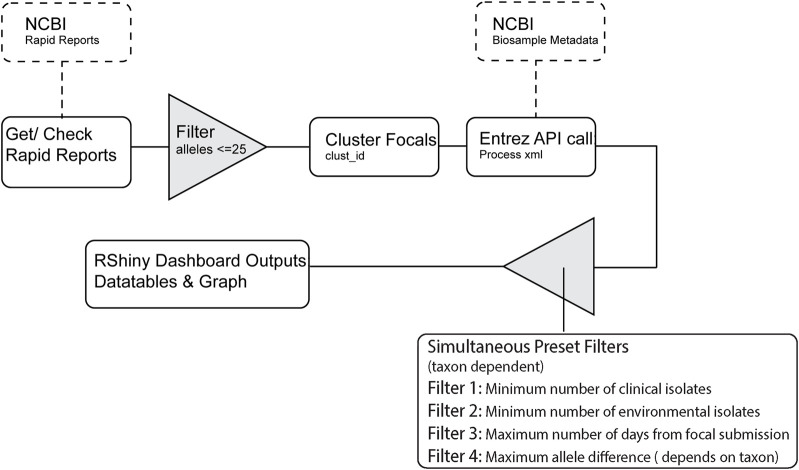
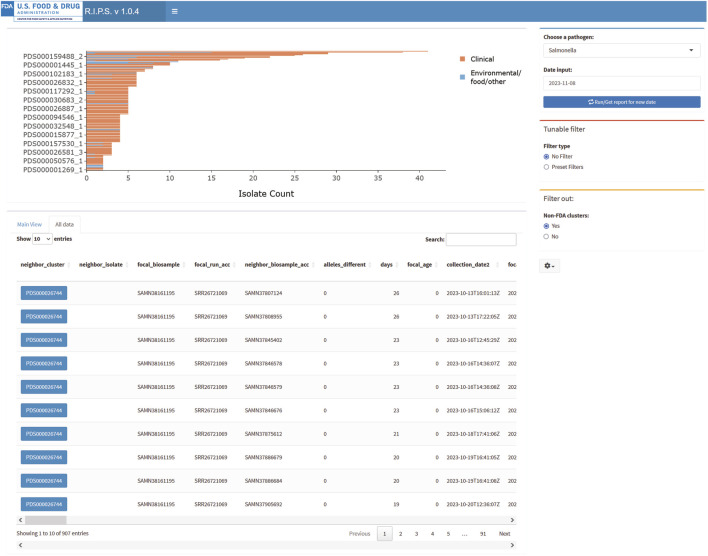
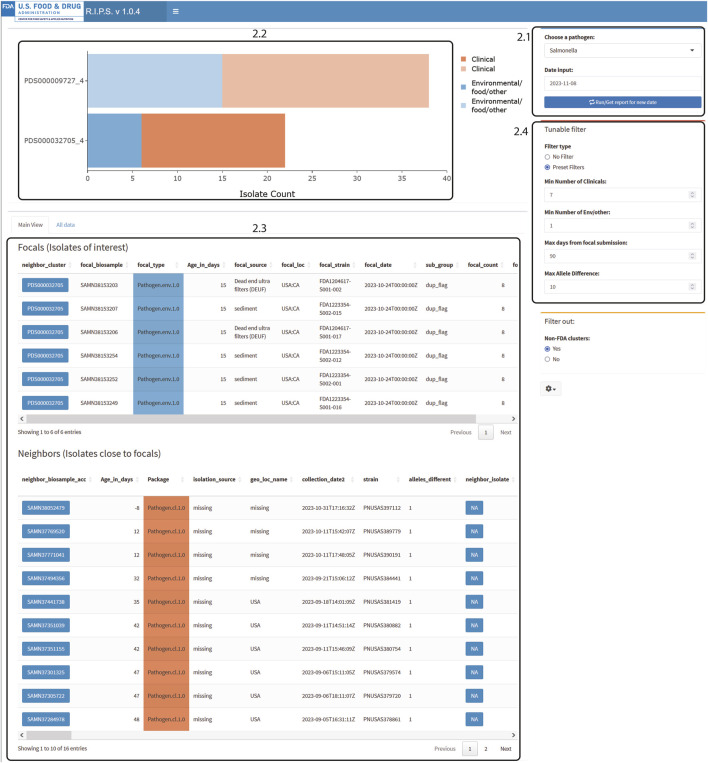
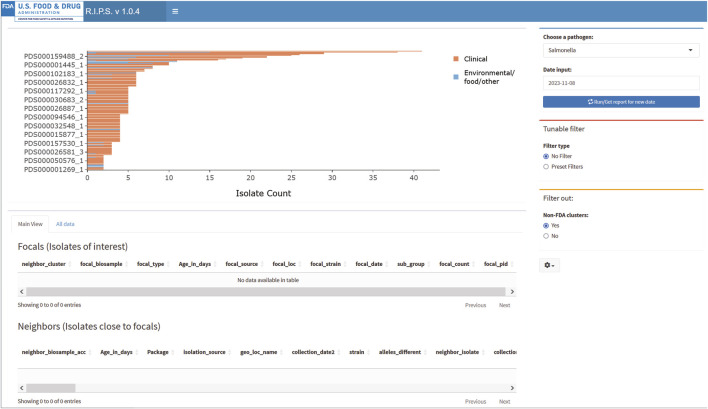
Monitoring data submitted to the National Center for Biotechnology Information's Pathogen Detection whole-genome sequence database, which includes the foodborne bacterial pathogens monocytogenes, , and , has proven effective for detecting emerging outbreaks. As part of the submission process, new sequence data are typed using a whole-genome multi-locus sequence typing scheme and clustered with sequences already in the database. Publicly available text files contain the results of these analyses. However, contextualizing and interpreting this information is complex. We present the Rapid Intuitive Pathogen Surveillance (RIPS) tool, which shows the results of the NCBI Rapid Reports, along with appropriate metadata, in a graphical, interactive dashboard. RIPS makes the information in the Rapid Reports useful for real-time surveillance of genome sequence databases.
提交给美国国家生物技术信息中心病原体检测全基因组序列数据库的监测数据已被证明对检测新出现的疫情有效,该数据库包括食源性病原体单核细胞增生李斯特菌、[此处原文缺失两种病原体名称]。作为提交过程的一部分,新的序列数据使用全基因组多位点序列分型方案进行分型,并与数据库中已有的序列聚类。公开可用的文本文件包含这些分析的结果。然而,将这些信息置于背景中并进行解释是复杂的。我们展示了快速直观病原体监测(RIPS)工具,它在一个图形化的交互式仪表板中展示了NCBI快速报告的结果以及适当的元数据。RIPS使快速报告中的信息对基因组序列数据库的实时监测有用。