Yim Kristina M, Baumgartner Marybeth, Krenzer Martina, Rosales Larios María F, Hill-Terán Guillermina, Nottoli Timothy, Muhle Rebecca A, Noonan James P
Department of Genetics, Yale School of Medicine, New Haven, CT 06510, USA.
Present address: Mount Sinai School of Medicine, Brookdale Department of Geriatrics and Palliative Medicine, New York, NY 10029, USA.
bioRxiv. 2024 Aug 15:2024.08.14.608000. doi: 10.1101/2024.08.14.608000.
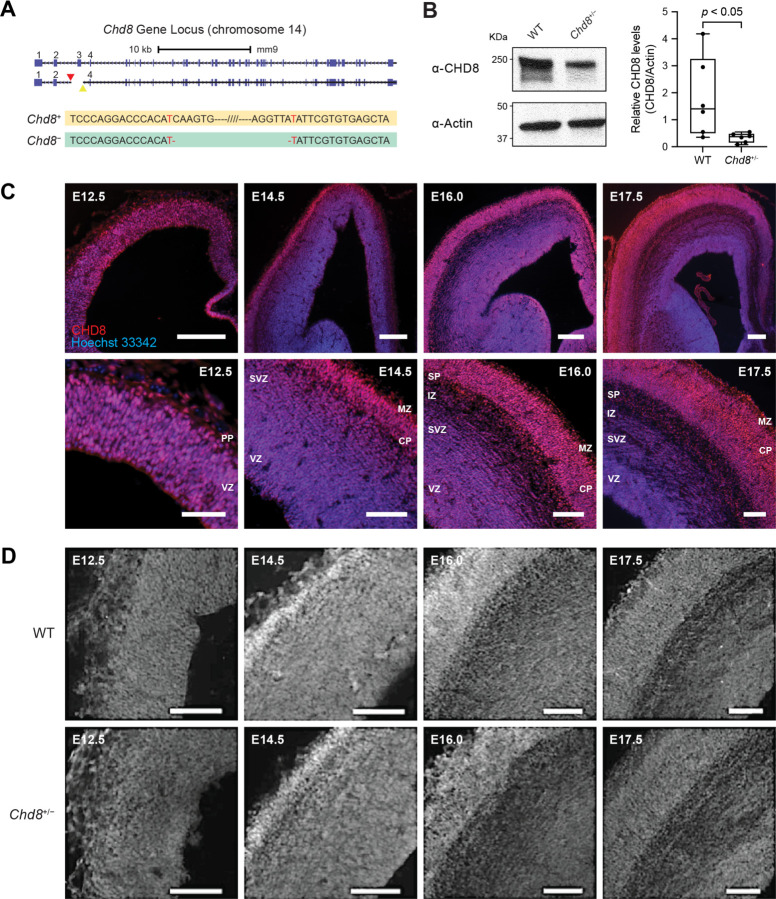
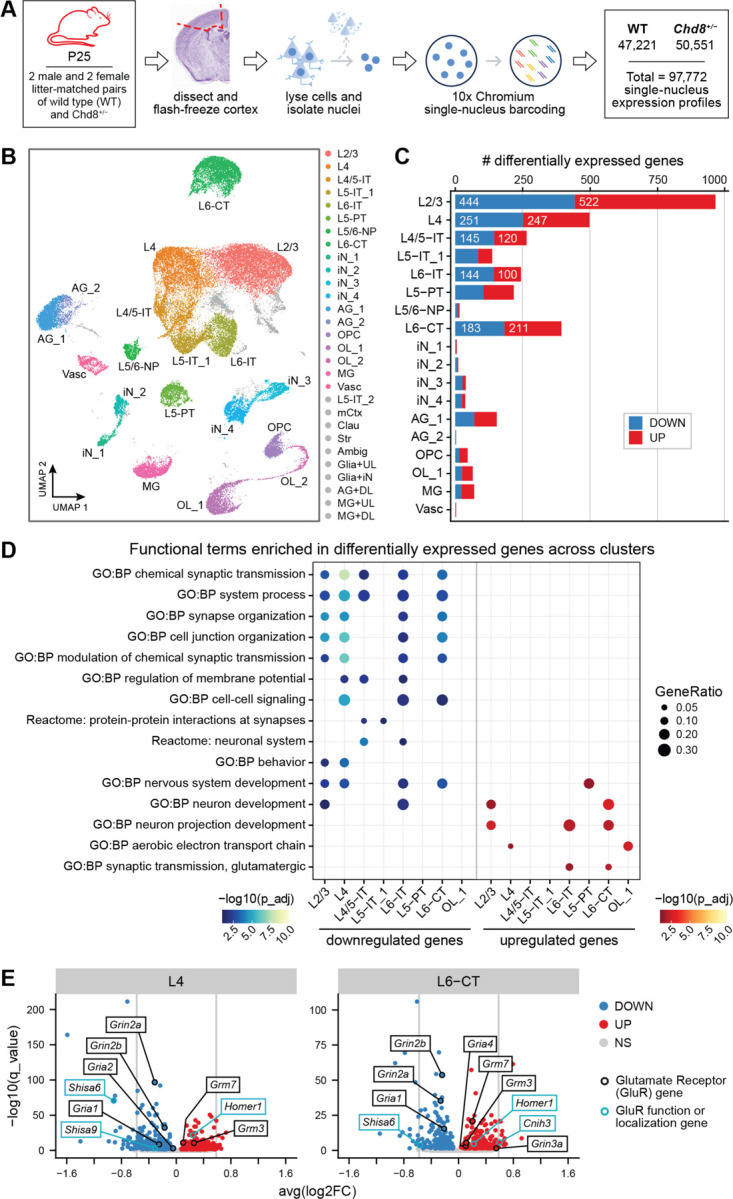
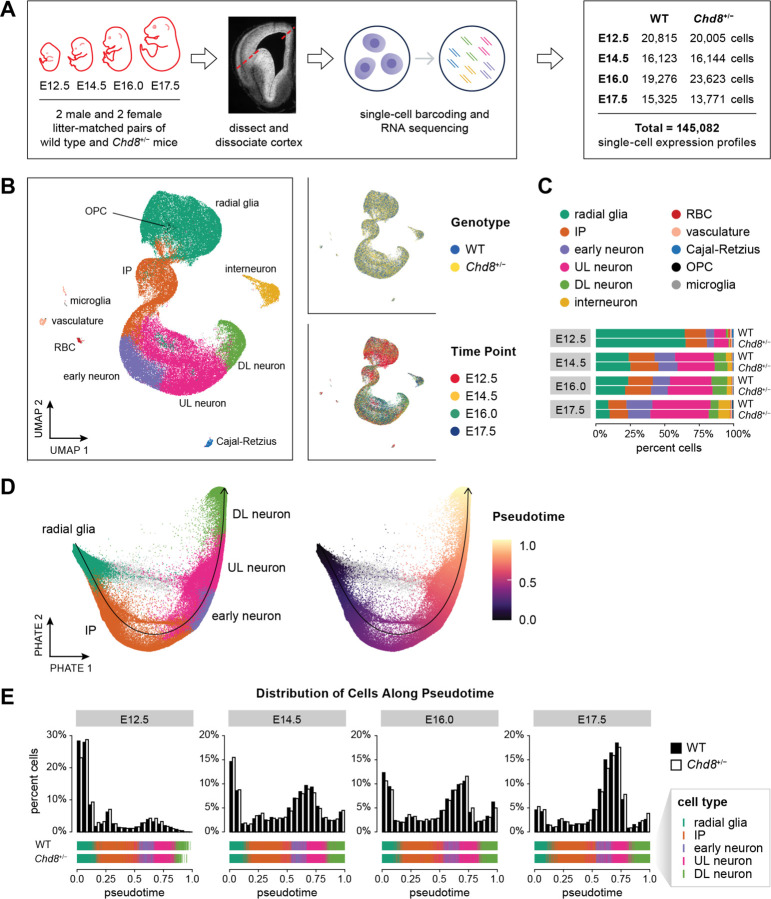
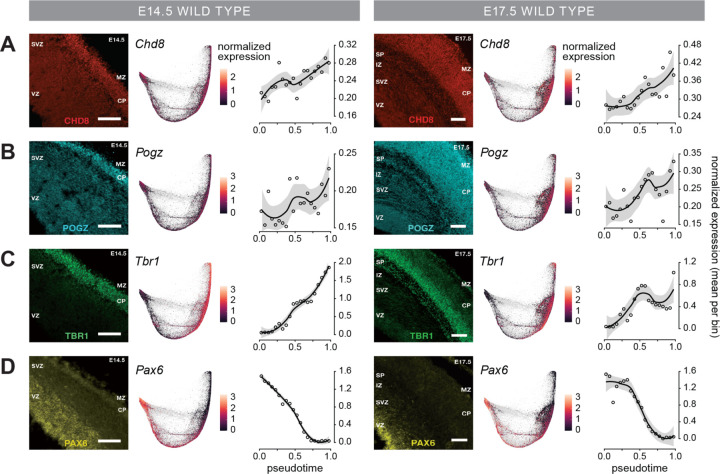
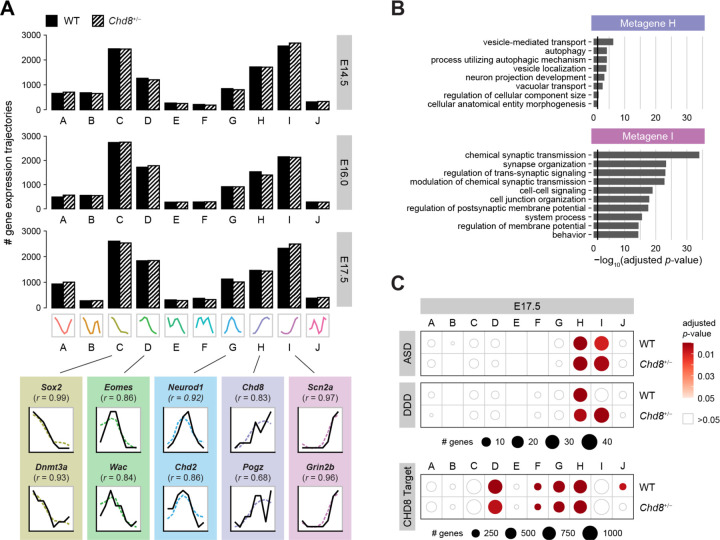
Disruptive variants in the chromodomain helicase , which acts as a transcriptional regulator during neurodevelopment, are strongly associated with risk for autism spectrum disorder (ASD). Loss of CHD8 function is hypothesized to perturb gene regulatory networks in the developing brain, thereby contributing to ASD etiology. However, insight into the cell type-specific transcriptional effects of CHD8 loss of function remains limited. We used single-cell and single-nucleus RNA-sequencing to globally profile gene expression and identify dysregulated genes in the embryonic and juvenile wild type and mouse cortex, respectively. and other ASD risk-associated genes showed a convergent expression trajectory that was largely conserved between the mouse and human developing cortex, increasing from the progenitor zones to the cortical plate. Genes associated with risk for neurodevelopmental disorders and genes involved in neuron projection development, chromatin remodeling, signaling, and migration were dysregulated in embryonic day (E) 12.5 radial glia. Genes implicated in synaptic organization and activity were dysregulated in postnatal day (P) 25 deep- and upper-layer excitatory cortical neurons, suggesting a delay in synaptic maturation or impaired synaptogenesis due to CHD8 loss of function. Our findings reveal a complex pattern of transcriptional dysregulation in developing cortex, potentially with distinct biological impacts on progenitors and maturing neurons in the excitatory neuronal lineage.
染色质结构域解旋酶中的破坏性变异体在神经发育过程中作为一种转录调节因子,与自闭症谱系障碍(ASD)的风险密切相关。据推测,CHD8功能的丧失会扰乱发育中的大脑中的基因调控网络,从而导致ASD的病因。然而,对CHD8功能丧失的细胞类型特异性转录效应的了解仍然有限。我们使用单细胞和单细胞核RNA测序来全面分析基因表达,并分别鉴定胚胎期和幼年期野生型和CHD8基因敲除小鼠皮层中失调的基因。与其他ASD风险相关基因显示出趋同的表达轨迹,在小鼠和人类发育中的皮层之间在很大程度上是保守的,从祖细胞区到皮质板逐渐增加。与神经发育障碍风险相关的基因以及参与神经元投射发育、染色质重塑、信号传导和迁移的基因在胚胎第12.5天的放射状胶质细胞中失调。与突触组织和活动相关的基因在出生后第25天的深层和上层兴奋性皮质神经元中失调,这表明由于CHD8功能丧失,突触成熟延迟或突触发生受损。我们的研究结果揭示了CHD8基因敲除小鼠发育中的皮层中转录失调的复杂模式,可能对兴奋性神经元谱系中的祖细胞和成熟神经元产生不同的生物学影响。