• 文献检索
  • 文档翻译
  • 深度研究
  • 学术资讯
  • Suppr Zotero 插件Zotero 插件
  • 邀请有礼
  • 套餐&价格
  • 历史记录
应用&插件
Suppr Zotero 插件Zotero 插件浏览器插件Mac 客户端Windows 客户端微信小程序
定价
高级版会员购买积分包购买API积分包
服务
文献检索文档翻译深度研究API 文档MCP 服务
关于我们
关于 Suppr公司介绍联系我们用户协议隐私条款
关注我们

Suppr 超能文献

核心技术专利:CN118964589B侵权必究
粤ICP备2023148730 号-1Suppr @ 2026

文献检索

告别复杂PubMed语法,用中文像聊天一样搜索,搜遍4000万医学文献。AI智能推荐,让科研检索更轻松。

立即免费搜索

文件翻译

保留排版,准确专业,支持PDF/Word/PPT等文件格式,支持 12+语言互译。

免费翻译文档

深度研究

AI帮你快速写综述,25分钟生成高质量综述,智能提取关键信息,辅助科研写作。

立即免费体验

通过响应曲面法(RSM)建模提高掺煤底灰和偏高岭土的基于粒化高炉矿渣粉的自密实地质聚合物混凝土的性能和可持续性。

Enhancing performance and sustainability of GGBFS-based self-compacting geopolymer concrete blended with coal bottom ash and metakaolin by using RSM modelling.

作者信息

Bheel Naraindas, Alwetaishi Mamdooh, Jae Idris Ahmed, Syamsir Agusril, Alraeeini Ahmed Saleh, Waheeb Sahl Abdullah, Alkhattabi Loai, Benjeddou Omrane

机构信息

Department of Civil and Environmental Engineering, Universiti Teknologi Petronas, 32610, Bandar Seri Iskandar, Teronoh, Perak, Malaysia.

Department of Civil Engineering, College of Engineering, Taif University, P.O. Box 11099, 21944, Taif, Saudi Arabia.

出版信息

Sci Rep. 2024 Aug 26;14(1):19754. doi: 10.1038/s41598-024-70800-0.

DOI:10.1038/s41598-024-70800-0
PMID:39187622
原文链接:https://pmc.ncbi.nlm.nih.gov/articles/PMC11347603/
Abstract

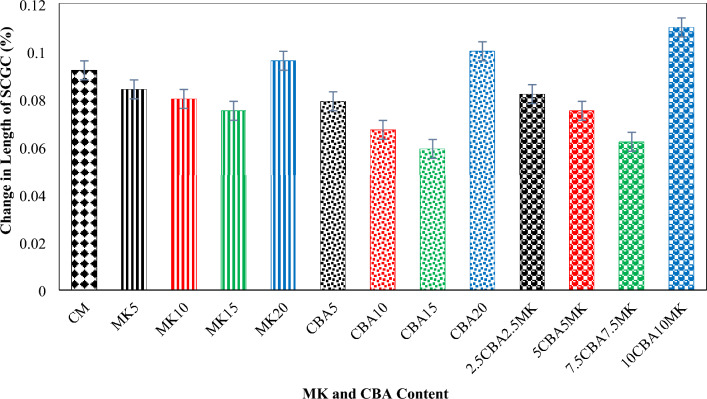
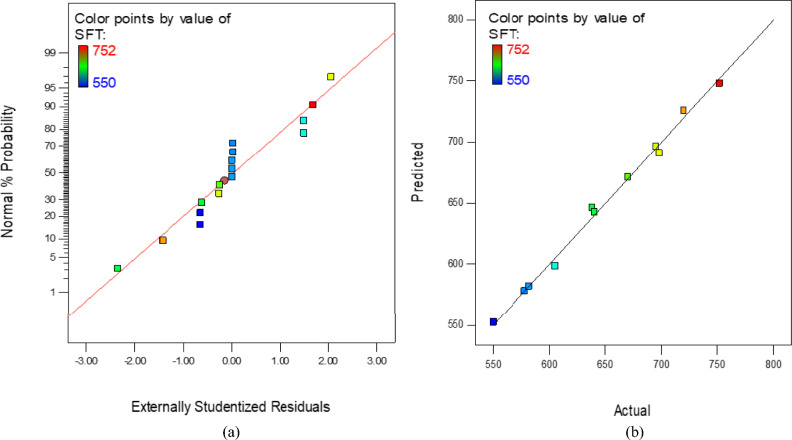
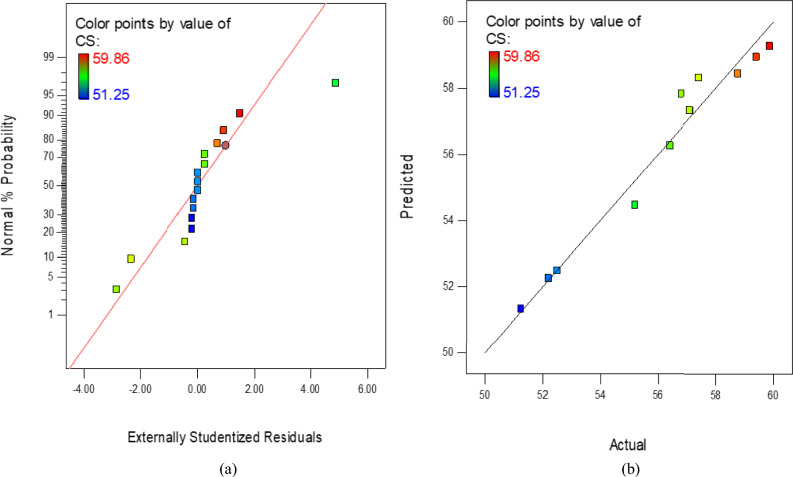
This research study is performed on the self-compacting geopolymer concrete (SCGC) combining coal bottom ash (CBA) and metakaolin (MK) as a substitution for GGBFS alone and combined for analysing the fresh properties (slump flow, V-Funnel, and T50 flow), mechanical characteristics (compressive, splitting tensile and flexural strengths) and durability tests (permeability and sulfate attack test). Though, total 195 SCGC samples were made and tested for 28 days. It has been revealed that the consumption of CBA and MK as a substitution for GGBFS alone and combine in the production of SCGC is decreased the workability of SCGC while mechanical characteristics of SCGC are enhanced by utilizing CBA and MK as a substitution for GGBFS alone and combine up to 10%. In addition, the compressive, splitting tensile and flexural strengths were calculated by 59.40 MPa, 5.68 MPa, and 6.12 MPa while using the 5CBA5MK as a substitution for GGBFS in the production of SCGC after 28 days correspondingly. Furthermore, the permeability is decreased by growing the quantity of CBA and MK by the weight of GGBFS alone and jointly in the production of SCGC after 28 days. Besides, the minimum change in length of the SCGC specimen is recorded by 0.062 mm at 7.5MK7.5CBA while the maximum change in length is calculated by 0.11 mm at 10CBA10MK as a substitution for GGBFS at 180 days correspondingly. In addition, the embodied carbon is recorded reduce as the addition of CBA while it is getting higher when the accumulation of MK alone or combined with CBA in SCGC. Besides, response models for prediction were constructed and confirmed using ANOVA at an accuracy rate of 95%. The models' R fluctuated from 88 to 99%. It has been observed that the utilization of CBA and MK alone and together up to 10% as substitution for GGBFS in geopolymer concrete provides the best results therefore it is suggested for structural applications.

摘要

本研究针对以煤底灰(CBA)和偏高岭土(MK)替代粒化高炉矿渣粉(GGBFS)单独使用及混合使用的自密实地质聚合物混凝土(SCGC)进行,以分析其新拌性能(坍落度、V型漏斗试验和T50流动时间)、力学性能(抗压强度、劈裂抗拉强度和抗弯强度)以及耐久性试验(渗透性和抗硫酸盐侵蚀试验)。总共制作了195个SCGC样品并进行了28天的测试。结果表明,在SCGC生产中单独或混合使用CBA和MK替代GGBFS会降低SCGC的工作性,但单独或混合使用CBA和MK替代GGBFS达10%时,会提高SCGC的力学性能。此外,在SCGC生产中使用5CBA5MK替代GGBFS 28天后,抗压强度、劈裂抗拉强度和抗弯强度分别为59.40MPa、5.68MPa和6.12MPa。此外,在SCGC生产中单独或混合使用CBA和MK替代GGBFS 28天后,随着CBA和MK用量的增加,渗透性降低。此外,在180天时,以7.5MK7.5CBA替代GGBFS时,SCGC试件的最小长度变化记录为0.062mm,以10CBA10MK替代GGBFS时,最大长度变化计算为0.11mm。此外,随着CBA的添加,体现碳减少,而在SCGC中单独或与CBA混合添加MK时,体现碳增加。此外,构建了预测响应模型并使用方差分析(ANOVA)进行验证,准确率为95%。模型的R值在88%至99%之间波动。据观察,在地质聚合物混凝土中单独或混合使用CBA和MK替代GGBFS达10%时效果最佳,因此建议用于结构应用。

https://cdn.ncbi.nlm.nih.gov/pmc/blobs/441f/11347603/d40a043c2197/41598_2024_70800_Fig26_HTML.jpg
https://cdn.ncbi.nlm.nih.gov/pmc/blobs/441f/11347603/cec61169d678/41598_2024_70800_Fig1_HTML.jpg
https://cdn.ncbi.nlm.nih.gov/pmc/blobs/441f/11347603/85c3814dfb58/41598_2024_70800_Fig2_HTML.jpg
https://cdn.ncbi.nlm.nih.gov/pmc/blobs/441f/11347603/3c94cfbe518f/41598_2024_70800_Fig3_HTML.jpg
https://cdn.ncbi.nlm.nih.gov/pmc/blobs/441f/11347603/46080c4dc16e/41598_2024_70800_Fig4_HTML.jpg
https://cdn.ncbi.nlm.nih.gov/pmc/blobs/441f/11347603/93e61a901f78/41598_2024_70800_Fig5_HTML.jpg
https://cdn.ncbi.nlm.nih.gov/pmc/blobs/441f/11347603/25fc4f0227cf/41598_2024_70800_Fig6_HTML.jpg
https://cdn.ncbi.nlm.nih.gov/pmc/blobs/441f/11347603/6a848be3d4cf/41598_2024_70800_Fig7_HTML.jpg
https://cdn.ncbi.nlm.nih.gov/pmc/blobs/441f/11347603/ff67b6e677f5/41598_2024_70800_Fig8_HTML.jpg
https://cdn.ncbi.nlm.nih.gov/pmc/blobs/441f/11347603/f4a1dde3be92/41598_2024_70800_Fig9_HTML.jpg
https://cdn.ncbi.nlm.nih.gov/pmc/blobs/441f/11347603/9f9efddf2689/41598_2024_70800_Fig10_HTML.jpg
https://cdn.ncbi.nlm.nih.gov/pmc/blobs/441f/11347603/d884d5ecb098/41598_2024_70800_Fig11_HTML.jpg
https://cdn.ncbi.nlm.nih.gov/pmc/blobs/441f/11347603/e0a91600f3ac/41598_2024_70800_Fig12_HTML.jpg
https://cdn.ncbi.nlm.nih.gov/pmc/blobs/441f/11347603/6434652f1a14/41598_2024_70800_Fig13_HTML.jpg
https://cdn.ncbi.nlm.nih.gov/pmc/blobs/441f/11347603/9530ca4f889f/41598_2024_70800_Fig14_HTML.jpg
https://cdn.ncbi.nlm.nih.gov/pmc/blobs/441f/11347603/ce7b50e40cdb/41598_2024_70800_Fig15_HTML.jpg
https://cdn.ncbi.nlm.nih.gov/pmc/blobs/441f/11347603/2eacda22d105/41598_2024_70800_Fig16_HTML.jpg
https://cdn.ncbi.nlm.nih.gov/pmc/blobs/441f/11347603/d70cbaf677ad/41598_2024_70800_Fig17_HTML.jpg
https://cdn.ncbi.nlm.nih.gov/pmc/blobs/441f/11347603/980d9740e792/41598_2024_70800_Fig18_HTML.jpg
https://cdn.ncbi.nlm.nih.gov/pmc/blobs/441f/11347603/a930b6ad4d0b/41598_2024_70800_Fig19_HTML.jpg
https://cdn.ncbi.nlm.nih.gov/pmc/blobs/441f/11347603/36cb5a6e476a/41598_2024_70800_Fig20_HTML.jpg
https://cdn.ncbi.nlm.nih.gov/pmc/blobs/441f/11347603/85270986ec92/41598_2024_70800_Fig21_HTML.jpg
https://cdn.ncbi.nlm.nih.gov/pmc/blobs/441f/11347603/cdfc634f637b/41598_2024_70800_Fig22_HTML.jpg
https://cdn.ncbi.nlm.nih.gov/pmc/blobs/441f/11347603/a65906dd0380/41598_2024_70800_Fig23_HTML.jpg
https://cdn.ncbi.nlm.nih.gov/pmc/blobs/441f/11347603/6ea64f3e117b/41598_2024_70800_Fig24_HTML.jpg
https://cdn.ncbi.nlm.nih.gov/pmc/blobs/441f/11347603/b126887e814a/41598_2024_70800_Fig25_HTML.jpg
https://cdn.ncbi.nlm.nih.gov/pmc/blobs/441f/11347603/d40a043c2197/41598_2024_70800_Fig26_HTML.jpg
https://cdn.ncbi.nlm.nih.gov/pmc/blobs/441f/11347603/cec61169d678/41598_2024_70800_Fig1_HTML.jpg
https://cdn.ncbi.nlm.nih.gov/pmc/blobs/441f/11347603/85c3814dfb58/41598_2024_70800_Fig2_HTML.jpg
https://cdn.ncbi.nlm.nih.gov/pmc/blobs/441f/11347603/3c94cfbe518f/41598_2024_70800_Fig3_HTML.jpg
https://cdn.ncbi.nlm.nih.gov/pmc/blobs/441f/11347603/46080c4dc16e/41598_2024_70800_Fig4_HTML.jpg
https://cdn.ncbi.nlm.nih.gov/pmc/blobs/441f/11347603/93e61a901f78/41598_2024_70800_Fig5_HTML.jpg
https://cdn.ncbi.nlm.nih.gov/pmc/blobs/441f/11347603/25fc4f0227cf/41598_2024_70800_Fig6_HTML.jpg
https://cdn.ncbi.nlm.nih.gov/pmc/blobs/441f/11347603/6a848be3d4cf/41598_2024_70800_Fig7_HTML.jpg
https://cdn.ncbi.nlm.nih.gov/pmc/blobs/441f/11347603/ff67b6e677f5/41598_2024_70800_Fig8_HTML.jpg
https://cdn.ncbi.nlm.nih.gov/pmc/blobs/441f/11347603/f4a1dde3be92/41598_2024_70800_Fig9_HTML.jpg
https://cdn.ncbi.nlm.nih.gov/pmc/blobs/441f/11347603/9f9efddf2689/41598_2024_70800_Fig10_HTML.jpg
https://cdn.ncbi.nlm.nih.gov/pmc/blobs/441f/11347603/d884d5ecb098/41598_2024_70800_Fig11_HTML.jpg
https://cdn.ncbi.nlm.nih.gov/pmc/blobs/441f/11347603/e0a91600f3ac/41598_2024_70800_Fig12_HTML.jpg
https://cdn.ncbi.nlm.nih.gov/pmc/blobs/441f/11347603/6434652f1a14/41598_2024_70800_Fig13_HTML.jpg
https://cdn.ncbi.nlm.nih.gov/pmc/blobs/441f/11347603/9530ca4f889f/41598_2024_70800_Fig14_HTML.jpg
https://cdn.ncbi.nlm.nih.gov/pmc/blobs/441f/11347603/ce7b50e40cdb/41598_2024_70800_Fig15_HTML.jpg
https://cdn.ncbi.nlm.nih.gov/pmc/blobs/441f/11347603/2eacda22d105/41598_2024_70800_Fig16_HTML.jpg
https://cdn.ncbi.nlm.nih.gov/pmc/blobs/441f/11347603/d70cbaf677ad/41598_2024_70800_Fig17_HTML.jpg
https://cdn.ncbi.nlm.nih.gov/pmc/blobs/441f/11347603/980d9740e792/41598_2024_70800_Fig18_HTML.jpg
https://cdn.ncbi.nlm.nih.gov/pmc/blobs/441f/11347603/a930b6ad4d0b/41598_2024_70800_Fig19_HTML.jpg
https://cdn.ncbi.nlm.nih.gov/pmc/blobs/441f/11347603/36cb5a6e476a/41598_2024_70800_Fig20_HTML.jpg
https://cdn.ncbi.nlm.nih.gov/pmc/blobs/441f/11347603/85270986ec92/41598_2024_70800_Fig21_HTML.jpg
https://cdn.ncbi.nlm.nih.gov/pmc/blobs/441f/11347603/cdfc634f637b/41598_2024_70800_Fig22_HTML.jpg
https://cdn.ncbi.nlm.nih.gov/pmc/blobs/441f/11347603/a65906dd0380/41598_2024_70800_Fig23_HTML.jpg
https://cdn.ncbi.nlm.nih.gov/pmc/blobs/441f/11347603/6ea64f3e117b/41598_2024_70800_Fig24_HTML.jpg
https://cdn.ncbi.nlm.nih.gov/pmc/blobs/441f/11347603/b126887e814a/41598_2024_70800_Fig25_HTML.jpg
https://cdn.ncbi.nlm.nih.gov/pmc/blobs/441f/11347603/d40a043c2197/41598_2024_70800_Fig26_HTML.jpg

相似文献

1
Enhancing performance and sustainability of GGBFS-based self-compacting geopolymer concrete blended with coal bottom ash and metakaolin by using RSM modelling.通过响应曲面法(RSM)建模提高掺煤底灰和偏高岭土的基于粒化高炉矿渣粉的自密实地质聚合物混凝土的性能和可持续性。
Sci Rep. 2024 Aug 26;14(1):19754. doi: 10.1038/s41598-024-70800-0.
2
Fresh, Mechanical, and Durability Behavior of Fly Ash-Based Self Compacted Geopolymer Concrete: Effect of Slag Content and Various Curing Conditions.基于粉煤灰的自密实地质聚合物混凝土的新鲜度、力学性能及耐久性:矿渣含量和不同养护条件的影响
Polymers (Basel). 2022 Aug 6;14(15):3209. doi: 10.3390/polym14153209.
3
Effect of local metakaolin developed from natural material soorh and coal bottom ash on fresh, hardened properties and embodied carbon of self-compacting concrete.本地偏高岭土(由天然材料索鲁土和煤底灰制成)对自密实混凝土的新拌、硬化性能和固碳的影响。
Environ Sci Pollut Res Int. 2021 Nov;28(42):60000-60018. doi: 10.1007/s11356-021-14960-w. Epub 2021 Jun 21.
4
Strength, durability, and microstructure of self-compacting geopolymer concrete produced with copper slag aggregates.用铜渣集料生产的自密实地质聚合物混凝土的强度、耐久性和微观结构。
Environ Sci Pollut Res Int. 2023 Jan;30(1):666-684. doi: 10.1007/s11356-022-22170-1. Epub 2022 Jul 29.
5
Mix design process for sustainable self-compacting geopolymer concrete.可持续自密实地质聚合物混凝土的配合比设计过程。
Heliyon. 2023 Nov 10;9(11):e22206. doi: 10.1016/j.heliyon.2023.e22206. eCollection 2023 Nov.
6
Use of waste recycling coal bottom ash and sugarcane bagasse ash as cement and sand replacement material to produce sustainable concrete.利用废煤底灰和甘蔗渣灰替代水泥和砂生产可持续混凝土。
Environ Sci Pollut Res Int. 2022 Jul;29(35):52399-52411. doi: 10.1007/s11356-022-19478-3. Epub 2022 Mar 8.
7
A comprehensive study on engineering and sustainability characteristics with emphasizing on 3R's approach in building construction.一项关于工程与可持续性特征的综合研究,重点关注建筑施工中的3R方法。
Heliyon. 2024 Jun 2;10(11):e32206. doi: 10.1016/j.heliyon.2024.e32206. eCollection 2024 Jun 15.
8
A Study on the Shrinkage and Compressive Strength of GGBFS and Metakaolin Base Geopolymer under Different NaOH Concentrations.不同NaOH浓度下粒化高炉矿渣粉和偏高岭土基地质聚合物的收缩率与抗压强度研究
Materials (Basel). 2024 Mar 3;17(5):1181. doi: 10.3390/ma17051181.
9
Investigating embodied carbon, mechanical properties, and durability of high-performance concrete using ternary and quaternary blends of metakaolin, nano-silica, and fly ash.研究用偏高岭土、纳米硅和粉煤灰的三元和四元混合物对高性能混凝土的含碳量、力学性能和耐久性的影响。
Environ Sci Pollut Res Int. 2021 Sep;28(35):49074-49088. doi: 10.1007/s11356-021-13918-2. Epub 2021 Apr 30.
10
The influence of nanosunflower ash and nanowalnut shell ash on sustainable lightweight self-compacting concrete characteristics.纳米向日葵灰和纳米核桃壳灰对可持续轻质自密实混凝土性能的影响。
Sci Rep. 2024 Apr 24;14(1):9450. doi: 10.1038/s41598-024-60096-5.

引用本文的文献

1
Investigations on mechanical and stress strain characteristics of geopolymer concrete reinforced with glass fibers.玻璃纤维增强地聚合物混凝土的力学性能及应力应变特性研究。
Sci Rep. 2025 Feb 21;15(1):6335. doi: 10.1038/s41598-025-90752-3.
2
Machine learning for predicting strength properties of waste iron slag concrete.用于预测废铁渣混凝土强度性能的机器学习
Heliyon. 2025 Jan 23;11(3):e42133. doi: 10.1016/j.heliyon.2025.e42133. eCollection 2025 Feb 15.
3
Combined effect of jute fiber and corn cob ash on sustainability assessment and mechanical properties of roller compacted concrete using RSM modelling.

本文引用的文献

1
Effect of seawater salinity, pH, and temperature on external corrosion behavior and microhardness of offshore oil and gas pipeline: RSM modelling and optimization.海水盐度、pH值和温度对海洋油气管道外部腐蚀行为及显微硬度的影响:响应曲面法建模与优化
Sci Rep. 2024 Jul 17;14(1):16543. doi: 10.1038/s41598-024-67463-2.
2
A comprehensive study on the impact of human hair fiber and millet husk ash on concrete properties: response surface modeling and optimization.全面研究人发纤维和小米糠灰对混凝土性能的影响:响应面建模与优化。
Sci Rep. 2024 Jun 12;14(1):13569. doi: 10.1038/s41598-024-63050-7.
3
Effect of wheat straw ash as cementitious material on the mechanical characteristics and embodied carbon of concrete reinforced with coir fiber.
基于响应曲面法建模研究黄麻纤维与玉米芯灰对碾压混凝土可持续性评估及力学性能的综合影响
Sci Rep. 2024 Nov 29;14(1):29724. doi: 10.1038/s41598-024-81345-7.
麦秸灰作为胶凝材料对椰壳纤维增强混凝土力学性能和隐含碳的影响。
Heliyon. 2024 Jan 11;10(2):e24313. doi: 10.1016/j.heliyon.2024.e24313. eCollection 2024 Jan 30.
4
Impedance Spectroscopy as a Methodology to Evaluate the Reactivity of Metakaolin Based Geopolymers.阻抗谱作为评估偏高岭土基地质聚合物反应活性的一种方法
Materials (Basel). 2022 Nov 25;15(23):8387. doi: 10.3390/ma15238387.
5
Optimization of Alkaline Activator on the Strength Properties of Geopolymer Concrete.碱性激发剂对地质聚合物混凝土强度性能的优化
Polymers (Basel). 2022 Jun 16;14(12):2434. doi: 10.3390/polym14122434.
6
Review on the Relationship between Nano Modifications of Geopolymer Concrete and Their Structural Characteristics.地聚合物混凝土的纳米改性与其结构特性之间的关系综述
Polymers (Basel). 2022 Mar 30;14(7):1421. doi: 10.3390/polym14071421.