School of Health and Human Performance, Dublin City University, Dublin, Ireland.
Healthspan, Resilience and Performance Research, Florida Institute for Human and Machine Cognition, Pensacola, Florida, USA.
Exp Physiol. 2024 Oct;109(10):1768-1781. doi: 10.1113/EP091789. Epub 2024 Aug 27.
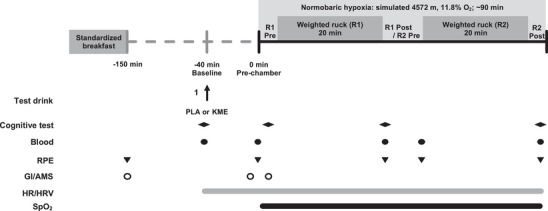
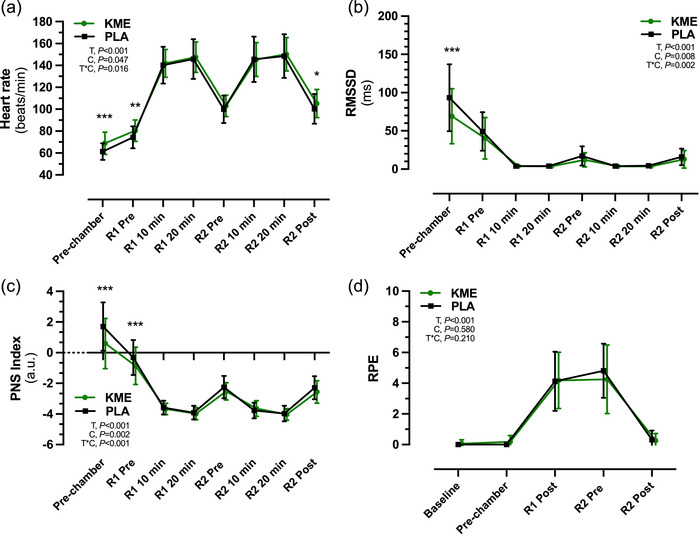
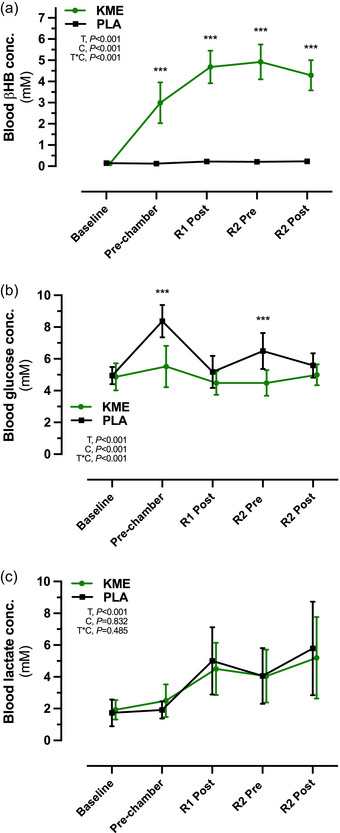
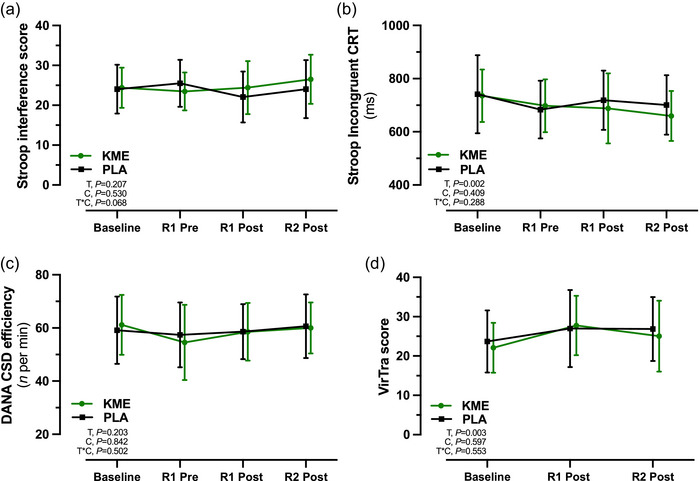
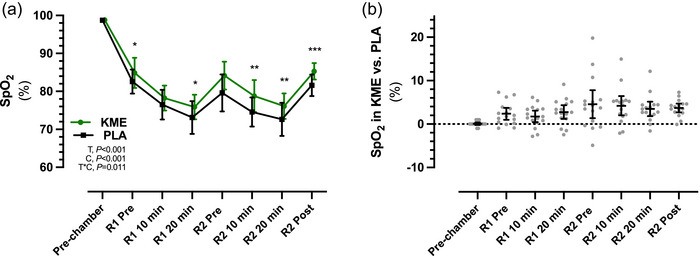
Acute ingestion of exogenous ketone supplements in the form of a (R)-3-hydroxybutyl (R)-3-hydroxybutyrate (R-BD R-βHB) ketone monoester (KME) can attenuate declines in oxygen availability during hypoxic exposure and might impact cognitive performance at rest and in response to moderate-intensity exercise. In a single-blind randomized crossover design, 16 males performed assessments of cognitive performance before and during hypoxic exposure with moderate exercise [2 × 20 min weighted ruck (∼22 kg) at 3.2 km/h at 10% incline] in a normobaric altitude chamber (4572 m, 11.8% O). The R-BD R-βHB KME (573 mg/kg) or a calorie- and taste-matched placebo (∼50 g maltodextrin) were co-ingested with 40 g of dextrose before exposure to hypoxia. The R-βHB concentrations were rapidly elevated and sustained (>3 mM; P < 0.001) by KME. The decline in oxygen saturation during hypoxic exposure was attenuated in KME conditions by 2.4%-4.2% (P < 0.05) compared with placebo. Outcomes of cognitive performance tasks, in the form of the Defense Automated Neurobehavioral Assessment (DANA) code substitution task, the Stroop color and word task, and a shooting simulation, did not differ between trials before and during hypoxic exposure. These data suggest that the acute exogenous ketosis induced by KME ingestion can attenuate declining blood oxygen saturation during acute hypoxic exposure both at rest and during moderate-intensity exercise, but this did not translate into differences in cognitive performance before or after exercise in the conditions investigated.
急性摄入(R)-3-羟基丁酸(R)-3-羟基丁酸酯(R-BD R-βHB)酮单酯(KME)形式的外源性酮补充剂可减轻缺氧暴露期间氧气供应的下降,并可能影响休息时和中等强度运动时的认知表现。在一项单盲随机交叉设计中,16 名男性在常压海拔室(4572 米,11.8%O)中进行了缺氧暴露和中度运动(3.2 公里/小时,10%坡度,负重 20 分钟,约 22 公斤)前后的认知表现评估。在暴露于缺氧之前,R-BD R-βHB KME(573mg/kg)或与卡路里和口味匹配的安慰剂(约 50g 麦芽糊精)与 40g 葡萄糖一起摄入。KME 可迅速升高并维持(>3mM;P<0.001)R-βHB 浓度。与安慰剂相比,KME 条件下缺氧暴露期间血氧饱和度下降减少了 2.4%-4.2%(P<0.05)。认知表现任务的结果,以防御自动化神经行为评估(DANA)代码替代任务、Stroop 颜色和单词任务以及射击模拟的形式,在缺氧暴露前后的试验中没有差异。这些数据表明,KME 摄入引起的急性外生酮症可以减轻急性缺氧暴露期间静息和中等强度运动期间的血液血氧饱和度下降,但在研究条件下,这并没有转化为运动前后认知表现的差异。