Department of Animal Science, Purdue University, West Lafayette, Indiana, United States of America.
Department of Veterinary Medicine, School of Animal Science and Food Engineering, University of São Paulo, Pirassununga, SP, Brazil.
PLoS One. 2024 Aug 27;19(8):e0306707. doi: 10.1371/journal.pone.0306707. eCollection 2024.
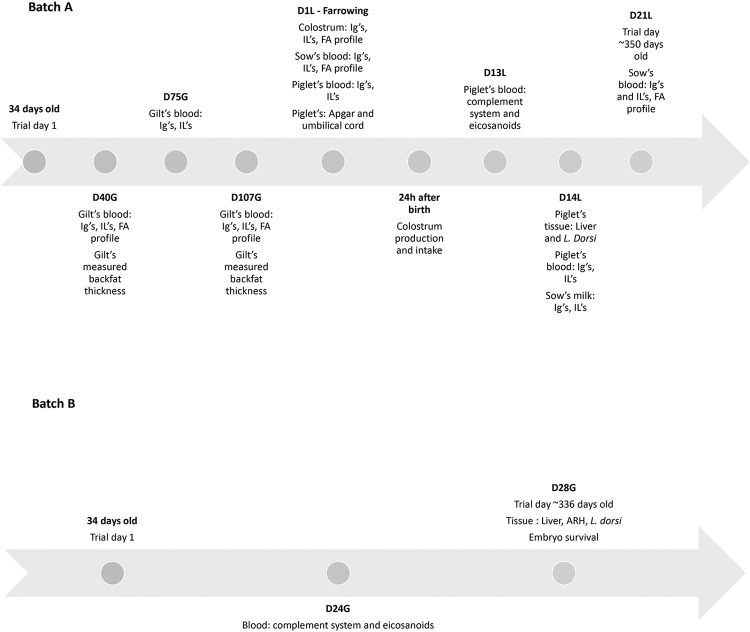
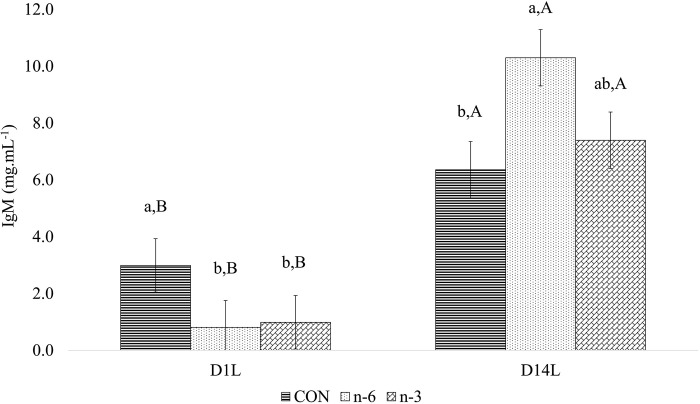
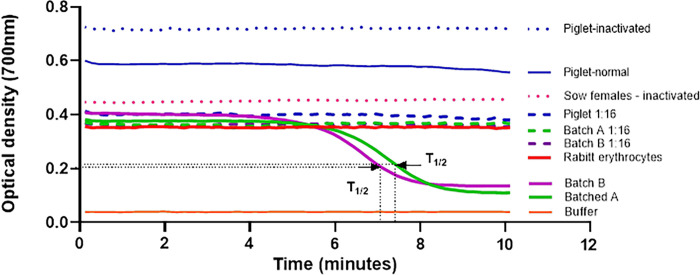
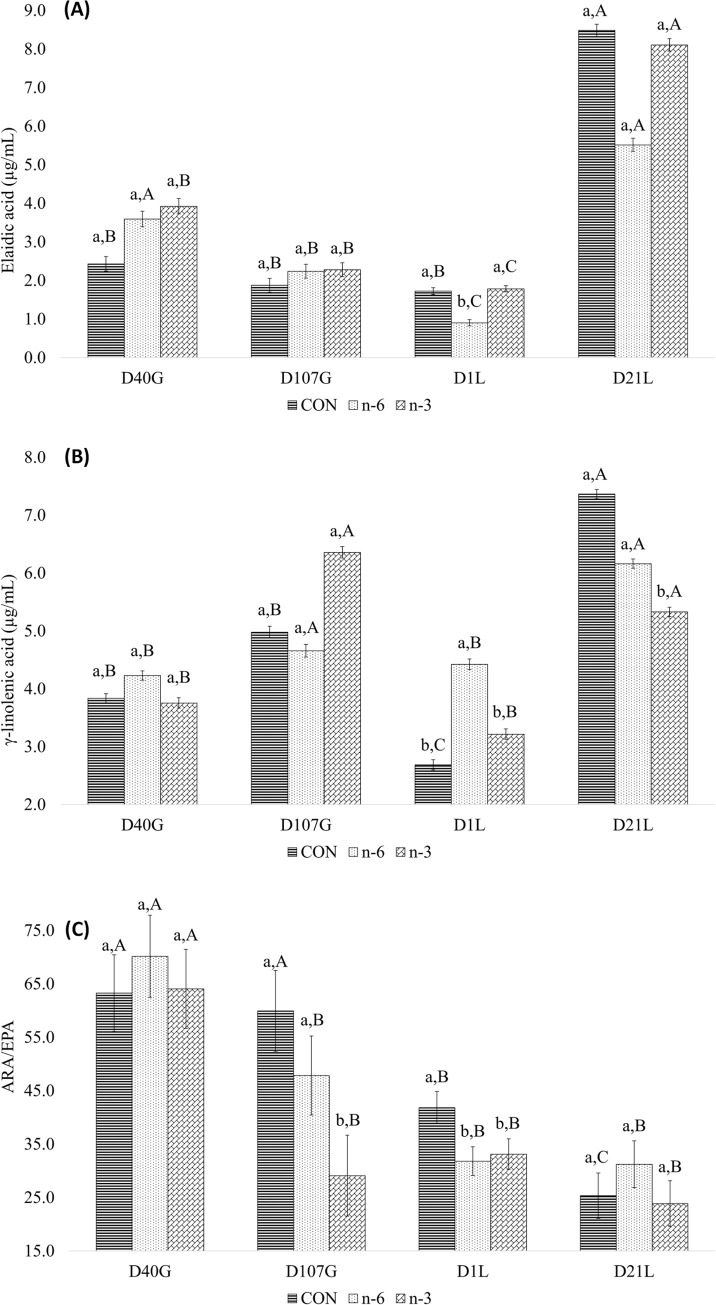
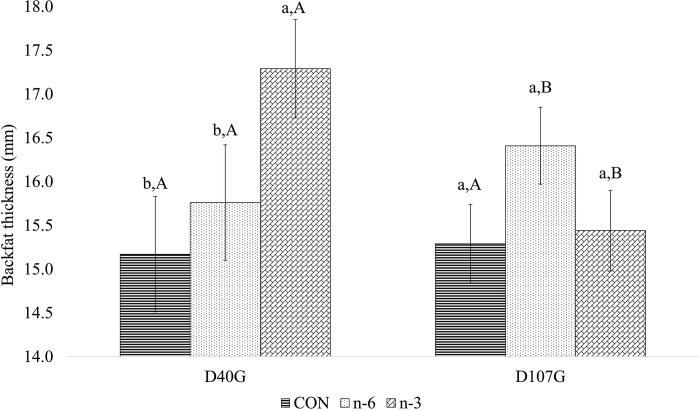
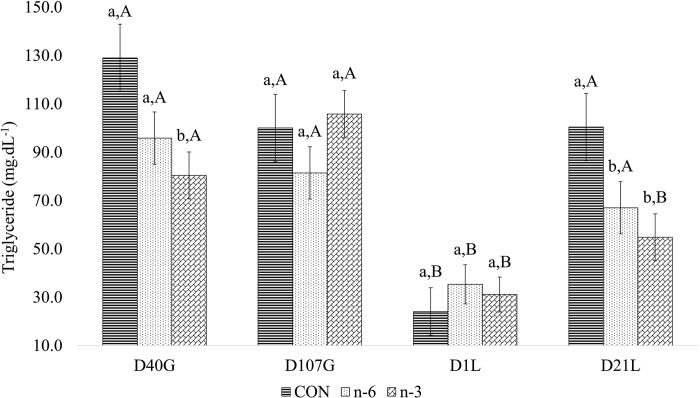
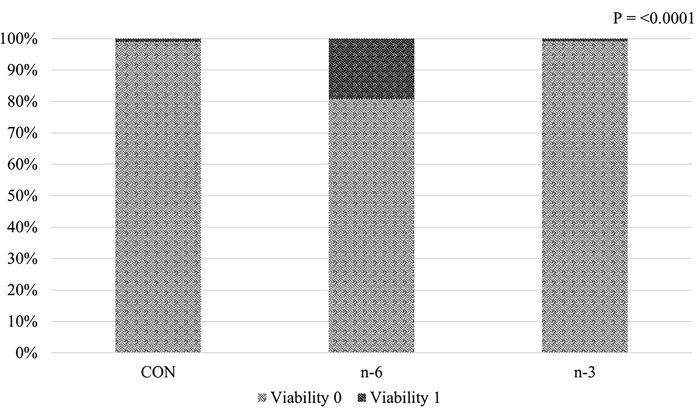
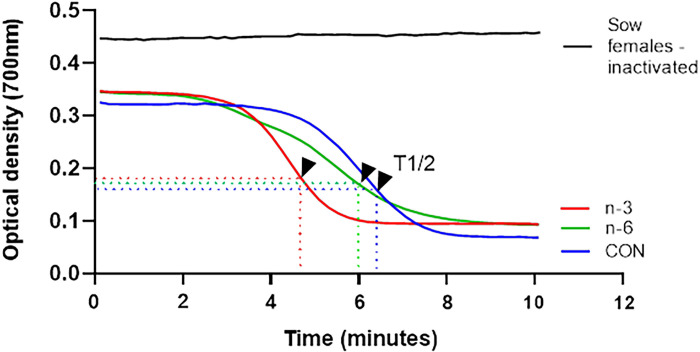
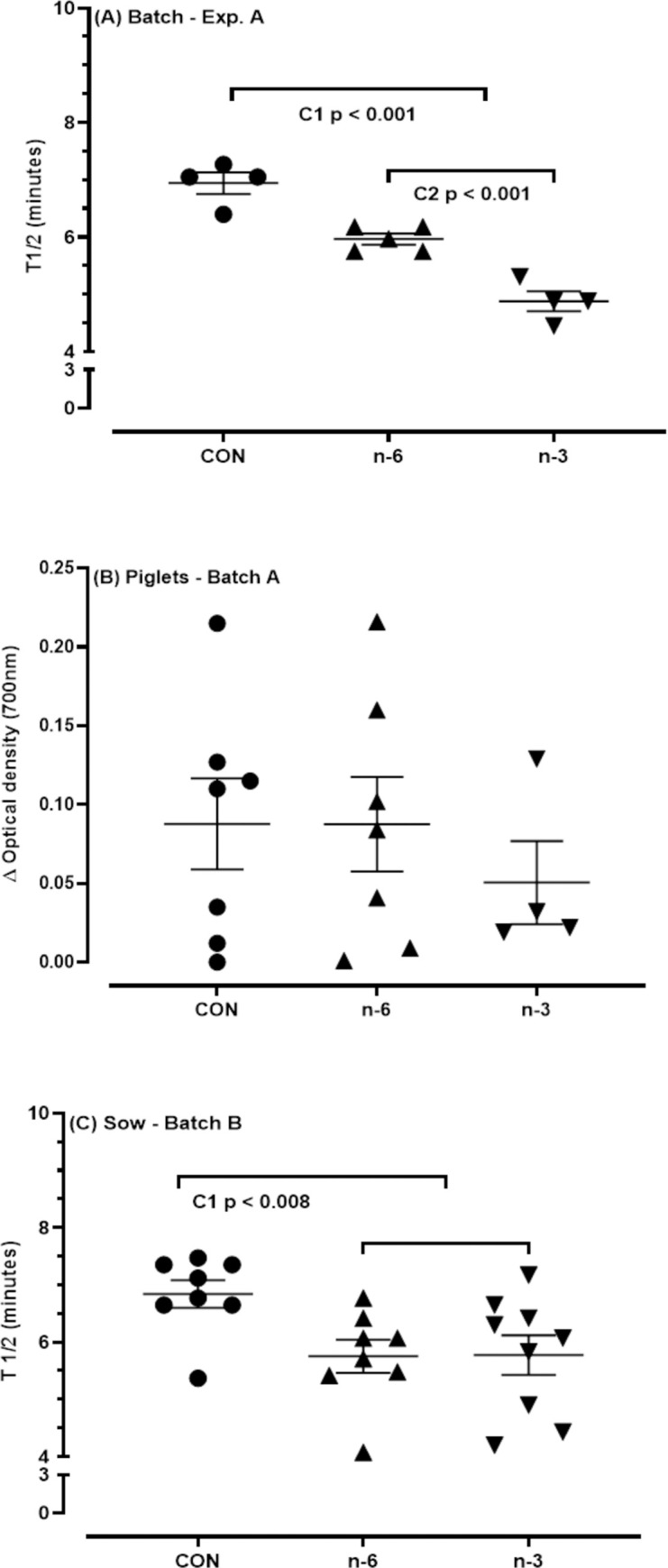
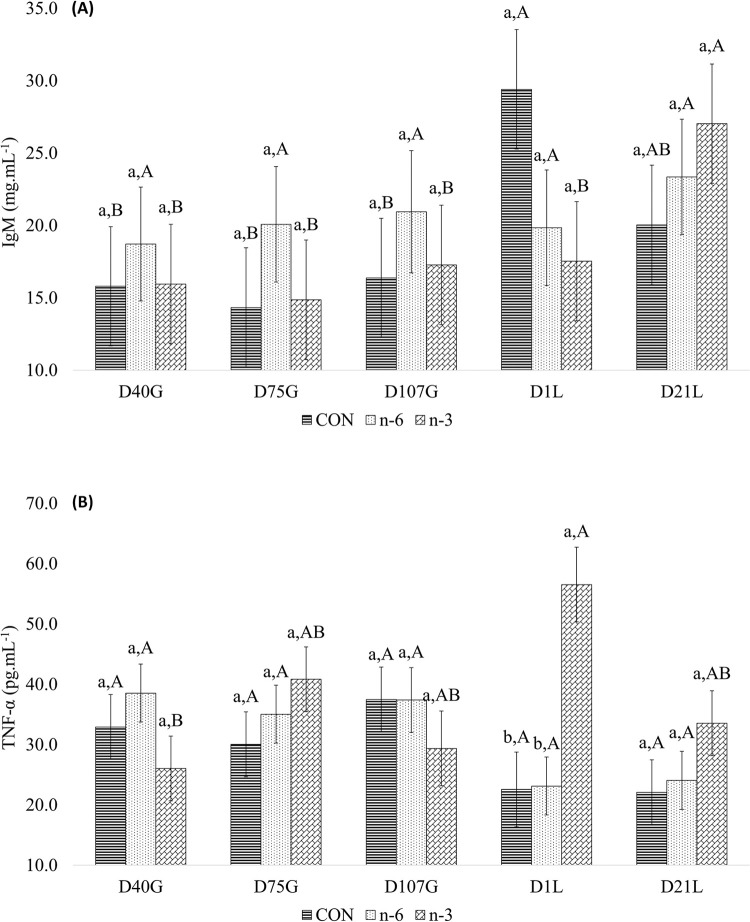
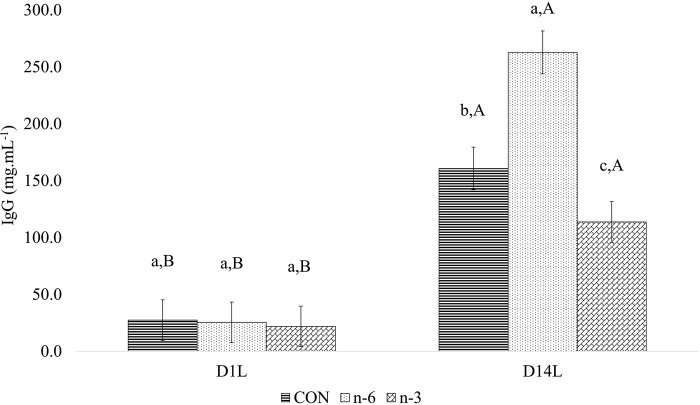
The risk of chronic diseases such as cardiovascular disease, cancer, inflammation, obesity, and autoimmune disease is linked to the quality of dietary fats, with lower intake of saturated and higher intake of n-6 and n-3 polyunsaturated fatty acids (PUFA) considered beneficial to health. This study investigated the effect of supplementing sows' diets with cow's milk biofortified with n-6 or n-3 PUFA, at varying n-6/n-3 ratios (8.26, 7.92, and 2.72) during their growing phase and throughout gestation and lactation on their reproductive performance and immune-inflammatory status. Specifically, we analyzed circulating cholesterol and fatty acid profiles of serum, colostrum and milk, sow body weight, and neonate colostrum intake, Apgar scores, muscle composition, and embryo viability. Analysis of circulating immunoglobulins (Ig), interleukins, and eicosanoids and complement system hemolytic activity were used to evaluate inflammatory and immune responses of sows and piglets. Expression of lipolysis and lipogenic genes in the liver were investigated in sows and piglets, with additional investigation of hypothalamus genes regulating appetite in sows. Feeding sows milk biofortified with n-6 and n-3 PUFA altered serum fatty acid profiles, reduced triglycerides (TG), increased embryo total number, increased early gestation backfat, and reduced colostrum IgG. Piglets of biofortified sow had higher circulating IgA, IgM and TNF-α, and lower IL-10. Sows fed n-3 biofortified milk had higher very low-density lipoproteins (VLDL) and TNF-α in circulation. Offspring from sows fed n-6 versus n-3 biofortified milk had lower IL-10 and expression levels of SREBP-1. N-3 versus n-6 also lowered arachidonic acid (ARA) levels in sow's milk and piglet viability 1. Findings offer insights into the potential health benefits of dietary supplementation with biofortified milk in swine, which serve as good model of diet-nutrition studies of humans, and therefore can potentially be considered in dietary recommendations both human and animal populations.
本研究旨在探讨在生长阶段和整个妊娠期及哺乳期,向母猪日粮中添加富含 n-6 或 n-3 多不饱和脂肪酸(PUFA)的牛奶对其繁殖性能和免疫炎症状态的影响。具体而言,我们分析了血清、初乳和乳汁中循环胆固醇和脂肪酸谱、母猪体重和新生仔猪初乳摄入量、阿普加评分、肌肉组成和胚胎活力。通过分析循环免疫球蛋白(Ig)、白细胞介素和类二十烷酸以及补体系统溶血活性,评估了母猪和仔猪的炎症和免疫反应。我们还研究了母猪和仔猪肝脏中脂肪分解和脂肪生成基因的表达情况,并进一步研究了调节母猪食欲的下丘脑基因。n-6 和 n-3 PUFA 强化牛奶喂养母猪改变了血清脂肪酸谱,降低了甘油三酯(TG),增加了胚胎总数,增加了早期妊娠背膘厚,并降低了初乳 IgG。强化牛奶喂养的仔猪具有更高的循环 IgA、IgM 和 TNF-α,以及更低的 IL-10。母猪喂养富含 n-3 的牛奶具有更高的极低密度脂蛋白(VLDL)和 TNF-α。与 n-3 相比,n-6 生物强化牛奶喂养的母猪后代具有更低的 IL-10 和 SREBP-1 表达水平。n-3 与 n-6 相比还降低了母猪乳中和仔猪活力 1 中的花生四烯酸(ARA)水平。这些发现为膳食补充富含 n-3 的生物强化牛奶对猪的潜在健康益处提供了新的见解,因为猪是人类饮食营养研究的良好模型,因此可以考虑在人类和动物群体的饮食建议中考虑这一因素。