Department of Endodontics, Stomatological Hospital and Dental School of Tongji University, Shanghai Engineering Research Center of Tooth Restoration and Regeneration, No.399 Yanchang Middle Road, Jing'an District, Shanghai, 200072, China.
Cell Mol Life Sci. 2024 Aug 28;81(1):373. doi: 10.1007/s00018-024-05400-2.
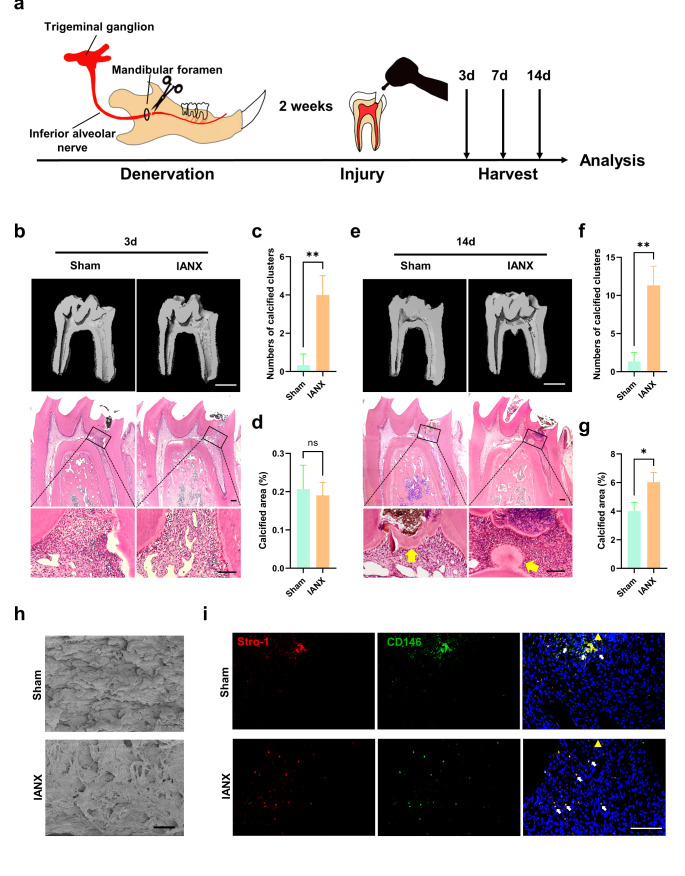
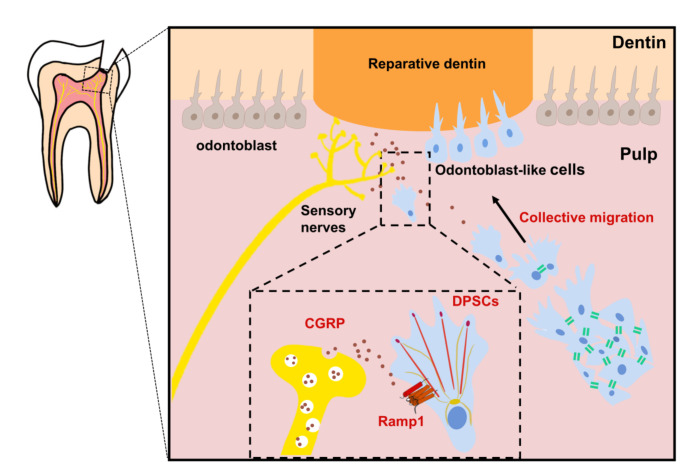
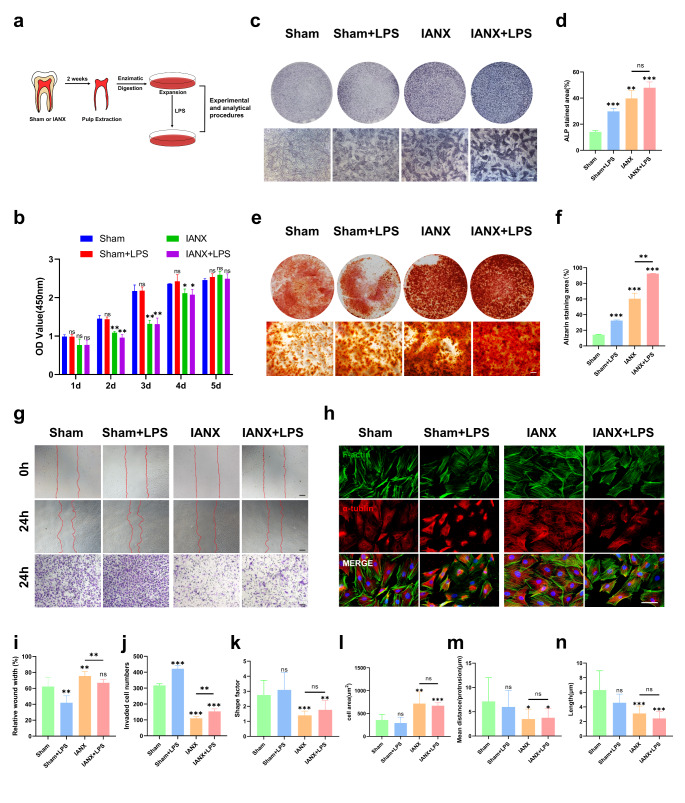
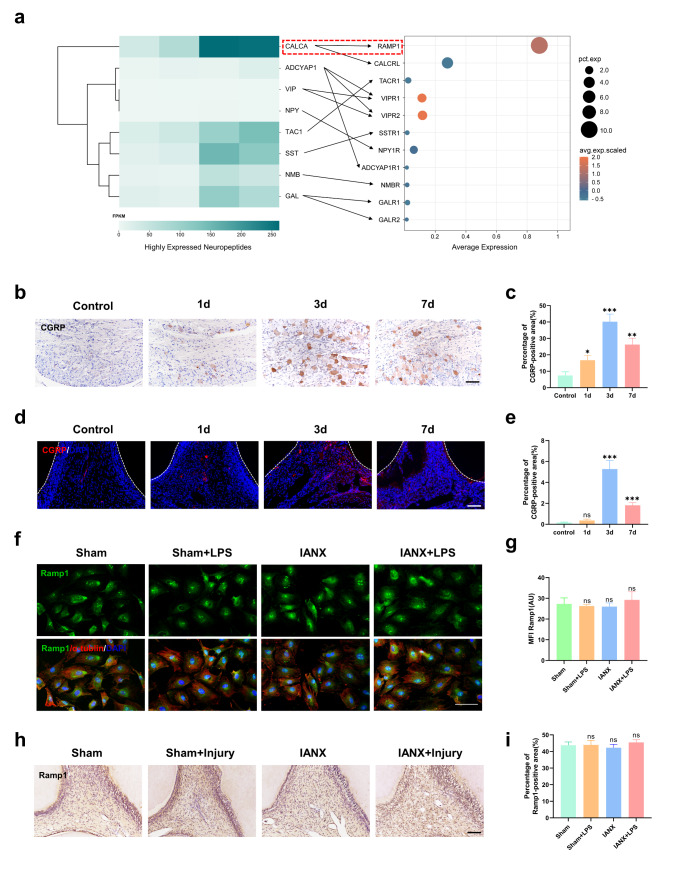
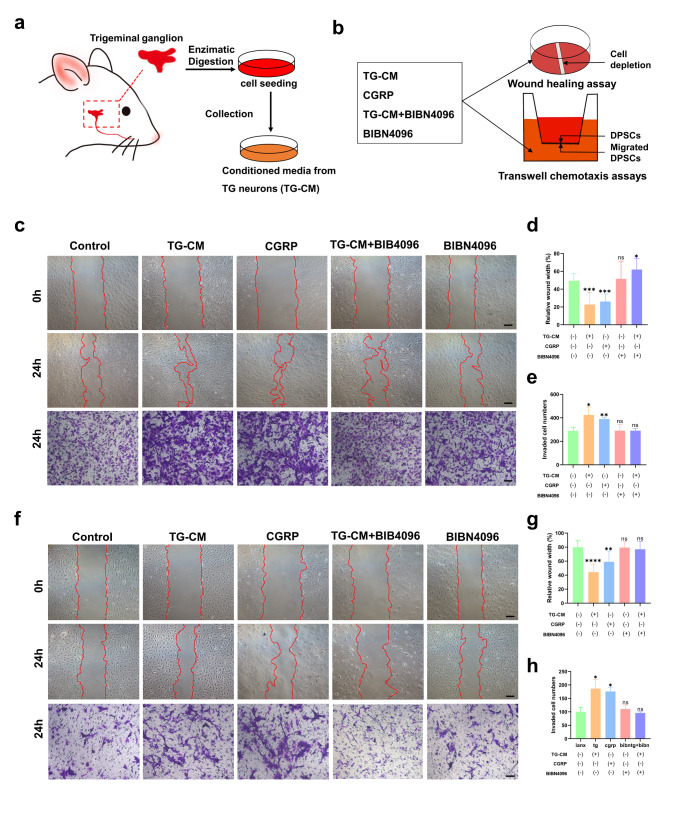
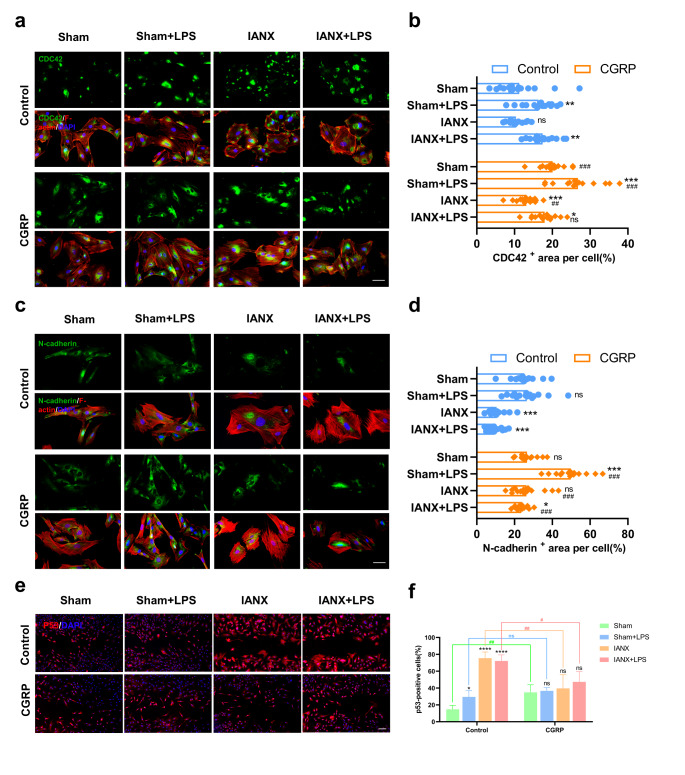
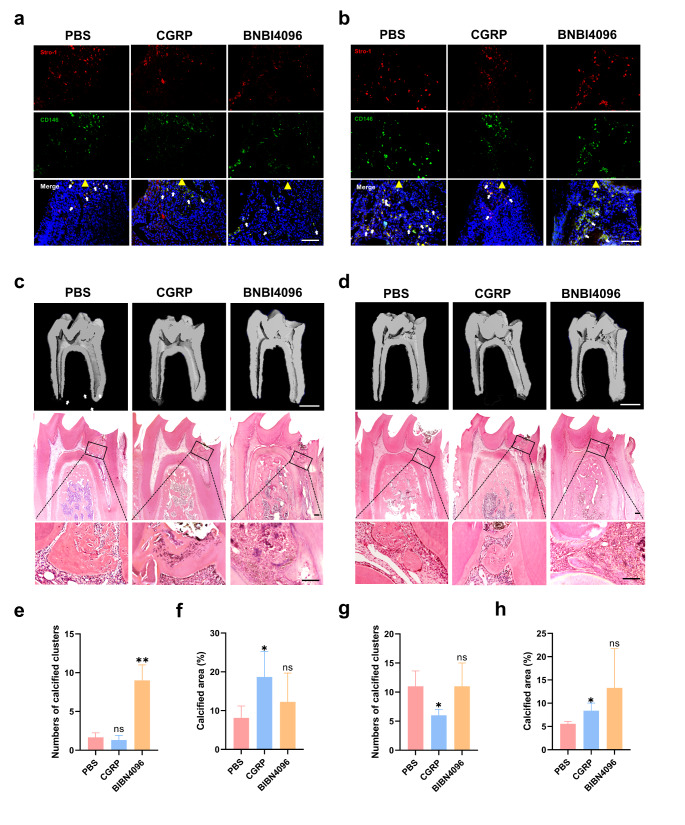
Dental pulp stem cells (DPSCs) are responsible for maintaining pulp structure and function after pulp injury. DPSCs migrate directionally to the injury site before differentiating into odontoblast-like cells, which is a prerequisite and a determinant in pulp repair. Increasing evidence suggests that sensory neuron-stem cell crosstalk is critical for maintaining normal physiological functions, and sensory nerves influence stem cells mainly by neuropeptides. However, the role of sensory nerves on DPSC behaviors after pulp injury is largely unexplored. Here, we find that sensory nerves released significant amounts of calcitonin gene-related peptide (CGRP) near the injury site, acting directly on DPSCs via receptor activity modifying protein 1 (RAMP1) to promote collective migration of DPSCs to the injury site, and ultimately promoting pulp repair. Specifically, sensory denervation leads to poor pulp repair and ectopic mineralization, in parallel with that DPSCs failed to be recruited to the injury site. Furthermore, in vitro evidence shows that sensory nerve-deficient microenvironment suppressed DPSC migration prominently among all related behaviors. Mechanistically, the CGRP-Ramp1 axis between sensory neurons and DPSCs was screened by single-cell RNA-seq analysis and immunohistochemical studies confirmed that the expression of CGRP rather than Ramp1 increases substantially near the damaged site. We further demonstrated that CGRP released by sensory nerves binds the receptor Ramp1 on DPSCs to facilitate cell collective migration by an indirect co-culture system using conditioned medium from trigeminal neurons, CGRP recombinant protein and antagonists BIBN4096. The treatment with exogenous CGRP promoted the recruitment of DPSCs, and ultimately enhanced the quality of pulp repair. Targeting the sensory nerve could therefore provide a new strategy for stem cell-based pulp repair and regeneration.
牙髓干细胞(DPSCs)在牙髓损伤后负责维持牙髓的结构和功能。DPSCs 在分化为成牙本质细胞样细胞之前,有向损伤部位定向迁移的能力,这是牙髓修复的前提和决定因素。越来越多的证据表明,感觉神经元-干细胞相互作用对于维持正常的生理功能至关重要,感觉神经主要通过神经肽影响干细胞。然而,感觉神经对牙髓损伤后 DPSC 行为的影响在很大程度上仍未得到探索。在这里,我们发现感觉神经在损伤部位附近释放大量降钙素基因相关肽(CGRP),通过受体活性修饰蛋白 1(RAMP1)直接作用于 DPSCs,促进 DPSCs 的集体迁移到损伤部位,最终促进牙髓修复。具体来说,感觉神经切断导致牙髓修复不良和异位矿化,同时 DPSCs 未能募集到损伤部位。此外,体外证据表明,感觉神经缺失的微环境显著抑制了 DPSC 的迁移,这在所有相关行为中表现得尤为明显。在机制上,通过单细胞 RNA-seq 分析筛选出感觉神经元和 DPSCs 之间的 CGRP-Ramp1 轴,免疫组织化学研究证实,损伤部位附近 CGRP 而非 Ramp1 的表达显著增加。我们进一步证明,感觉神经释放的 CGRP 与 DPSCs 上的受体 Ramp1 结合,通过三叉神经神经元的条件培养基、CGRP 重组蛋白和拮抗剂 BIBN4096 的间接共培养系统,促进细胞集体迁移。外源性 CGRP 的处理促进了 DPSCs 的募集,并最终增强了牙髓修复的质量。因此,靶向感觉神经可能为基于干细胞的牙髓修复和再生提供一种新策略。