State Key Laboratory of Military Stomatology & National Clinical Research Center for Oral Diseases & Shaanxi International Joint Research Center for Oral Diseases, Center for Tissue Engineering, School of Stomatology, The Fourth Military Medical University, Xi'an, China.
Xi'an Institute of Tissue Engineering and Regenerative Medicine, Xi'an, China.
Cell Prolif. 2020 May;53(5):e12803. doi: 10.1111/cpr.12803. Epub 2020 Apr 4.
The aim of this study is to investigate the role of sensory nerve in tooth homeostasis and its effect on mesenchymal stromal/stem cells (MSCs) in dental pulp.
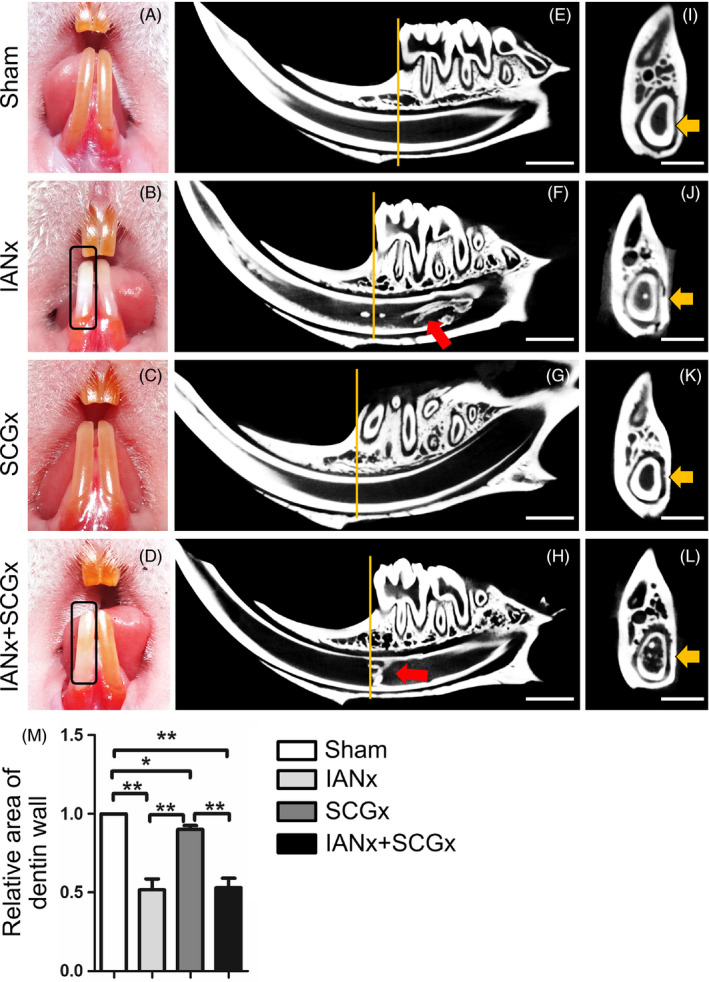
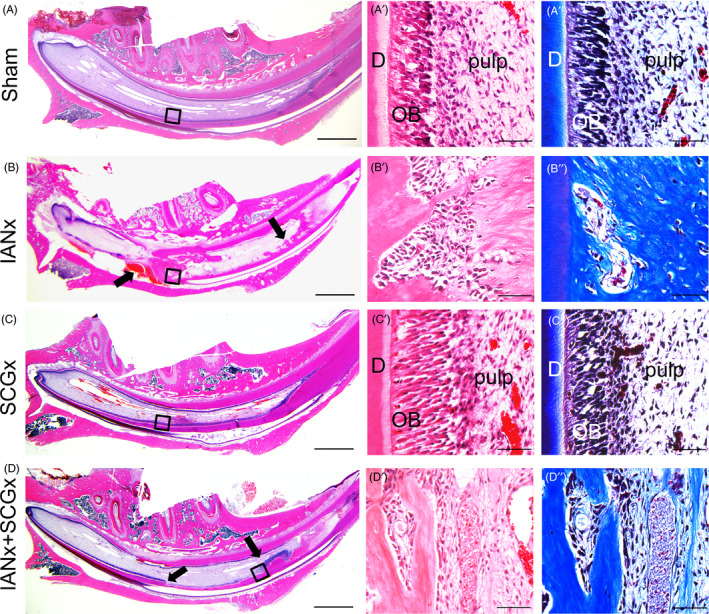
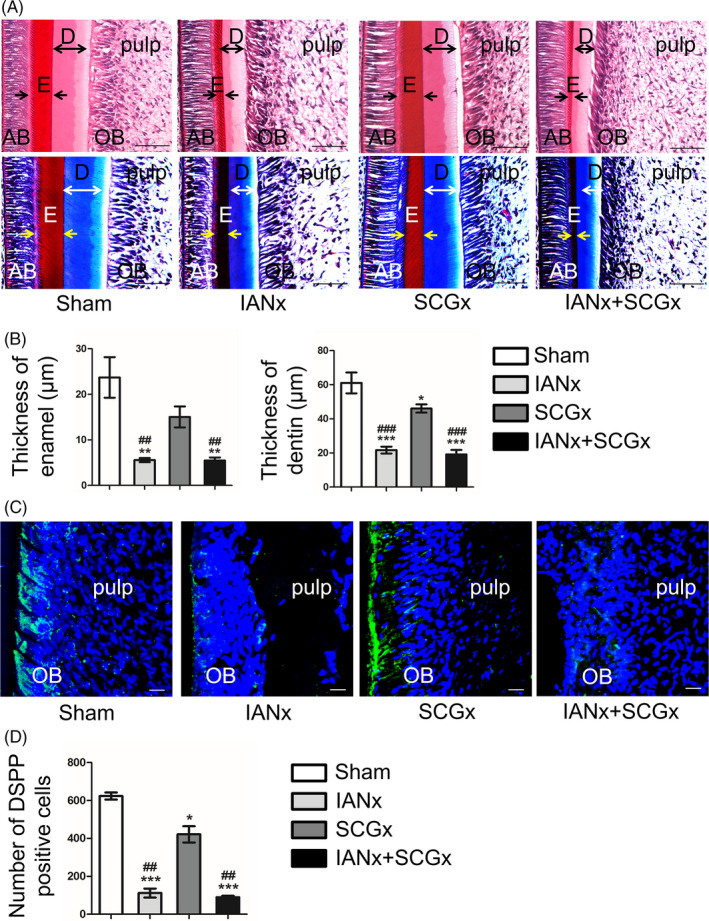
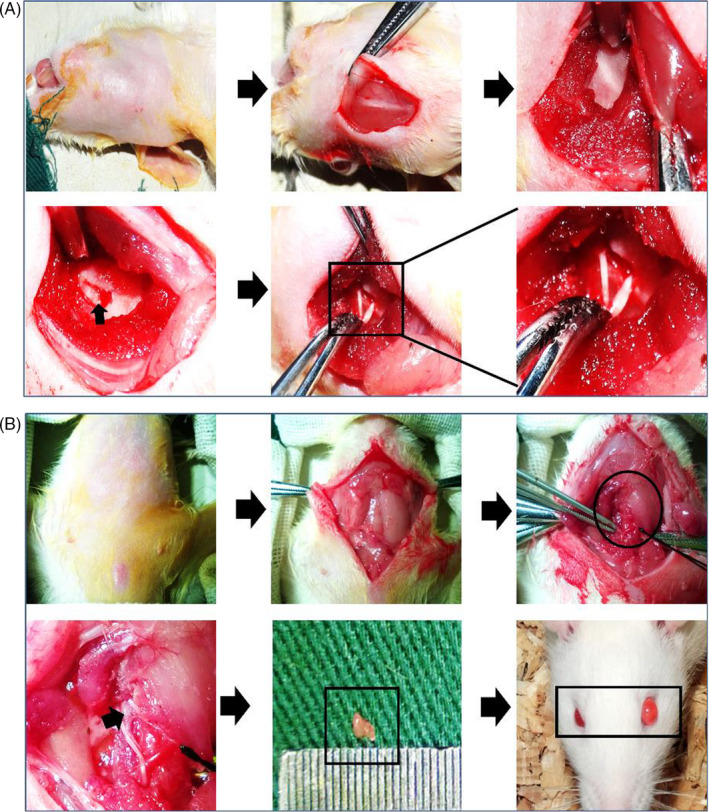
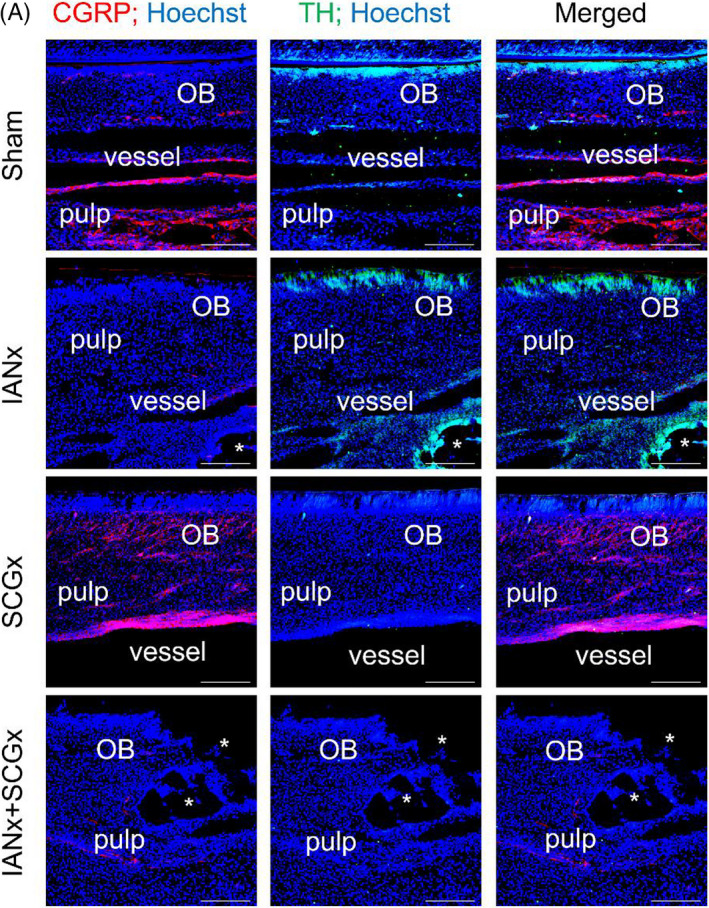
We established the rat denervated incisor models to identify the morphological and histological changes of tooth. The groups were as follows: IANx (inferior alveolar nerve section), SCGx (superior cervical ganglion removal), IANx + SCGx and Sham group. The biological behaviour of dental pulp stromal/stem cells (DPSCs) was evaluated. Finally, we applied activin B to DPSCs from sensory nerve-deficient microenvironment to analyse the changes of proliferation and apoptosis.
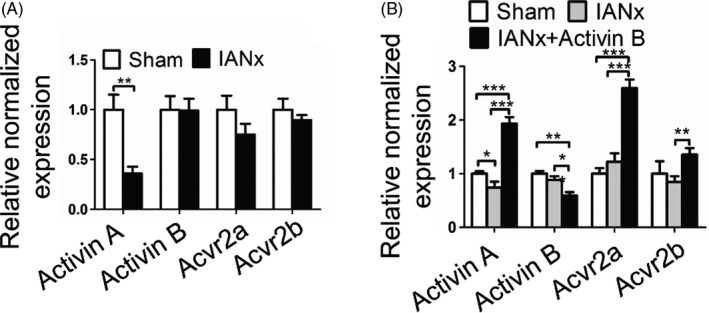
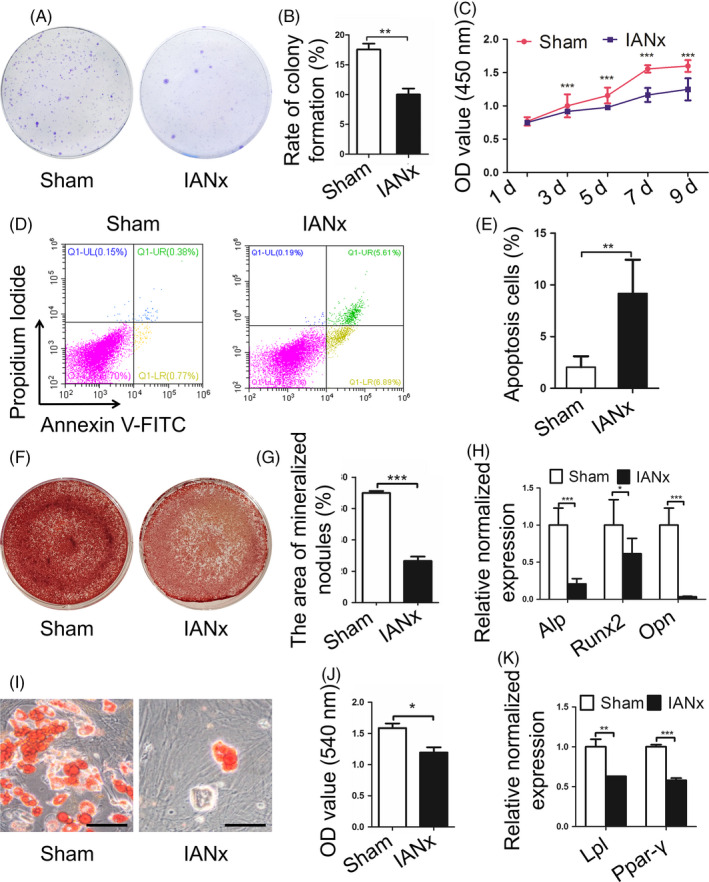
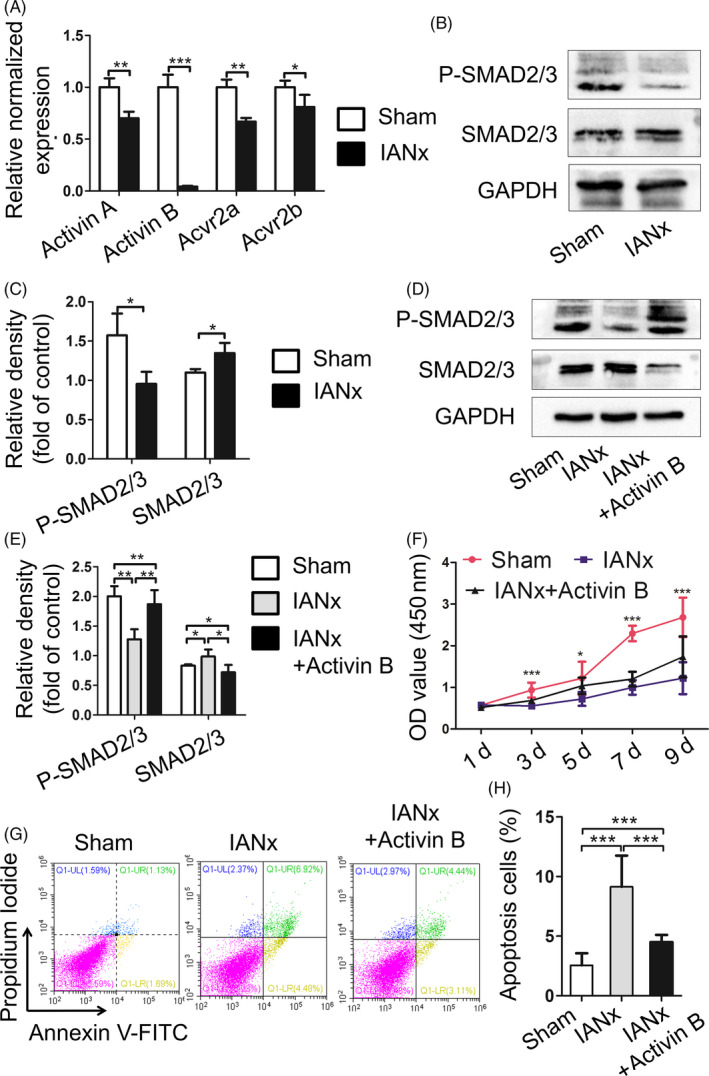
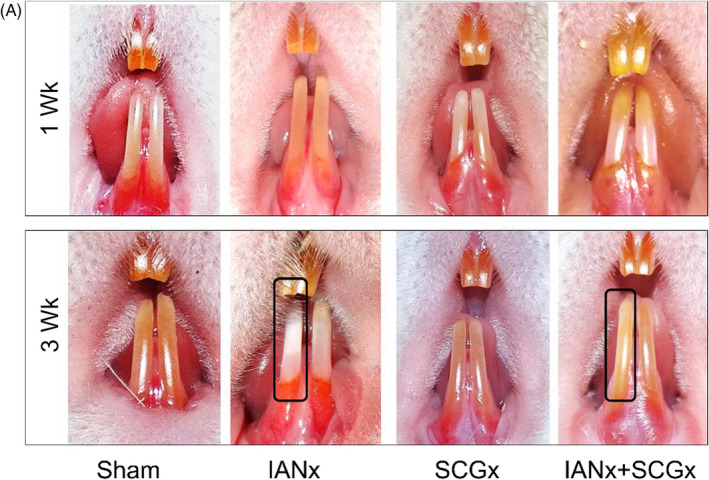
Incisor of IANx and IANx + SCGx groups exhibited obvious disorganized tooth structure, while SCGx group only showed slight decrease of dentin thickness, implying sensory nerve, not sympathetic nerve, contributes to the tooth homeostasis. Moreover, we found sensory nerve injury led to disfunction of DPSCs via activin B/SMAD2/3 signalling in vitro. Supplementing activin B promoted proliferation and reduced apoptosis of DPSCs in sensory nerve-deficient microenvironment.
This research first demonstrates that sensory nerve-deficient microenvironment impairs tooth haemostasis by inducing apoptosis of DPSCs via activin B/SMAD2/3 signalling. Our study provides the evidence for the crucial role of sensory nerve in tooth homeostasis.
本研究旨在探讨感觉神经在牙齿稳态中的作用及其对牙髓间充质基质/干细胞(MSCs)的影响。
我们建立了大鼠去神经切牙模型,以确定牙齿的形态和组织学变化。实验组如下:IANx(下牙槽神经切断术)、SCGx(颈上神经节切除术)、IANx+SCGx 和 Sham 组。评估牙髓基质/干细胞(DPSCs)的生物学行为。最后,我们将激活素 B 应用于感觉神经缺失微环境中的 DPSCs,以分析增殖和凋亡的变化。
IANx 和 IANx+SCGx 组的切牙表现出明显的牙齿结构紊乱,而 SCGx 组仅表现出牙本质厚度的轻微减少,表明感觉神经而非交感神经有助于牙齿稳态。此外,我们发现感觉神经损伤通过激活素 B/SMAD2/3 信号通路导致 DPSCs 功能障碍。在感觉神经缺失的微环境中补充激活素 B 可促进 DPSCs 的增殖并减少其凋亡。
本研究首次证明感觉神经缺失微环境通过激活素 B/SMAD2/3 信号通路诱导 DPSCs 凋亡,从而损害牙齿稳态。我们的研究为感觉神经在牙齿稳态中的关键作用提供了证据。