Miranda Kathryn, Becker William, Busbee Philip B, Dopkins Nicholas, Abdulla Osama A, Zhong Yin, Zhang Jiajia, Nagarkatti Mitzi, Nagarkatti Prakash S
Department of Pathology, Microbiology and Immunology, University of South Carolina School of Medicine, Columbia, SC, USA.
Epidemiology and Biostatistics, Arnold School of Public Health, University of South Carolina, Columbia, SC, USA.
iScience. 2022 Aug 24;25(9):104994. doi: 10.1016/j.isci.2022.104994. eCollection 2022 Sep 16.
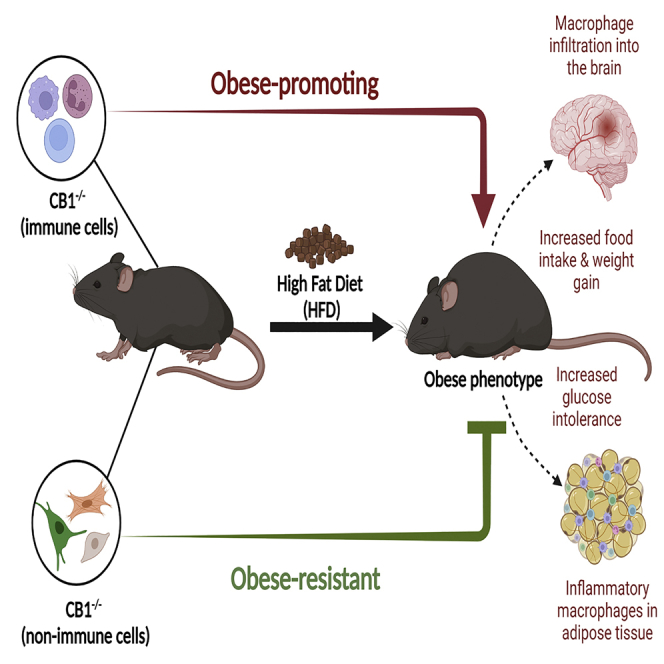
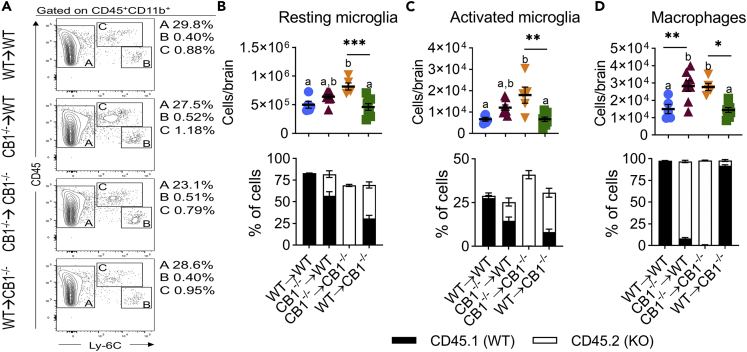
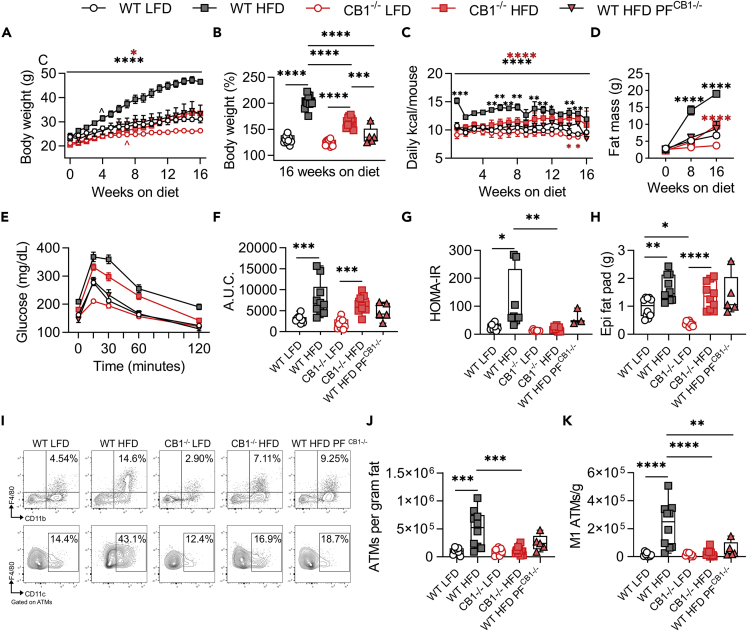
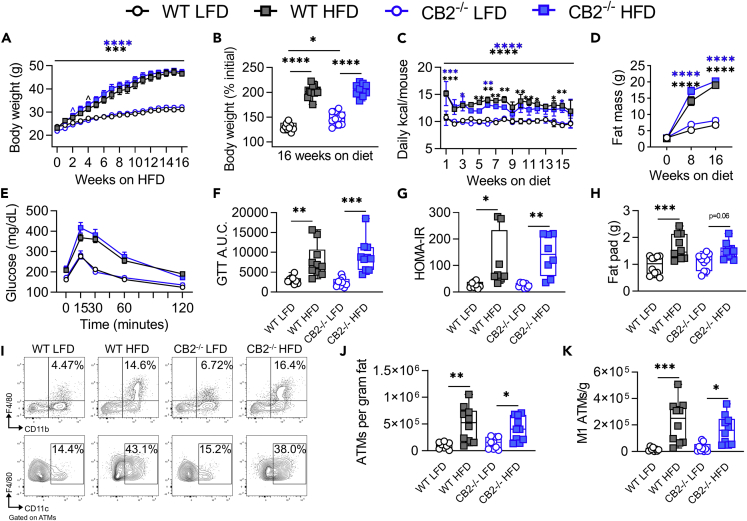
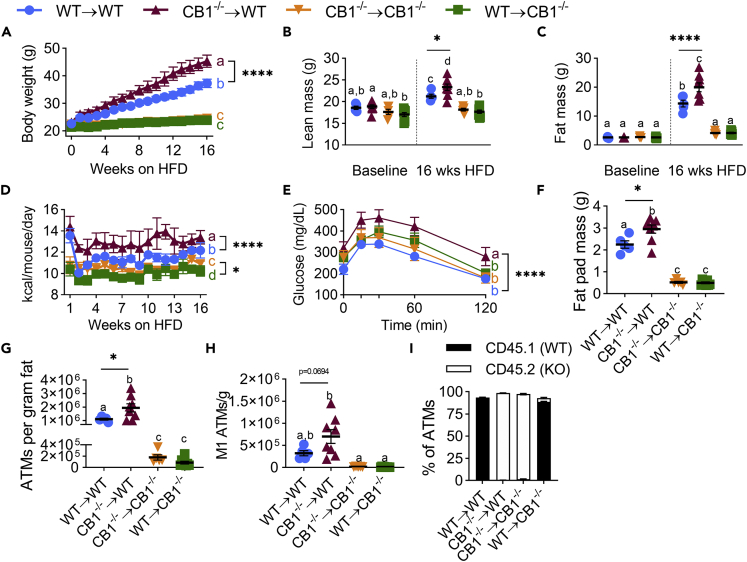
While blockade of cannabinoid receptor 1 (CB1) has been shown to attenuate diet-induced obesity (DIO), its relative role in different cell types has not been tested. The current study investigated the role of CB1 in immune vs non-immune cells during DIO by generating radiation-induced bone marrow chimeric mice that expressed functional CB1 in all cells except the immune cells or expressed CB1 only in immune cells. CB1 recipient hosts were resistant to DIO, indicating that CB1 in non-immune cells is necessary for induction of DIO. Interestingly, chimeras with CB1 in immune cells showed exacerbation in DIO combined with infiltration of bone-marrow-derived macrophages to the brain and visceral adipose tissue, elevated food intake, and increased glucose intolerance. These results demonstrate the opposing role of CB1 in hematopoietic versus non-hematopoietic cells during DIO and suggests that targeting immune CB1 receptors provides a new pathway to ameliorate obesity and related metabolic disorders.
虽然已证明对大麻素受体1(CB1)进行阻断可减轻饮食诱导的肥胖(DIO),但其在不同细胞类型中的相对作用尚未得到验证。本研究通过生成辐射诱导的骨髓嵌合小鼠,研究了DIO期间CB1在免疫细胞与非免疫细胞中的作用,这些小鼠在除免疫细胞外的所有细胞中表达功能性CB1,或仅在免疫细胞中表达CB1。CB1受体宿主对DIO具有抗性,这表明非免疫细胞中的CB1是诱导DIO所必需的。有趣的是,免疫细胞中含有CB1的嵌合体在DIO中表现出病情加重,同时骨髓来源的巨噬细胞浸润到大脑和内脏脂肪组织,食物摄入量增加,葡萄糖耐量降低。这些结果证明了DIO期间CB1在造血细胞与非造血细胞中的相反作用,并表明靶向免疫CB1受体为改善肥胖及相关代谢紊乱提供了一条新途径。