Minguez Beatriz, de Los Santos Mariela, Garcia-Volpe Camila, Molera Cristina, Paredes-Fuentes Abraham J, Oliva Clara, Arias Angela, Rodriguez-Gonzalez Helena, Yubero Delia, Tondo Mireia, Santos-Ocaña Carlos, Meavilla Silvia, Artuch Rafael
Gastroenterology and Nutrition Department, Hospital Sant Joan de Déu, 08950 Barcelona, Spain.
Division of Inborn Errors of Metabolism-IBC, Biochemistry and Molecular Genetics Department, Hospital Clínic de Barcelona, 08036 Barcelona, Spain.
Antioxidants (Basel). 2024 Aug 9;13(8):966. doi: 10.3390/antiox13080966.
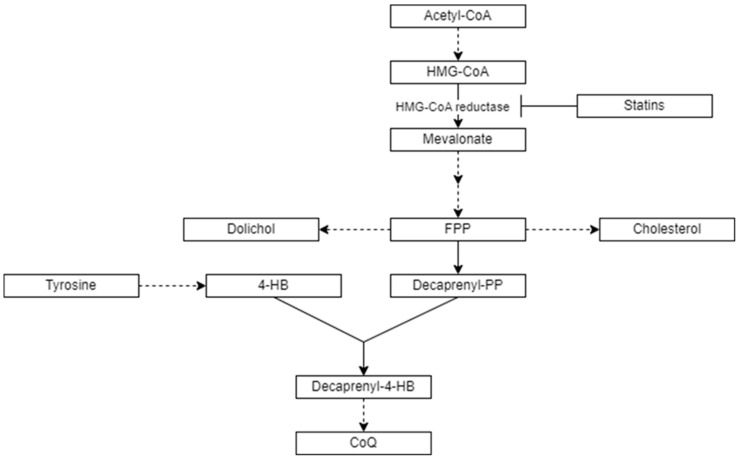
Coenzyme Q10 (CoQ) is a ubiquitous lipid with different biological functions. In blood, there is a close relationship between CoQ status and cholesterol, which strongly supports the study of both molecules simultaneously. The objective of this study was to evaluate plasma CoQ, lipoprotein concentrations and CoQ/Chol ratio in a cohort of paediatric patients with different types of dyslipidaemias. A total of 60 paediatric patients were recruited (age range: 7 months-18 years), including 52 with different types of hypercholesterolemia, 2 with isolated hypertriglyceridemia and 6 with hypobetalipoproteinemia. Plasma CoQ was analysed by HPLC with electrochemical detection, and lipoprotein and cholesterol concentrations by standard automated methods. The lowest CoQ values were detected in patients with hypobetalipoproteinemia and in two cases of liver cirrhosis. Mean CoQ values were significantly higher in hypercholesterolemic patients compared to controls (average values 1.07 µmol/L and 0.63 µmol/L) while the CoQ/cholesterol ratio did not show differences (170 vs. 163, respectively). Mean CoQ values were significantly lower in the group of patients with hypobetalipoproteinemia compared to controls (mean CoQ values of 0.22 µmol/L vs. 0.63 µmol/L, respectively), while those of CoQ/cholesterol did not show differences. Pearson's correlation test showed a positive correlation between the CoQ and cholesterol values (r = 0.565, < 0.001) and between the CoQ and the LDL cholesterol values (r = 0.610, < 0.001). Our results suggest that it is advisable to analyse plasma CoQ and cholesterol concentrations in patients with hypobetalipoproteinemia and hypercholesterolemia associated with liver damage.
辅酶Q10(CoQ)是一种具有多种生物学功能的普遍存在的脂质。在血液中,CoQ状态与胆固醇之间存在密切关系,这有力地支持了同时对这两种分子进行研究。本研究的目的是评估一组患有不同类型血脂异常的儿科患者的血浆CoQ、脂蛋白浓度和CoQ/胆固醇比值。共招募了60名儿科患者(年龄范围:7个月至18岁),其中包括52名患有不同类型高胆固醇血症的患者、2名患有单纯高甘油三酯血症的患者和6名患有低β脂蛋白血症的患者。采用高效液相色谱电化学检测法分析血浆CoQ,采用标准自动化方法分析脂蛋白和胆固醇浓度。在低β脂蛋白血症患者和两例肝硬化患者中检测到最低的CoQ值。与对照组相比,高胆固醇血症患者的平均CoQ值显著更高(平均值分别为1.07μmol/L和0.63μmol/L),而CoQ/胆固醇比值没有差异(分别为170和163)。与对照组相比,低β脂蛋白血症患者组的平均CoQ值显著更低(平均CoQ值分别为0.22μmol/L和0.63μmol/L),而CoQ/胆固醇比值没有差异。Pearson相关检验显示CoQ与胆固醇值之间呈正相关(r = 0.565,P < 0.001),CoQ与低密度脂蛋白胆固醇值之间也呈正相关(r = 0.610,P < 0.001)。我们的结果表明,对于患有低β脂蛋白血症和与肝损伤相关的高胆固醇血症的患者,分析血浆CoQ和胆固醇浓度是可取的。