Inborn errors of metabolism Unit, Institut de Recerca Sant Joan de Déu, Barcelona, Spain.
CIBER de Enfermedades Raras (CIBERER), Instituto de Salud Carlos III Spain, Madrid, Spain.
Sci Rep. 2019 Jan 28;9(1):793. doi: 10.1038/s41598-018-37542-2.
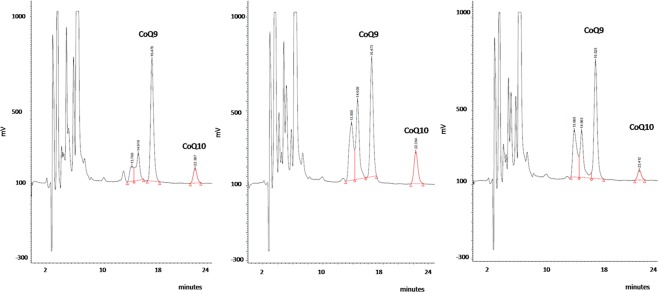
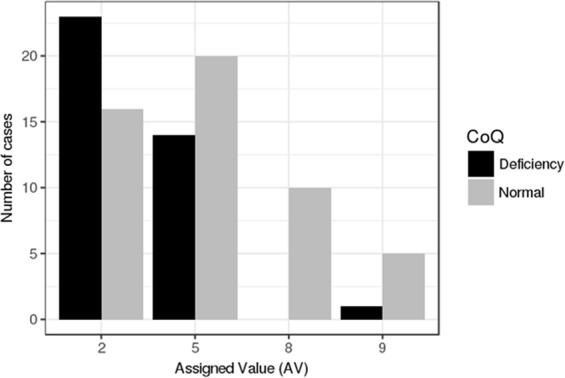
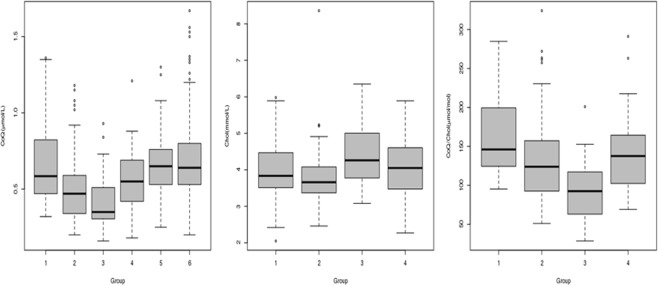
Identifying diseases displaying chronic low plasma Coenzyme Q (CoQ) values may be important to prevent possible cardiovascular dysfunction. The aim of this study was to retrospectively evaluate plasma CoQ concentrations in a large cohort of pediatric and young adult patients. We evaluated plasma CoQ values in 597 individuals (age range 1 month to 43 years, average 11 years), studied during the period 2005-2016. Patients were classified into 6 different groups: control group of healthy participants, phenylketonuric patients (PKU), patients with mucopolysaccharidoses (MPS), patients with other inborn errors of metabolism (IEM), patients with neurogenetic diseases, and individuals with neurological diseases with no genetic diagnosis. Plasma total CoQ was measured by reverse-phase high-performance liquid chromatography with electrochemical detection and ultraviolet detection at 275 nm. ANOVA with Bonferroni correction showed that plasma CoQ values were significantly lower in the PKU and MPS groups than in controls and neurological patients. The IEM group showed intermediate values that were not significantly different from those of the controls. In PKU patients, the Chi-Square test showed a significant association between having low plasma CoQ values and being classic PKU patients. The percentage of neurogenetic and other neurological patients with low CoQ values was low (below 8%). In conclusión, plasma CoQ monitoring in selected groups of patients with different IEM (especially in PKU and MPS patients, but also in IEM under protein-restricted diets) seems advisable to prevent the possibility of a chronic blood CoQ suboptimal status in such groups of patients.
确定表现为慢性低血浆辅酶 Q(CoQ)值的疾病可能对预防潜在的心血管功能障碍很重要。本研究的目的是回顾性评估大样本儿科和青年患者群体中的血浆 CoQ 浓度。我们评估了 597 名个体(年龄范围为 1 个月至 43 岁,平均年龄为 11 岁)在 2005-2016 年期间的血浆 CoQ 值。患者被分为 6 个不同组:健康参与者对照组、苯丙酮尿症(PKU)患者组、黏多糖贮积症(MPS)患者组、其他先天性代谢缺陷(IEM)患者组、神经遗传疾病患者组和无遗传诊断的神经科疾病患者组。采用反相高效液相色谱法结合电化学和紫外检测,以 275nm 测定血浆总 CoQ。经 Bonferroni 校正的方差分析显示,PKU 和 MPS 组的血浆 CoQ 值明显低于对照组和神经科疾病患者组。IEM 组的中间值与对照组无显著差异。在 PKU 患者中,卡方检验显示低血浆 CoQ 值与经典 PKU 患者之间存在显著相关性。具有低 CoQ 值的神经遗传和其他神经科疾病患者的比例较低(低于 8%)。总之,对不同 IEM(尤其是 PKU 和 MPS 患者,但也包括接受限制蛋白质饮食的 IEM)的选定患者群体进行血浆 CoQ 监测似乎是明智的,可以预防此类患者群体中慢性血液 CoQ 亚最佳状态的发生。