Kittinger Clemens, Stadler Johannes, Kühn Klaus Dieter
D&R Insitute of Hygiene, Microbiology and Environmental Medicine, Medical University of Graz, Neue Stiftingtalstraße 6/III 1, 8036 Graz, Austria.
Department of Orthopaedics and Trauma, Medical University of Graz, 8036 Graz, Austria.
Antibiotics (Basel). 2024 Aug 11;13(8):754. doi: 10.3390/antibiotics13080754.
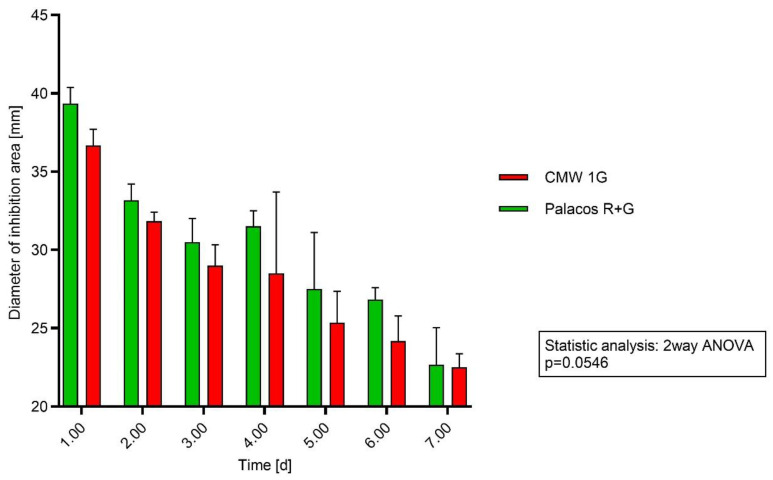
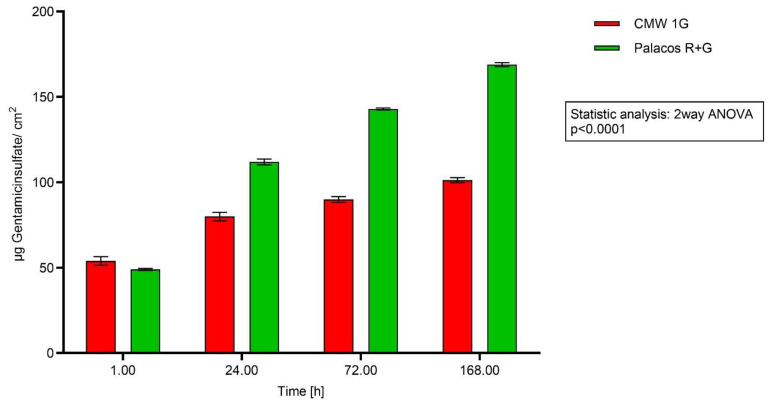
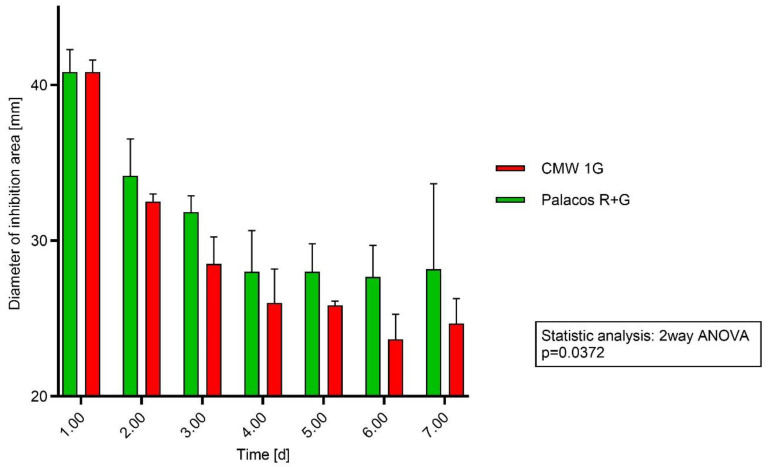
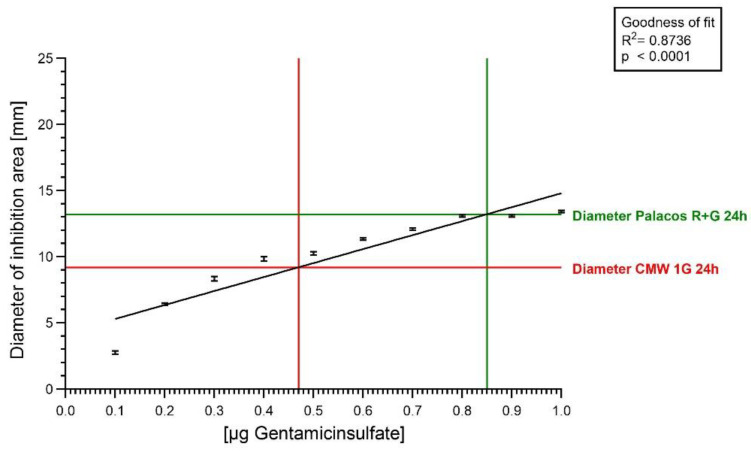
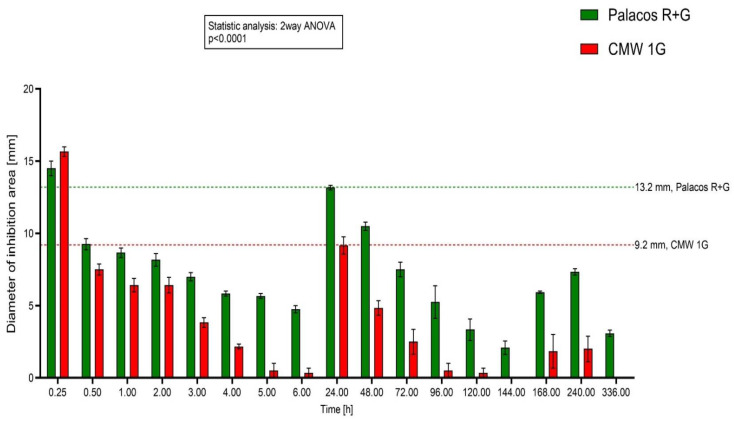
(1) Background: There is an ongoing discussion on the elution efficacy of antibiotic-impregnated cements. Our experiments were intended to clarify if there are differences in the antibiotic elution of HPLC compared with inhibition zone testing using eluates or PMMA discs. (2) Materials and Methods: Two cement brands with different concentrations of the active ingredient were tested in antimicrobial Kirby-Bauer (disc diffusion) assays. Cement platelets were directly applied on the agar plates and their zone of inhibition was measured. In parallel, the platelets were incubated in phosphate buffered saline (PBS) and at distinct points of time transferred into new buffer. At these time points, 50 µL of the bone cement eluates was used for zone of inhibition testing. Standard gentamicin sulfate solutions served as a control in the same test setup. To verify the microbiological investigations, the antibiotic content of the eluates was also measured via high-performance liquid chromatography (HPLC). (3) Results: The experiments with cement eluates showed better differentiable results than the direct application of the cement discs. The results were also comparable to investigations with HPLC and gentamicin sulfate standard solutions. (4) Conclusions: The results of elution rates are influenced by the test system and the period of observation chosen. The microbial test systems reflect the results of HPLC to the same degree and give evidence of the efficacy of the antibiotics. The HPLC tests on eluates were more suitable in representing differences in release characteristics.
(1) 背景:关于抗生素骨水泥的洗脱效果存在持续的讨论。我们的实验旨在阐明与使用洗脱液或聚甲基丙烯酸甲酯(PMMA)盘进行抑菌圈测试相比,高效液相色谱法(HPLC)在抗生素洗脱方面是否存在差异。(2) 材料与方法:在抗菌的 Kirby-Bauer(纸片扩散法)试验中测试了两种不同活性成分浓度的骨水泥品牌。将骨水泥薄片直接置于琼脂平板上,并测量其抑菌圈。同时,将薄片在磷酸盐缓冲盐水(PBS)中孵育,并在不同时间点转移至新的缓冲液中。在这些时间点,取50 μL骨水泥洗脱液用于抑菌圈测试。在相同的测试设置中,标准硫酸庆大霉素溶液用作对照。为了验证微生物学研究结果,还通过高效液相色谱法(HPLC)测量了洗脱液中的抗生素含量。(3) 结果:骨水泥洗脱液的实验结果比直接应用骨水泥盘的结果更具区分性。结果也与使用HPLC和硫酸庆大霉素标准溶液的研究结果相当。(4) 结论:洗脱率的结果受测试系统和所选观察期的影响。微生物测试系统在相同程度上反映了HPLC的结果,并证明了抗生素的有效性。对洗脱液进行的HPLC测试更适合于体现释放特性的差异。